

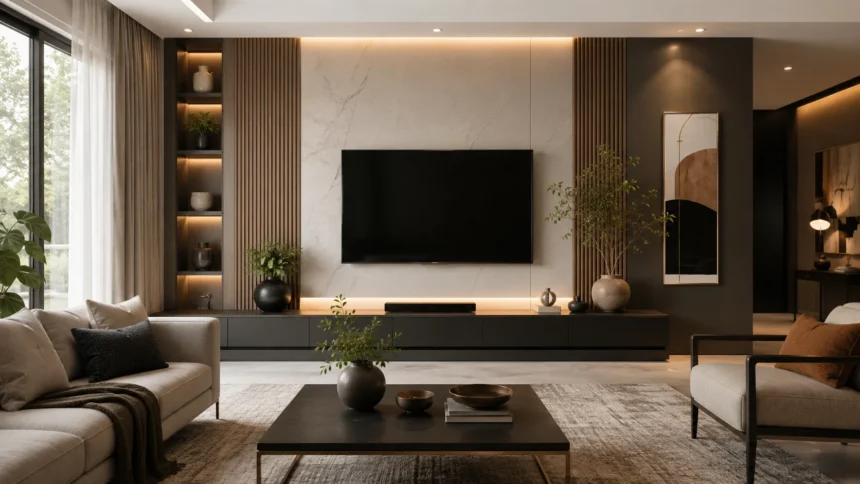
How to Decorate a TV Wall for a Modern, Stylish Living Room
The television is often one of the largest visual elements in a living room, which means the wall behind it deserves more attention than simply mounting a screen and leaving the surrounding space empty. Thoughtful TV wall decor ideas can transform this functional area into an intentional focal point that contributes to the overall interior design. The best TV walls balance technology with texture, color, storage, and decorative details. Instead of allowing the television to dominate the room, good styling helps it feel naturally integrated with the furniture, architecture, and personality of your home.
A successful modern TV wall design begins by considering how you actually use your living room. Some households need generous storage for gaming equipment, speakers, media devices, books, and children’s belongings, while others prefer a clean wall with almost nothing surrounding the screen. Your lifestyle should guide the layout before decorative trends influence your decisions. A beautiful media wall that provides nowhere to hide cables or store everyday electronics may quickly become frustrating. Combining practical planning with visual styling creates an entertainment area that continues to look attractive long after the initial makeover.
Scale is another important consideration because the television needs to feel proportionate to the wall and surrounding furniture. A large television floating alone on an oversized wall can appear disconnected, while too many decorative pieces around a small screen may make the area unnecessarily busy. Media consoles, shelving, wall panels, artwork, and lighting can help create a visual frame around the television. The objective is not necessarily to hide the screen completely. Instead, the surrounding elements should reduce its visual harshness and create a more balanced composition.
Modern TV wall decorating also relies heavily on materials. Wood slats can introduce warmth, stone or marble-look surfaces can create a sophisticated atmosphere, and textured plaster can make a minimalist room feel more layered. Painted feature walls remain one of the simplest and most affordable solutions, while cabinetry can add architectural character and storage. Even small additions such as LED lighting, floating shelves, or carefully selected accessories can change the appearance dramatically. The strongest design usually combines only a few materials rather than introducing every possible feature at once.
Your TV wall should ultimately feel connected to the rest of the living room rather than functioning as a completely separate design statement. Repeat colors, textures, and finishes that already appear in your sofa, coffee table, rug, lighting, or flooring. If warm wood appears elsewhere, introducing a similar tone behind the television can create continuity. If your room uses black metal accents, subtle dark details around the media area can achieve the same effect. With careful planning, your living room TV wall can become stylish, functional, and visually comfortable instead of simply being a place to hang a screen.
Start With the Right TV Placement and Wall Proportions
Before choosing panels, paint colors, shelves, or decorative accessories, determine where the television should sit on the wall. Comfortable viewing should come before appearance because an attractively styled TV wall will still feel wrong if the screen is positioned awkwardly. Consider the height of your sofa and your typical seated eye level when selecting the mounting position. Many homeowners mount televisions unnecessarily high because they treat them like artwork. In a primary living room, keeping the center of the screen relatively close to seated eye level generally creates a more comfortable viewing experience.
The distance between the sofa and television also influences both screen size and wall styling. A very large television positioned too close can feel overwhelming, while a small screen across a large room may be difficult to watch comfortably. Once you understand the appropriate viewing relationship, the surrounding design becomes easier to plan. Larger televisions often look best with substantial media consoles or architectural wall treatments underneath them. Smaller screens can be integrated with shelving or artwork without dominating the composition. Good TV wall design ideas should support comfortable viewing rather than compete with it.
Look at the proportions of the wall itself before deciding how much decoration is necessary. A narrow wall may need only the television, slim console, and one subtle background treatment. An expansive living room wall can support built-in cabinetry, floating shelves, decorative panels, or a wider entertainment unit. Trying to fit an oversized media system onto a small wall can make the room feel crowded. Conversely, placing a tiny console beneath a television on a broad wall can make the arrangement appear visually weak and disconnected.
The furniture beneath the television should generally feel wider than the screen whenever possible. A broader media console gives the television a stronger visual base and prevents it from appearing top-heavy. Floating cabinets can create a clean contemporary appearance, while freestanding TV units provide flexibility and may offer more storage. Consider the proportions of nearby furniture as well. Your entertainment unit should relate to the sofa, coffee table, and surrounding architecture so the entire seating area feels coordinated rather than assembled from unrelated pieces.
Finally, consider what is visible from different parts of the home. In open-plan spaces, the TV wall may be seen from the kitchen, dining area, hallway, and entrance, making its design especially important. Step back and evaluate the wall from several viewpoints before committing to permanent features. A balanced arrangement should look intentional even when the television is turned off. Planning placement and proportion first gives every later choice—whether wood panels, cabinetry, artwork, or lighting—a much stronger foundation.
Use Wood Slat Panels for a Warm Modern TV Feature Wall
Wood slat walls have become popular because they can soften the technological appearance of a television while adding architectural texture. Vertical wooden strips naturally draw the eye upward, making the wall appear taller and more interesting. They work especially well in contemporary, Scandinavian, Japandi, and organic-modern interiors where natural materials play an important role. Instead of leaving the television against a plain painted surface, a wood slat TV wall creates depth without requiring large amounts of decorative accessories around the screen.
You do not necessarily need to cover the entire wall with wood. Applying slatted panels behind only one portion of the television can create asymmetry and make the design feel more dynamic. For example, wood slats may occupy one-third of the wall while the remaining area uses paint, plaster, or another neutral finish. This approach is particularly useful when you want texture without making the entertainment wall appear visually heavy. It can also reduce material costs while still producing a strong architectural effect.
Consider the tone of the wood in relation to your existing flooring and furniture. Pale oak or ash can create an airy Scandinavian appearance, while walnut and deeper brown finishes bring richness and contrast. Wood tones do not have to match perfectly, but they should feel related. A television’s black screen often looks particularly attractive against medium or dark wood because the contrast feels softer than pure white walls. Warm wood also helps balance sleek speakers, metal accessories, and other electronics commonly found around the media area.
Wood slats can also provide practical benefits when used thoughtfully. Depending on the installation method, they may help disguise cable routes, wall imperfections, or acoustic materials. However, cable management should still be planned before installing the decorative surface. Decide where electrical outlets, HDMI connections, speakers, and other equipment will be positioned so unnecessary wires do not remain visible afterward. A carefully executed TV feature wall design should look clean because its practical components were planned in advance, not because cables were hidden temporarily behind accessories.
Keep the rest of the styling relatively restrained when the wall itself provides substantial texture. A floating media cabinet, small plant, ceramic vase, or sculptural object may be enough to complete the arrangement. Filling wooden panels with numerous shelves and decorative objects can reduce the visual impact of the material. Let the grain, rhythm, and warmth of the wood contribute to the design. This simple approach can make the television area feel sophisticated without becoming overly decorative or trend-driven.
Create a Sleek Look With Stone, Marble, or Textured Wall Finishes
Stone-inspired TV walls can create a striking focal point, especially in modern interiors that emphasize clean lines and luxurious materials. Large-format porcelain, marble-look slabs, natural stone, or textured finishes can turn the wall behind the television into an architectural statement. Because these materials often contain natural-looking movement and veining, they introduce visual interest without requiring many accessories. A marble TV wall paired with a simple floating console can feel polished, contemporary, and surprisingly uncluttered when the surrounding furnishings remain restrained.
Natural stone can be beautiful but may also be heavy, expensive, and more complicated to install. Porcelain slabs and high-quality engineered surfaces can create a similar visual effect while providing greater flexibility in some homes. If you prefer something softer, limewash-style paint, textured plaster, or microcement-inspired finishes can produce subtle variation without bold veining. These alternatives suit minimalist and organic-modern living rooms particularly well because they create depth while maintaining a quiet, neutral appearance.
Color selection has a major influence on how dramatic the television appears. Light beige, warm gray, and soft stone finishes can keep the living room bright while providing more depth than plain white paint. Dark charcoal, black, or deep brown backgrounds visually reduce the contrast between the wall and a black television screen. This can make the TV feel less dominant when switched off. A dark TV feature wall can be particularly effective in rooms with good lighting, warm flooring, and lighter upholstery that prevents the overall interior from feeling too heavy.
When using marble or strongly patterned stone, allow the material itself to become the main decorative feature. Adding multiple floating shelves, artwork, wall lights, and ornaments around heavily veined surfaces can create too much visual competition. A cleaner composition usually feels more sophisticated. Consider a low-profile media unit, hidden cable management, and perhaps one or two carefully selected accessories. Integrated lighting can highlight the texture if used subtly, but it should support the wall rather than create an excessively theatrical effect.
Texture can also be introduced without completely rebuilding the wall. Decorative plaster finishes, fluted panels, ribbed surfaces, wallpaper, or large textured wall panels can provide depth at different budget levels. The right option depends on your existing architecture, maintenance needs, and preferred interior style. Rather than automatically choosing the most dramatic material, select a finish that works with your room’s lighting and surrounding furniture. A successful modern media wall feels integrated with the whole room instead of looking like an unrelated showroom installation.
Add Floating Shelves Without Making the TV Wall Look Cluttered
Floating shelves are useful when you want to decorate around a television while maintaining a relatively light and contemporary appearance. They provide space for books, framed photographs, plants, ceramics, and personal objects without requiring bulky cabinets. However, shelf placement should be carefully considered because poorly positioned shelves can make the TV wall feel crowded. Instead of surrounding the screen on every side, consider using shelves asymmetrically or positioning them away from the immediate viewing area. This keeps the television visually grounded without creating unnecessary distractions.
One approach is to install two or three shelves on one side of the television while balancing them with a tall plant, wall light, or decorative feature on the other. This creates visual movement and avoids the overly symmetrical appearance sometimes associated with entertainment centers. Another option is to place one long floating shelf above or below the screen. When done correctly, this can visually extend the width of the entertainment zone and connect the television with surrounding wall decor.
Keep decorative objects on shelves varied but restrained. Mixing books, greenery, small ceramics, framed artwork, and sculptural objects creates greater depth than displaying several identical accessories. Vary heights and shapes while leaving open space around each grouping. Overfilling shelves is one of the quickest ways to make TV wall decor with shelves appear messy. Small groups of two or three objects are often enough, particularly when the television itself already creates a strong visual presence in the center of the wall.
Shelf materials should relate to the rest of the room. Warm wood can soften black screens and electronics, while painted shelves can blend into the wall for a quieter look. Black metal or dark floating shelves may work well in industrial or highly contemporary interiors. You can also coordinate the shelves with your media console to create continuity. Exact matching is not always necessary, but repeating one finish or color generally helps the entertainment area feel more intentional.
Remember that shelves require ongoing editing. Books, small objects, and decorative pieces can gradually accumulate until the TV wall becomes visually noisy. Periodically remove unnecessary items and reconsider whether each piece contributes to the overall arrangement. You may discover that one attractive vase and several books create more impact than ten small ornaments. The strongest wall decor around a TV supports the screen and surrounding architecture rather than competing continuously for attention.
Use Built-In Cabinets for a Clean and Functional Media Wall
Built-in cabinetry can transform a television wall into one of the most functional areas of the living room. Cabinets provide storage for electronics, games, toys, books, chargers, and everyday household items while giving the television an architectural frame. When properly designed, built-ins make the entertainment area look intentional rather than simply furnished. They are particularly useful on large walls where a small freestanding console may not provide enough visual weight or storage.
A common design places the television in the center with closed cabinets below and open shelving on either side. The closed sections hide clutter while the shelves provide opportunities for decorative styling. Another option is to use floor-to-ceiling cabinetry with doors that visually blend into the wall. This produces a cleaner appearance and can make storage almost disappear. For a more contemporary result, combine smooth handleless cabinetry with natural wood niches or contrasting open shelves.
Color plays an important role in how visually dominant built-ins become. Painting cabinetry the same color as the surrounding wall can create a calm, integrated appearance. Dark cabinetry can make the television blend into the composition, while warm beige, taupe, cream, or muted gray can create a softer look. Natural wood introduces warmth and works especially well when paired with neutral paint. Your built-in TV wall unit should feel connected to the broader living room palette rather than functioning as an isolated block of furniture.
Consider ventilation and technology before finalizing cabinet designs. Game consoles, receivers, routers, and other electronics may generate heat and require adequate airflow. Remote controls and wireless signals may also influence where devices can be stored. Cable routes, outlets, soundbars, speakers, and future equipment upgrades should all be considered during planning. Beautiful cabinetry becomes frustrating if accessing electronics requires repeatedly removing shelves or leaving doors open during use.
Decorate open sections sparingly so the cabinetry does not become visually overloaded. Books, ceramics, artwork, plants, and meaningful objects can provide personality, but each shelf does not need to be completely filled. Vary the amount of negative space so the arrangement feels relaxed. If your living room already contains several decorative elements, closed storage may be preferable to extensive open shelving. A successful TV storage wall makes everyday life easier while giving the room a clean and cohesive focal point.
Use Lighting to Make Your TV Wall Feel More High-End
Thoughtful lighting can dramatically improve the atmosphere around a television, particularly in the evening. Rather than relying entirely on overhead lighting, consider combining ambient sources that create softer illumination throughout the room. LED strips behind the television or wall panels can introduce a subtle glow, while integrated shelf lighting can highlight decorative objects. Wall sconces can add symmetry or architectural interest. The goal should be creating comfortable ambience rather than turning the entertainment wall into an excessively bright display.
Backlighting can also reduce the harsh contrast between a bright television screen and a dark surrounding wall when watching at night. A soft light source behind the screen can make the entire viewing area feel more comfortable. Keep the lighting subtle and avoid rapidly changing colors unless that effect genuinely suits your room and entertainment preferences. Warm white or adjustable neutral lighting generally integrates more easily with modern living room interiors than highly saturated decorative lighting.
Integrated lighting works particularly well with slatted wood, stone, floating cabinetry, or recessed architectural details. A concealed LED strip beneath a floating media console can make the unit appear visually lighter while creating a gentle wash of light across the floor. Similarly, light hidden within a wall niche can emphasize material texture. These details make TV wall lighting ideas feel more architectural because the source is less visible than the effect it produces.
Wall sconces can be effective when enough space exists on both sides of the television. Minimal linear fixtures suit contemporary interiors, while warmer decorative sconces can work in transitional or organic-modern rooms. Make sure fixtures do not reflect excessively on the television screen or shine directly toward seated viewers. Lighting should improve the room’s comfort rather than creating glare. Dimmable fixtures are particularly useful because brightness can be adjusted between everyday activities and movie watching.
Do not underestimate ordinary lamps elsewhere in the living room. Floor lamps beside the sofa and table lamps on consoles can provide enough ambient light to balance the television without requiring built-in electrical work. This approach is particularly useful for renters or anyone seeking an affordable update. Combining several soft light sources at different heights often creates a more sophisticated atmosphere than one powerful ceiling fixture. Good lighting helps both the TV wall and the entire seating area feel warmer, calmer, and more intentional.
Decorate Around the TV With Artwork Without Creating Visual Competition
Artwork can help integrate a television into a living room, especially when the screen feels too dominant against a plain wall. The key is choosing artwork that complements rather than competes with the television. A few appropriately scaled pieces placed beside the screen can create a gallery-style arrangement while balancing the black rectangle visually. This method works particularly well in eclectic, transitional, bohemian, and traditional interiors where layered wall decor already feels natural.
Before creating a gallery wall, map the arrangement carefully. Treat the television as one element within the overall composition rather than positioning artwork randomly around it. Frames can align with the top, center, or bottom edge of the television to create subtle structure. Varying frame sizes adds interest, but repeating one or two colors or materials can maintain cohesion. A gallery wall around a TV should appear intentional when the screen is both on and off.
Choose artwork with enough visual presence to balance the television without making the entire wall chaotic. Large prints, abstract paintings, photography, and simple graphic pieces can work well depending on your interior. Avoid using many tiny frames around a large television because they may appear insignificant and create unnecessary visual noise. Several medium-scale artworks are often easier to balance. You can also include mirrors or sculptural wall objects to introduce texture beyond traditional framed pictures.
Frame colors can help unify the arrangement. Black frames visually relate to the screen and often create a clean modern effect, while wood frames add warmth and make the area feel less technological. Brass or metallic frames can introduce a more decorative appearance when used selectively. Mixed frames can work beautifully in eclectic interiors, but repeating a common tone or finish usually prevents the composition from feeling accidental. Your surrounding furniture and finishes should guide these choices.
If you prefer a minimalist living room, you may not need artwork directly around the television at all. One large piece on a nearby wall can provide enough visual interest while allowing the TV area to remain simple. Decorating every empty wall is not necessary. Negative space can make architecture and furniture feel more sophisticated. Evaluate the whole living room rather than the television wall alone. Sometimes the most effective decor around a wall-mounted TV is intentionally restrained.
Hide Cables and Electronics for a Cleaner TV Wall
Visible wires can undermine even the most thoughtfully decorated TV wall. Before focusing on artwork, panels, or accessories, create a plan for power cables, HDMI connections, speakers, game consoles, and streaming devices. Cable management can involve recessed wall routes, paintable covers, furniture channels, or carefully positioned media cabinets depending on what is appropriate for your home. The exact solution matters less than ensuring loose cords are not hanging visibly beneath an otherwise clean wall-mounted television.
If you are renovating, plan electrical outlets before decorative wall treatments are installed. Power and connection points positioned behind the screen can minimize visible cables, while additional outlets near the media cabinet accommodate consoles and speakers. Professional installation may be appropriate when electrical or in-wall work is required. Thinking through technology during the design phase prevents the frustrating situation of completing a beautiful feature wall only to discover that new wiring must later be added across it.
For renters or homes where wall modifications are impractical, cable covers can provide a simple alternative. Paint them the same color as the wall so they become less noticeable. A strategically positioned media console can also conceal many connections, especially when the television is mounted only a short distance above it. Decorative boxes can hide smaller devices, although electronics requiring ventilation should never be enclosed improperly. Practical TV cable management ideas can dramatically improve the visual quality of the entire setup.
Soundbars deserve similar attention because their size and placement influence the composition. A soundbar can be wall-mounted below the screen, positioned on a media console, or integrated into cabinetry depending on the setup. Try to align it visually with the television so the equipment appears deliberate rather than added later. Speakers should also be incorporated into the broader layout instead of becoming obstacles to decorative styling. The best media walls acknowledge technology rather than pretending it does not exist.
Future flexibility is worth considering as well. Televisions, gaming systems, speakers, and streaming technology change over time, so avoid designs that make equipment replacement unnecessarily difficult. Accessible cable routes and adaptable storage can save considerable frustration later. A modern living room should look clean without sacrificing practicality. When wires and electronics are thoughtfully organized, decorative materials and furniture become much more noticeable, allowing the TV wall decor to achieve the polished appearance you intended.
Make a Small Living Room TV Wall Feel Spacious
In a small living room, the TV wall should provide function without visually overpowering the space. Begin by limiting the number of decorative elements surrounding the television. One streamlined media console, a subtle wall finish, and a few carefully selected accessories may be enough. Large entertainment centers with numerous shelves can make compact rooms feel smaller when they extend too far into the space. A lighter, simpler arrangement usually allows the room to breathe while still creating a defined focal point.
Floating furniture can be particularly effective because visible floor beneath the media cabinet creates a sense of openness. A slim floating console provides storage without the visual bulk of deeper furniture. You can mount the television above it and add one plant or decorative object rather than covering the surface completely. This simple small living room TV wall idea feels modern while preserving valuable floor area.
Using the wall vertically can also help. Narrow wood slats, vertical paneling, or tall shelving positioned beside the television can draw the eye upward and create the impression of greater ceiling height. However, avoid installing numerous small shelves simply because wall space is available. Vertical styling works best when several strong elements are used instead of many small ones. A tall plant beside the media console can achieve a similar effect without permanent installation.
Color can influence how visually heavy the entertainment area feels. Light or mid-tone walls maintain brightness, while darker feature walls can visually blend with the television and reduce its prominence. Both approaches can work in compact rooms depending on natural light and surrounding furniture. The key is maintaining cohesion. Using too many contrasting finishes around a small TV wall can break the space into visually fragmented sections and make the room appear busier.
Multipurpose storage is particularly valuable in smaller homes. Choose a media unit with drawers or doors that can hide electronics, paperwork, toys, and other everyday items. Keeping these objects out of sight allows the entertainment area to remain visually calm. Avoid treating open shelving as additional storage unless the objects are genuinely attractive enough to display. In a compact living room, organization itself becomes part of good design. A clean TV wall can make the entire room feel larger and more comfortable.
Choose TV Wall Decor That Matches Your Interior Style
A minimalist living room usually benefits from a simple TV wall with clean lines and very few decorative elements. Consider a floating cabinet, neutral wall treatment, and perhaps one subtle plant or sculptural object. Handleless storage and concealed cables can reinforce the streamlined effect. Warm beige, soft gray, muted white, and natural wood can keep the room comfortable while preserving visual simplicity. Minimalist TV wall decor works best when proportion, materials, and lighting provide interest instead of numerous accessories.
Organic-modern interiors can incorporate warm wood, textured plaster, stone, woven materials, and softly shaped ceramics. A slatted wood panel behind part of the television paired with a floating beige or wood console can create a relaxed but sophisticated focal point. Introduce greenery to soften hard lines and repeat natural textures already present elsewhere in the room. The aim is to make technology feel integrated into a calm environment dominated by tactile, natural-looking materials.
For contemporary interiors, geometric wall panels, dark accent colors, integrated lighting, and sleek cabinetry can create a stronger architectural statement. Black, charcoal, walnut, stone, and warm neutrals often work particularly well together. Use fewer accessories and allow contrast between materials to provide interest. A large television can become part of the composition when framed by cabinetry or wall treatments rather than standing alone on a blank surface.
Traditional or transitional living rooms may benefit from built-in shelving, decorative molding, framed artwork, and warmer furniture finishes. A television can be incorporated into a wall of cabinetry or positioned above a substantial media console with lamps, books, and carefully styled objects nearby. Wall molding painted in the same color as the surrounding room can make the TV area feel more architectural. These details help modern technology sit comfortably within a more classic interior.
Regardless of style, avoid copying a TV wall simply because it looks attractive in another home. Ceiling height, wall dimensions, furniture scale, natural light, and lifestyle all influence whether a design will work. Use inspiration to identify materials and principles you like, then adapt them to your own room. The best modern living room TV wall ideas create continuity with the rest of the space instead of appearing like an isolated trend installed purely for visual impact.
Common TV Wall Decorating Mistakes to Avoid
One common mistake is trying to include too many design features at once. Wood slats, marble, shelves, lighting, decorative molding, artwork, and cabinetry may all look attractive individually, but combining everything on one wall can quickly become overwhelming. Choose one dominant material or architectural feature and allow supporting details to remain simpler. Good design depends on hierarchy. When every element demands attention, none of them becomes an effective focal point.
Another mistake is using furniture that is too small in proportion to the television. A narrow console beneath a very large screen can make the entire arrangement look unstable and top-heavy. Whenever possible, choose furniture that extends beyond the width of the television so it provides a strong visual foundation. This does not mean the media cabinet needs to cover the entire wall. It simply needs enough scale to balance the black rectangle above it.
Cluttered shelves are another frequent issue. Once homeowners install open shelving around a television, there is often a temptation to fill every surface with books, plants, photographs, candles, and decorative objects. This can make it difficult for the eye to rest and may distract from the screen while watching. Edit shelf displays regularly and leave deliberate empty areas. A few larger accessories typically look more sophisticated than numerous tiny objects placed across every available section.
Ignoring glare can cause practical problems as well. Highly reflective wall materials, mirrors, bright lighting, or windows directly opposite the screen may make watching television uncomfortable during certain times of day. Consider natural light before selecting glossy finishes or positioning decorative lighting. Curtains, blinds, matte materials, and carefully angled fixtures can help. A visually impressive entertainment wall should still perform comfortably during normal daily use.
Finally, avoid designing the entire living room around the television without considering other focal points. Fireplaces, windows, artwork, architectural details, and conversation areas may all deserve attention. The television can be important without becoming the only feature in the room. Use furniture placement and decorative balance to create an environment that works equally well for watching movies, talking with guests, reading, or relaxing. Good living room TV decor supports the broader purpose of the space rather than completely defining it.
Conclusion: Turn Your TV Wall Into a Stylish Living Room Feature
A modern TV wall should successfully combine entertainment technology with the warmth and personality expected from a living space. Start with comfortable television placement and furniture proportions before thinking about decorative finishes. Once those fundamentals are established, you can introduce wood slats, stone, paint, shelving, cabinetry, lighting, or artwork according to your preferred interior style. A clear plan prevents the wall from becoming overloaded and allows each design choice to contribute meaningfully.
Materials play a particularly important role because they can reduce the visual harshness of a large black screen. Wood introduces warmth, stone provides sophistication, and textured finishes create depth. Darker backgrounds can help the television visually recede, while lighter walls maintain an airy atmosphere. There is no single material that works for every room. The best option is the one that relates naturally to your existing flooring, furniture, lighting, and color palette.
Storage should also be treated as part of the design rather than an afterthought. Floating cabinets, built-ins, drawers, and concealed compartments can keep electronics and everyday clutter out of sight. Thoughtful cable management further improves the appearance and prevents distracting wires from undermining an otherwise polished wall. When technology is organized properly, the decorative elements surrounding it become much more noticeable.
Remember that you do not need to fill every available section of the TV wall. Negative space can make modern interiors feel more refined and can prevent accessories from competing with the screen. Choose fewer objects with stronger shapes, interesting textures, or personal meaning. A plant, several books, one ceramic vase, or carefully selected artwork may provide enough personality without creating visual clutter.
Ultimately, the most successful TV wall decor ideas for a modern living room combine comfortable viewing, thoughtful proportions, practical storage, and a design language that belongs naturally in your home. Whether you prefer wood panels, floating shelves, built-in cabinetry, stone finishes, or a simple painted wall, restraint and cohesion matter more than following every trend. Design around the way you live, and your TV wall can become an attractive focal point rather than simply a place for electronics.
Frequently Asked Questions
What can I put on the wall around my TV?
You can use floating shelves, framed artwork, wood panels, wall sconces, decorative molding, cabinetry, or textured finishes. Keep the arrangement balanced and avoid adding so many pieces that they compete with the screen.
How do I make my TV wall look modern?
Use clean lines, concealed cables, streamlined storage, and a limited material palette. Wood slats, textured walls, floating cabinets, subtle lighting, and neutral colors can create a contemporary look.
What color wall looks best behind a TV?
Neutral shades, warm beige, gray, charcoal, and deeper colors can all work well. Darker walls help a black screen visually blend in, while lighter shades keep smaller living rooms feeling open and bright.
Should you decorate above a wall-mounted TV?
You can, but it is not always necessary. If the surrounding wall already has strong materials or architectural details, leaving space above the television can create a cleaner and more sophisticated appearance.
How do I decorate a TV wall in a small living room?
Choose a slim or floating media console, limit decorative accessories, hide cables, and use vertical elements to draw the eye upward. Simple styling and practical closed storage can make the space feel larger.