

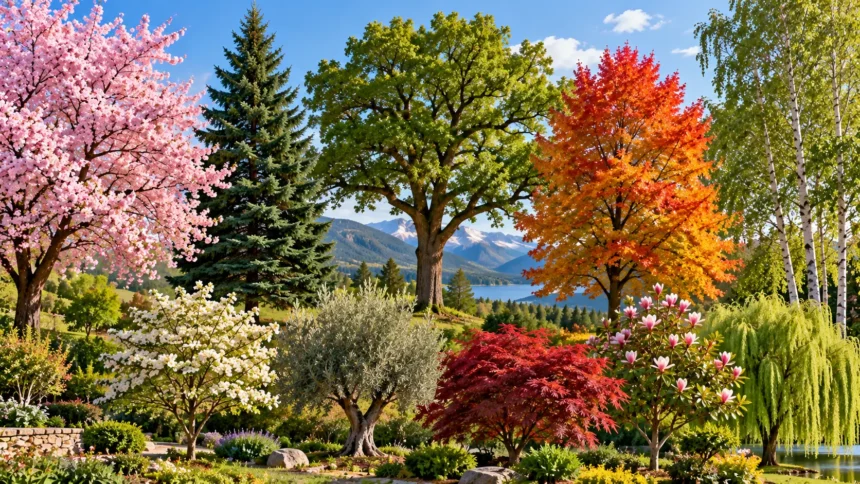
Trees are among the most important plants on Earth, providing oxygen, shade, wildlife habitats, and countless environmental benefits. They grow in forests, gardens, parks, mountains, and urban landscapes across different climates. From towering evergreen conifers to beautiful flowering trees, each species has distinctive characteristics. Understanding the different types of trees can help you appreciate nature and choose suitable varieties for landscaping.
There are thousands of tree species worldwide, and they differ in size, leaf shape, bark texture, growth patterns, and environmental requirements. Some trees lose their leaves during certain seasons, while others remain green throughout the year. Many produce colorful flowers, edible fruits, or valuable timber. These differences make trees essential components of natural ecosystems and designed landscapes.
This guide explores common types of trees, their identifying features, and their most important characteristics. You will discover deciduous trees, evergreen species, fruit-bearing varieties, and ornamental trees commonly grown around homes. Whether you are interested in gardening, landscaping, or learning about nature, these examples will help you recognize different tree varieties.
What Are Trees and How Are They Classified?
Trees are perennial plants that typically develop woody stems, branches, and an elevated crown of leaves. Unlike many smaller plants, trees can survive for decades or even centuries under suitable environmental conditions. Their roots absorb water and nutrients, while their leaves support photosynthesis. Trees play important roles in regulating ecosystems and providing habitats for wildlife.
Trees can be classified according to several characteristics, including their leaves, reproductive structures, growth habits, and botanical relationships. Two familiar categories are deciduous and evergreen trees. Deciduous species typically lose their leaves seasonally, while evergreen trees retain foliage throughout the year. However, both groups contain many unrelated species with different environmental requirements.
Botanical classification also distinguishes flowering plants, known as angiosperms, from gymnosperms such as pines and many other conifers. These classifications are not interchangeable with deciduous and evergreen categories. For example, some conifers lose their needles seasonally. Understanding these overlapping characteristics makes identifying different trees easier and more accurate.
Deciduous Trees: Common Features and Examples
Deciduous trees are known for shedding their leaves during a particular season. In temperate climates, this usually happens during autumn as temperatures decline and daylight decreases. In some tropical climates, trees lose leaves during dry periods instead. Seasonal leaf loss helps trees respond to environmental conditions and conserve resources.
Oak, maple, birch, and many elm trees are familiar examples of deciduous species. Their leaves often change color before falling, creating beautiful autumn landscapes in suitable regions. During winter, their exposed branches reveal distinctive shapes and branching patterns. These features make deciduous trees attractive for parks, streets, and residential gardens.
Deciduous trees can provide useful seasonal shade in landscaped spaces. Their leafy crowns may reduce direct sunlight during warmer months, while bare branches allow more light through during winter. However, their suitability depends on climate, mature size, and planting location. Choosing appropriate species helps ensure healthy growth and manageable maintenance.
Evergreen Trees: Varieties That Stay Green Year-Round
Evergreen trees retain living foliage throughout the year, although individual leaves or needles are still replaced over time. They are commonly associated with conifers, but many broadleaf trees are also evergreen. Their continuous foliage provides year-round greenery and shelter for wildlife. Evergreen species occur in tropical, temperate, and other suitable environments.
Pine, spruce, fir, and many cedar species are familiar evergreen conifers. Broadleaf evergreens include certain magnolias, hollies, and eucalyptus trees. Their leaf structures vary considerably depending on climate and species. Some have narrow needles, while others produce broad, leathery leaves that remain attached for extended periods.
Evergreen trees are popular in landscaping because they provide consistent visual structure throughout the seasons. They can be useful for privacy screens, windbreaks, and decorative planting. However, mature height, root spread, and local environmental conditions should influence species selection. Not every evergreen variety is suitable for every climate or garden.
Oak Trees: Strong and Long-Living Hardwood Varieties
Oak trees belong to the genus Quercus and are among the most recognizable hardwood trees. They are known for their sturdy trunks, broad crowns, and distinctive acorns. Oak species grow across different regions of the Northern Hemisphere and beyond through cultivation. Their appearance varies, with some producing deeply lobed leaves and others having smoother leaf margins.
White oak and red oak are common examples in North America. White oak trees often develop broad canopies and can live for centuries under suitable conditions. Red oak species are valued for relatively rapid growth and attractive autumn foliage. Different oaks also vary in their tolerance of soil conditions, moisture, and temperature.
Oak trees support numerous insects, birds, and mammals through their leaves, branches, and acorns. Their extensive crowns can provide excellent shade in large landscapes. However, mature specimens require significant space for branches and roots. Selecting an oak appropriate for the local environment can provide long-term ecological and landscaping benefits.
Maple Trees: Beautiful Leaves and Autumn Colors
Maple trees belong to the genus Acer and are famous for their recognizable leaves and colorful autumn displays. Many species have leaves with three to five prominent lobes, although shapes vary. Maples grow in different temperate regions and are widely planted in parks and gardens. Their attractive foliage makes them popular ornamental and shade trees.
Sugar maple is well known for its association with maple syrup production and brilliant autumn colors. Red maple is another familiar species, often displaying red or orange foliage during fall. Japanese maple is especially valued for its decorative leaf shapes and compact growth forms. Each species has different sunlight, soil, and moisture requirements.
Maple trees can be excellent landscaping choices when planted in suitable conditions. Larger varieties provide shade, while smaller ornamental selections complement courtyards and gardens. Some maples have relatively shallow roots that may compete with nearby plants. Understanding the mature size and growth pattern helps homeowners select appropriate varieties.
Pine Trees: Needle-Leaved Conifers for Different Climates
Pine trees belong to the genus Pinus and are common conifers found across many regions of the Northern Hemisphere. Most pines remain evergreen and produce long, narrow needles arranged in bundles. They also develop woody cones containing seeds. Their distinctive appearance makes them easy to recognize in forests, mountains, and landscaped environments.
Eastern white pine, Scots pine, and ponderosa pine are familiar examples of pine species. Eastern white pine typically has soft needles grouped in bundles of five. Scots pine is recognized for its distinctive bark and needle characteristics. Ponderosa pine can become exceptionally tall and is associated with forests across western North America.
Pine trees provide valuable wildlife habitats and are important sources of timber and other forest products. Their evergreen foliage also makes selected species useful for windbreaks and landscape screening. However, pine varieties differ in their tolerance of heat, drought, and soil conditions. Proper species selection is essential for healthy long-term growth.
Birch Trees: Elegant Trunks and Distinctive Bark
Birch trees belong to the genus Betula and are admired for their slender trunks and attractive bark. Many species display white, silver, or pale-colored bark that creates a distinctive appearance. Their relatively delicate leaves often turn yellow during autumn. Birches are especially common in cooler regions of the Northern Hemisphere.
Silver birch is one of the best-known species, recognized for its pale bark and graceful branching pattern. Paper birch is another familiar variety, with bark that often peels in thin layers. River birch differs by featuring attractive exfoliating bark in warmer brown or reddish tones. Each species offers different landscape characteristics.
Birch trees are often planted as ornamental specimens because of their beautiful trunks and relatively open crowns. Many varieties prefer consistent moisture and suitable soil conditions. Some species can become stressed in climates that are excessively hot or dry. Choosing a birch adapted to local conditions helps preserve its appearance and vitality.
Willow Trees: Graceful Branches and Water-Loving Varieties
Willow trees belong to the genus Salix and are commonly associated with rivers, lakes, and other moist environments. Many species feature narrow leaves and flexible branches that create a graceful appearance. Some develop distinctive drooping canopies, particularly weeping willow varieties. Their attractive form makes them popular near large ponds and landscaped water features.
Weeping willow is one of the most recognizable ornamental types, known for branches that hang toward the ground. White willow and black willow are other familiar species with different growth habits. Willows generally grow relatively quickly when environmental conditions are favorable. Many species also tolerate moist soils better than typical landscape trees.
Willow trees can provide shade and attractive scenery in spacious outdoor environments. However, their root systems may extend widely in search of moisture, creating problems near vulnerable underground infrastructure. Their branches may also require periodic maintenance. Careful planting location is particularly important when considering willows for residential landscapes.
Cherry Blossom Trees: Stunning Spring Flowering Trees
Cherry blossom trees are among the most admired ornamental flowering trees worldwide. They belong mainly to flowering species and cultivars within the genus Prunus. Many produce clusters of delicate pink or white flowers during spring. Their beautiful seasonal displays make them popular in gardens, parks, and public landscapes.
Japanese flowering cherries are especially famous for their connection with traditional spring celebrations. Yoshino cherry produces pale blossoms and is widely planted as an ornamental tree. Kanzan cherry is known for its fuller pink flowers and decorative appearance. Flowering periods vary according to climate, weather conditions, and individual varieties.
Most ornamental cherry blossom trees are grown for flowers rather than edible fruit. They generally prefer suitable sunlight, well-drained soil, and adequate moisture during establishment. Some cultivars are vulnerable to pests, diseases, or environmental stress. Choosing locally adapted varieties and providing appropriate care can support attractive seasonal blooms.
Magnolia Trees: Large Flowers and Beautiful Foliage
Magnolia trees are well known for their impressive flowers, attractive leaves, and distinctive branching patterns. The genus Magnolia includes both deciduous and evergreen species. Flowers may appear white, pink, purple, or cream depending on the variety. Their ornamental beauty makes magnolias popular choices for residential gardens and public landscapes.
Southern magnolia is a familiar evergreen species valued for its glossy leaves and large white flowers. Saucer magnolia is a deciduous hybrid known for its beautiful pink and purple spring blossoms. Star magnolia is another ornamental selection with delicate, star-shaped flowers. These varieties differ in mature size, flowering time, and climate preferences.
Magnolias generally perform best when planted in conditions appropriate for the selected species. Some prefer sheltered locations that protect early flowers from late frosts. Others tolerate warmer climates and provide attractive foliage throughout the year. Allowing sufficient root and canopy space helps magnolia trees develop healthy shapes.
Palm Trees: Tropical and Subtropical Varieties
Palm trees belong to the Arecaceae family and are commonly associated with warm tropical and subtropical landscapes. They are recognizable for their distinctive leaf arrangements and often tall, unbranched trunks. Unlike typical broadleaf hardwood trees, palms have a different internal stem structure. Their appearance varies from compact ornamental palms to extremely tall species.
Coconut palms are famous for their tropical appearance and economically important fruits. Date palms are widely cultivated in dry, warm regions for their edible dates. Royal palms are appreciated for their elegant trunks and attractive crowns. Different palm species vary significantly in temperature tolerance, mature height, and moisture requirements.
Palm trees can create attractive landscaping features in climates where they grow successfully. However, not every palm tolerates frost, drought, or prolonged wet conditions. Some require considerable space, while smaller varieties are suitable for compact gardens. Understanding individual species requirements is essential before planting palms outdoors.
Fruit Trees: Common Varieties for Home Gardens
Fruit trees are cultivated for their edible produce and often provide attractive seasonal flowers. Popular examples include apple, pear, peach, orange, and mango trees. Their growth requirements vary considerably depending on climate and species. Choosing suitable varieties can provide both ornamental value and opportunities to harvest fresh fruit.
Apple and pear trees are commonly associated with temperate growing regions. Peach trees also require suitable seasonal conditions for productive growth. Citrus trees, including oranges and lemons, generally prefer warmer climates with protection from damaging frost. Mango trees thrive in many tropical and subtropical environments where temperatures remain favorable.
Growing fruit trees successfully requires attention to sunlight, soil drainage, watering, and pollination requirements. Some varieties need compatible neighboring trees to produce reliable fruit crops. Pruning and pest management may also be necessary according to the species. Local agricultural guidance can help gardeners select varieties suited to their growing conditions.
Fast-Growing Shade Trees for Landscaping
Fast-growing shade trees are popular among homeowners who want to establish attractive outdoor spaces relatively quickly. These trees develop larger crowns over shorter periods compared with slower-growing species. However, growth rate depends on climate, soil conditions, water availability, and tree health. Fast growth does not automatically mean a species is suitable for every property.
Certain maples, tulip trees, and hybrid poplars are commonly discussed as relatively fast-growing shade options. Their mature sizes and environmental requirements vary considerably. Some develop broad canopies that provide substantial shade, while others have narrower growth patterns. Selecting a species should involve considering available space and long-term maintenance.
Fast-growing trees may sometimes develop weaker branch structures or require more frequent care than slower-growing alternatives. Their roots can also become extensive as the tree matures. Planting decisions should consider nearby buildings, underground utilities, and local regulations. A well-matched shade tree can provide lasting environmental and landscaping benefits.
How to Choose the Right Tree for Your Garden
Choosing the right tree begins with understanding the environmental conditions of your property. Consider local climate, available sunlight, soil type, and drainage characteristics. Different tree species have different requirements for healthy growth. A variety that thrives in one region may struggle in another because of temperature or moisture differences.
Mature tree size is another essential factor when planning a garden. Small ornamental trees may suit compact spaces, while large shade trees require considerable room for their crowns and roots. Avoid planting large species too close to buildings, sidewalks, or underground services. Proper spacing helps reduce future maintenance difficulties and structural conflicts.
Gardeners should also consider their primary reasons for planting a tree. Some people want shade, while others prefer seasonal flowers, privacy, or edible fruit. Choosing native or locally adapted species can support regional wildlife and reduce certain maintenance challenges. Local nurseries and qualified arborists can provide useful guidance.
Conclusion
Trees are essential components of natural ecosystems and landscaped environments, offering shade, wildlife habitats, and remarkable visual beauty. Different types of trees vary in leaf structure, growth habits, flowering patterns, and environmental requirements. Deciduous varieties provide seasonal changes, while evergreens maintain foliage throughout the year. Understanding these characteristics makes tree identification and selection easier.
Common tree varieties such as oak, maple, pine, birch, and willow offer distinctive features and ecological benefits. Flowering trees, including magnolias and ornamental cherries, add seasonal color to gardens. Fruit trees provide additional practical value through edible harvests. Each species contributes something different to the surrounding environment.
Selecting suitable trees requires careful attention to climate, soil conditions, mature size, and long-term maintenance. Proper planting and ongoing care help trees develop healthy roots and attractive crowns. Choosing locally adapted species can also support biodiversity and environmental sustainability. With thoughtful planning, trees can remain valuable and beautiful parts of a landscape for generations.
Frequently Asked Questions
What are the main types of trees?
Trees are commonly grouped into deciduous and evergreen varieties. Botanical classifications also include angiosperms and gymnosperms. These categories describe different characteristics, including leaf retention and reproductive structures.
What are the most common tree species?
Common tree varieties include oak, maple, pine, birch, willow, cedar, and spruce. Their distribution varies by climate, geography, and growing conditions, with different species dominating different regions.
What is the difference between evergreen and deciduous trees?
Deciduous trees typically shed their leaves during a particular season, while evergreen trees retain living foliage throughout the year. Both categories contain many species with different growth requirements.
Which trees are best for providing shade?
Oak, maple, and tulip trees are popular shade choices where climate and available space are suitable. The best species depends on mature canopy size, soil conditions, and local environmental factors.
What are the best trees for a small garden?
Small ornamental maples, compact magnolias, and suitable flowering cherry cultivars can work well in smaller gardens. Choose varieties based on their mature dimensions, climate compatibility, and maintenance needs.
