

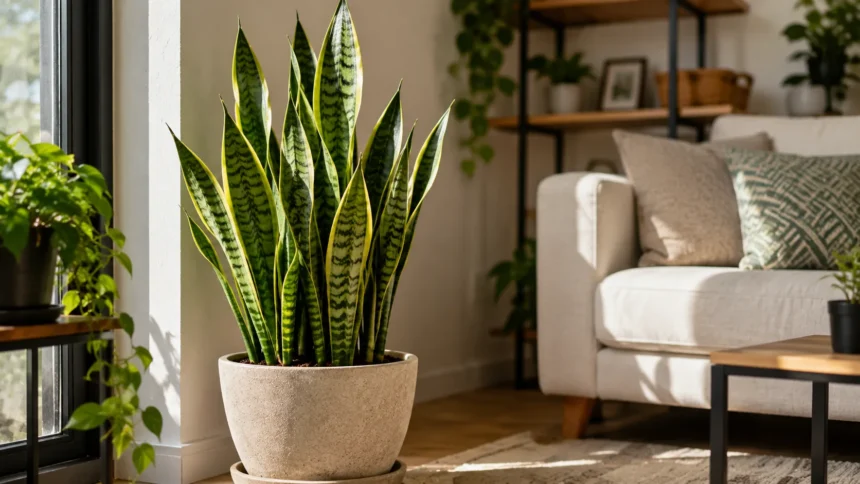
Snake Plant Care: 8 Tips for Healthy Growth
Snake plants are among the most forgiving houseplants you can grow, making them a favorite for beginners, busy plant owners, and anyone who wants attractive greenery without complicated maintenance. Their upright, sword-shaped leaves create a strong architectural look that works well in bedrooms, offices, living rooms, and entryways. Snake plants are commonly known by the older botanical name Sansevieria trifasciata, although they are now generally classified as Dracaena trifasciata. These hardy plants tolerate missed waterings, average indoor temperatures, and a surprisingly wide range of light conditions. However, being tough does not mean they are impossible to damage. Overwatering, poor drainage, cold temperatures, and prolonged darkness can still weaken an otherwise resilient plant.
Healthy snake plant growth depends less on constant attention and more on avoiding a few common mistakes. The thick leaves and underground rhizomes store water, allowing the plant to survive dry periods much better than consistently wet soil. Bright indirect light encourages stronger, faster growth, but snake plants can also remain alive in lower-light rooms. A well-draining potting mix and container with drainage holes are especially important because the roots are vulnerable to rot when moisture remains trapped. Feeding should be light, and repotting is usually needed only occasionally. Once these basic needs are understood, snake plant care becomes extremely straightforward.
Different snake plant varieties can have slightly different appearances, but their basic care requirements remain similar. Some grow tall with green-and-gray banded leaves, while others have yellow margins, silvery foliage, compact rosettes, or cylindrical leaves. Popular choices include Laurentii, Moonshine, Black Gold, Bird’s Nest, and several other cultivars sold as indoor plants. Their slow-to-moderate growth makes them useful in spaces where you do not want a plant quickly outgrowing its container. With appropriate light and careful watering, a snake plant can remain healthy for many years. The following eight snake plant care tips explain exactly how to help yours develop strong roots, upright leaves, and steady new growth.
Tip 1: Give Your Snake Plant the Right Light
Snake plants are famous for tolerating low light, but tolerance is different from preference. For the healthiest growth, place your snake plant where it receives plenty of bright, indirect light for several hours each day. An east-facing window can work particularly well because gentle morning sunlight provides useful energy without exposing the foliage to intense afternoon heat. A position a short distance from a bright south- or west-facing window may also be suitable. Plants receiving good light generally produce new leaves more frequently and maintain stronger coloration. Low-light plants may survive for long periods, but their growth usually becomes much slower.
Direct sunlight is not automatically harmful to snake plants, especially when exposure occurs during cooler morning hours. In fact, gradually acclimated plants can often tolerate some direct sun without difficulty. Problems arise when a snake plant that has been growing in shade is suddenly moved into several hours of intense midday sunlight. Leaves that developed under dimmer conditions can scorch, creating bleached, pale, or brown patches. If you want to move the plant into brighter conditions, increase its light exposure gradually over one or two weeks. This adjustment allows the foliage to adapt. Outdoor summer placement should also include protection from intense afternoon sun in very hot climates.
Snake plants can grow in lower-light rooms, which is one reason they are popular for offices and apartments. However, extremely dark corners are not ideal, even if photographs online suggest these plants can grow without meaningful light. Every green plant needs sufficient light for photosynthesis, and snake plants are no exception. A plant kept far from a window may remain alive by using stored energy while producing little new growth. Over time, the leaves may become weaker, narrower, or less colorful. If the room has very limited natural light, a simple grow light can provide the additional illumination needed for healthier growth.
Variegated snake plants usually benefit from brighter light than solid-green varieties because the yellow, cream, or pale sections contain less chlorophyll. A variety such as Laurentii may gradually lose some of its strong contrast if kept in very dim conditions for extended periods. Bright indirect light helps maintain attractive patterns and encourages balanced growth. However, variegated leaves can also be more sensitive to sudden intense sunlight. Position the plant where it receives substantial brightness without being baked by hot glass for hours. Observing leaf color and growth speed can help you determine whether the location is suitable.
Rotate your snake plant occasionally so all sides receive reasonably even light. Plants naturally lean or direct new growth toward the strongest light source, which can eventually make the overall shape appear uneven. Turning the pot about a quarter rotation every week or two can encourage a more balanced appearance. Rotation is especially useful for plants positioned directly beside a window where light reaches primarily one side. However, there is no need to rotate the plant daily or constantly move it around the room. Stable growing conditions with occasional adjustment are usually better than repeatedly changing its environment.
Tip 2: Water Less Often Than You Think
Overwatering is probably the most common reason snake plants decline indoors. Their thick leaves and rhizomes store moisture, allowing them to tolerate dry soil much better than constantly damp roots. Instead of watering on a fixed weekly schedule, wait until the potting mix has dried substantially before adding more water. Insert your finger several inches into the soil or use the weight of the pot to judge whether moisture remains. In many homes, the soil may need to become almost completely dry before watering again. The exact interval changes with light, temperature, container size, season, and potting mix.
When it is time to water, thoroughly moisten the soil rather than adding only a small splash to the surface. Pour water slowly until some drains from the holes at the bottom of the container. This approach moistens the root zone evenly and prevents roots near the bottom from remaining permanently dry. Afterward, empty any decorative saucer or outer pot that collects excess water. Never allow the inner container to sit in standing water for long periods. Snake plants prefer a cycle of thorough watering followed by substantial drying rather than small, frequent doses that keep the soil continuously damp.
Watering frequency should generally decrease during cooler or darker months because the plant uses moisture more slowly. A snake plant that needs watering every two or three weeks during bright summer conditions might remain moist much longer during winter. Continuing the same schedule year-round can therefore result in overwatering. Always check the soil rather than relying on the calendar. Indoor heating can sometimes dry pots faster, so actual conditions still matter more than season alone. The plant’s needs should determine the schedule, not an automatic reminder on your phone.
Signs of overwatering can include yellow leaves, soft or mushy bases, collapsing foliage, unpleasant soil odor, and brown areas that feel wet rather than crispy. A badly overwatered snake plant may develop root rot, causing healthy-looking leaves to loosen from the soil because the roots and rhizomes have begun decaying. If this happens, stop watering and inspect the root system. Healthy roots should feel firm rather than black, slimy, or mushy. Damaged material may need to be removed before the plant is repotted into fresh, dry, well-draining mix. Catching the problem early greatly improves the chances of recovery.
Underwatering is less common but still possible, particularly when plants are forgotten for several months in bright or hot conditions. Severely dry snake plants may develop wrinkled, curling, folded, or unusually thin leaves. Brown crispy edges can also appear after prolonged dehydration. When soil has become extremely dry and pulled away from the sides of the pot, water may immediately run through without soaking the root ball. In that situation, water slowly in several passes until the mix absorbs moisture properly. Return to normal drying cycles afterward instead of compensating with constant watering.
Tip 3: Use Fast-Draining Soil and the Right Pot
Snake plant roots perform best in a loose potting mix that drains quickly and allows air to reach the root system. Standard heavy houseplant soil may hold more moisture than necessary, particularly in dim indoor conditions. A mix designed for succulents or cacti can provide a useful starting point because it generally drains faster than moisture-retentive tropical potting soil. Some growers improve ordinary potting mix with materials such as perlite, pumice, or coarse mineral components. The exact recipe is less important than the final behavior of the soil. Water should move through the container without leaving the root zone saturated for many days.
Drainage holes are one of the most important features of a snake plant container. A beautiful decorative pot without an opening can easily trap water around the roots even when you believe you are watering carefully. One solution is keeping the plant in a plastic nursery pot with drainage and placing that container inside a decorative outer pot. Remove the inner pot when watering and allow it to drain completely before returning it. Alternatively, choose a decorative planter that already contains one or more suitable drainage holes. Good drainage gives you a much larger margin for error with watering.
Terracotta pots can work particularly well for snake plants because the porous material allows some moisture to evaporate through the sides of the container. This can be helpful for plant owners who tend to water too frequently. However, terracotta also dries faster, meaning plants in bright, warm rooms may require somewhat more frequent checking. Glazed ceramic and plastic containers retain moisture longer and can still work perfectly when the soil is well draining. Pot material is therefore less important than understanding how quickly your particular combination of soil and container dries. Adjust watering based on actual moisture conditions.
Do not place a small snake plant into an unnecessarily enormous container. Oversized pots contain much more soil than the roots can use, and that extra soil may remain wet for a long time after watering. Snake plants generally tolerate being somewhat snug in their containers and often grow well when slightly root-bound. When moving to a larger pot, choose one only about one or two inches wider than the existing container. This provides additional room without surrounding the plant with excessive wet soil. Gradual increases in pot size are safer than jumping immediately to a very large planter.
The container should also be stable enough to support tall foliage. Mature snake plants can become top-heavy, particularly varieties with leaves several feet long. A lightweight plastic pot may tip easily if the plant is placed in a busy walkway or exposed to outdoor wind. Heavier ceramic or terracotta containers can provide better stability for tall specimens. However, extremely heavy pots become difficult to move during cleaning or repotting. Select a container that balances drainage, stability, and practicality for the location where the snake plant will grow.
Tip 4: Keep Temperatures Warm and Stable
Snake plants prefer warm indoor conditions similar to the temperatures people generally find comfortable. A range around 60°F to 85°F works well for most indoor plants, with steady conditions being more important than maintaining one exact number. They tolerate ordinary household warmth without needing specialized heating equipment. Growth may slow when temperatures become cooler, especially if light levels are also low. Very cold conditions are much more dangerous than normal indoor warmth. Protecting the plant from sudden temperature drops helps prevent leaf and root damage.
Cold drafts can cause serious problems because snake plants originate from warmer environments and are not frost-tolerant houseplants. Avoid placing them directly beside frequently opened winter doors, poorly insulated windows, or air-conditioning vents that blast cold air onto the leaves. Temperatures below roughly 50°F for extended periods can stress many common snake plant varieties. Frost can damage foliage quickly, causing water-soaked patches that later turn brown or black. Plants kept outdoors during summer should be brought inside before cold autumn nights become frequent. Do not wait for the first freeze to begin moving them.
Heat is generally easier for snake plants to tolerate than cold, provided the plant has appropriate light and water. However, extreme heat can cause soil to dry faster and may scorch leaves when combined with strong direct sun. Keep pots away from radiators, fireplaces, heating vents, and other locations where foliage becomes unusually hot. A plant sitting directly against sun-heated glass can also experience temperatures much higher than the room itself. During heat waves, check soil moisture somewhat more frequently. Avoid automatically increasing watering unless the potting mix is genuinely dry.
Humidity is not a major challenge for snake plants compared with tropical houseplants such as calatheas or many ferns. Average household humidity is generally sufficient, so routine misting is unnecessary. In fact, repeatedly wetting the leaves can create problems when water collects inside dense rosettes or remains on foliage in cool conditions. Snake plants are adapted to handling relatively dry air and usually do not require a humidifier. This tolerance makes them particularly convenient for heated or air-conditioned homes. Focus more on correct soil moisture than on trying to maintain tropical humidity levels.
Good air circulation can further support healthy growth, especially when several houseplants are grouped closely together. Air movement helps moisture evaporate from the soil and leaf surfaces and can reduce stagnant conditions around the plant. You do not need to place a powerful fan directly beside the snake plant. Normal household airflow is generally adequate. Avoid squeezing the plant tightly between furniture where the leaves are repeatedly bent or damaged. A stable, warm location with reasonable airflow and sufficient light provides an excellent environment for long-term growth.
Tip 5: Fertilize Lightly During Active Growth
Snake plants are not heavy feeders, so they do not require frequent fertilizer applications to remain healthy. In fact, overfertilizing can damage the roots and create brown leaf edges or excessive salt buildup in the soil. During spring and summer, when the plant is actively producing new leaves or shoots, a diluted balanced houseplant fertilizer can provide adequate nutrition. Follow the product label and consider using a weaker concentration rather than assuming stronger feeding will create faster growth. Snake plants evolved to grow under relatively lean conditions. Moderate nutrition supports healthier growth than constant heavy fertilization.
A liquid houseplant fertilizer is convenient because it can be diluted and applied during normal watering. Depending on the product, feeding every four to eight weeks during active growth may be sufficient. Slow-release fertilizer can also work when used carefully according to package directions. Avoid combining several fertilizer types at the same time because nutrients can accumulate unexpectedly. More fertilizer does not automatically produce larger leaves or more new shoots. Light, healthy roots, and appropriate watering have a much greater influence on overall growth.
Fertilizing should generally be reduced or stopped during winter when indoor light levels are lower and growth slows. Feeding a plant that is barely growing does not provide much benefit because the roots cannot use nutrients at the same rate. Excess fertilizer salts can then remain in the potting mix and potentially damage the root system. Resume feeding when you notice active spring growth or stronger seasonal light. Plants grown under powerful grow lights year-round may continue growing longer than those relying entirely on windows. Adjust feeding according to actual growth rather than following a rigid seasonal rule.
White or crusty deposits on the soil surface or pot rim can indicate mineral or fertilizer salt accumulation. This buildup may become more common when plants are frequently fertilized or watered with mineral-rich water. Occasionally flushing the potting mix can help by allowing a generous amount of water to flow completely through the container and carry soluble salts away. Make sure drainage is excellent before doing this. If buildup is severe, replacing some or all of the potting mix may be appropriate. Reducing fertilizer afterward can prevent the problem from quickly returning.
Do not fertilize a snake plant that is already suffering from root rot, severe overwatering, major pest damage, or another serious stress. Fertilizer cannot repair diseased roots and may make the situation worse. First identify and correct the environmental problem, then allow the plant time to recover. Once new healthy growth appears, gentle feeding can resume during the appropriate season. The same principle applies after repotting into fresh commercial soil because many potting mixes already contain nutrients. Waiting several weeks before adding additional fertilizer can help prevent unnecessary overfeeding.
Tip 6: Repot Only When Your Snake Plant Needs It
Snake plants grow relatively slowly and usually do not require annual repotting. Many specimens are perfectly comfortable remaining in the same container for two or three years, sometimes longer depending on growth rate and pot size. Signs that repotting may be needed include roots emerging from drainage holes, rhizomes pressing strongly against the pot, unusually rapid drying, or the container becoming visibly distorted. A mature plant may also become top-heavy and unstable as additional shoots fill the pot. Repotting should solve a genuine space or soil problem rather than being performed simply because another year has passed. Snake plants often appreciate being slightly snug.
Spring or early summer is generally a convenient time to repot because the plant is entering active growth and can recover quickly from root disturbance. Water lightly a few days beforehand if the soil is extremely dry, but avoid working with soaking-wet potting mix. Gently remove the plant from the container and examine the roots and rhizomes. Healthy underground growth should feel firm and generally appear pale, tan, yellowish, or orange depending on the plant and soil conditions. Remove only genuinely dead or rotting tissue. Healthy roots do not need aggressive trimming simply to fit into the new container.
Choose a new pot only slightly wider than the old one. An increase of about one to two inches in diameter is often enough for a typical houseplant-sized snake plant. Fill around the root ball with fresh, well-draining potting mix while maintaining approximately the same planting depth. Do not bury the leaf bases deeply because excess moisture around the crown can encourage rot. Firm the soil gently enough to support the plant without compressing it heavily. Leave some space at the top of the container so watering does not immediately overflow.
Repotting is also a good opportunity to divide an oversized snake plant. Rhizomes naturally produce new shoots, eventually forming dense clusters throughout the container. If you want several smaller plants, carefully separate sections so each division has healthy roots, a portion of rhizome, and at least one strong shoot. Use a clean, sharp knife if the rhizomes cannot be separated by hand. Allow freshly cut surfaces to dry briefly before planting when appropriate. Division maintains the original appearance of variegated cultivars better than some forms of leaf propagation.
After repotting, avoid overreacting if growth pauses temporarily. Root disturbance can cause a short adjustment period even when the plant was handled carefully. Place the repotted snake plant in bright indirect light and avoid immediately saturating the soil repeatedly. If the roots were healthy and the new mix is only slightly moist, waiting several days before a thorough watering can sometimes be appropriate. Do not fertilize heavily right away. Stable conditions allow the roots to settle into their new environment and resume normal growth naturally.
Tip 7: Watch for Pests and Common Snake Plant Problems
Snake plants are relatively resistant to pests, but they are not completely immune. Mealybugs, spider mites, scale insects, and occasionally thrips can attack stressed indoor plants. Inspect the leaf bases, undersides, and narrow areas where pests can hide, particularly when bringing a new plant into your home. Mealybugs often appear as small white cottony clusters, while scale can resemble brown or tan bumps attached firmly to leaves. Spider mites may create pale speckling or fine webbing. Catching an infestation early makes it much easier to manage before pests spread to other houseplants.
Isolate an affected snake plant from your collection while identifying and treating the pest. Light infestations can sometimes be reduced by wiping leaves carefully or washing pests away. Insecticidal soap or horticultural products labeled for indoor ornamental plants may also be useful when applied exactly as directed. Repeat treatment may be necessary because eggs or immature insects can survive the first application. Inspect nearby plants because pests often move between pots positioned close together. Avoid automatically applying strong pesticides when you have not identified the pest, because unnecessary treatments can damage plants and complicate the problem.
Root rot remains much more common than insect damage in snake plants. Symptoms can include yellowing foliage, mushy leaf bases, collapsing leaves, soft rhizomes, and persistently wet soil with an unpleasant smell. Remove the plant from its container and cut away rotting roots or rhizomes using clean tools. Healthy sections can sometimes be saved and repotted into fresh, dry, fast-draining soil. Reduce watering frequency afterward and ensure the container has open drainage holes. The most effective treatment for root rot is preventing the soil from remaining wet for extended periods.
Brown leaf tips can develop from several different types of stress. Long periods without water, excess fertilizer salts, physical damage, severe heat, cold drafts, or inconsistent care may all contribute. Once a leaf tip has turned brown, that damaged tissue will not become green again. You can trim the dry portion for appearance using clean scissors while following the natural shape of the leaf. More importantly, determine why the damage occurred so new leaves remain healthy. A single brown tip is usually not an emergency, especially on an older plant.
Leaning, bent, or floppy leaves can result from insufficient light, physical injury, root problems, or naturally aging foliage. Move a low-light plant gradually into brighter conditions if new leaves are becoming unusually narrow and weak. Leaves that have been permanently creased usually will not straighten completely because their internal structure has been damaged. Severely damaged foliage can be removed close to the soil if necessary. However, do not cut healthy leaves merely because they are not perfectly vertical. Snake plants naturally develop some variation in leaf direction as the clump matures.
Tip 8: Propagate Snake Plants for More Healthy Growth
Division is one of the easiest and most reliable methods of propagating snake plants. Mature plants produce underground rhizomes that send up new shoots, eventually creating multiple connected growth points inside the same container. During repotting, gently separate a section containing roots, rhizome, and healthy leaves from the parent plant. Use a clean knife when the underground stems are too strong to pull apart safely. Plant the division in a small pot containing well-draining mix. Because the new plant already has roots, it can usually establish more quickly than a leaf cutting.
Leaf cuttings provide another popular propagation method. Choose a healthy mature leaf and cut it near the base using a clean blade. The leaf can then be divided into sections several inches long, but it is important to remember which end originally faced downward. Allow the cut sections to dry and form a slight callus before placing the bottom ends into suitable potting mix. Keep the soil only lightly moist rather than wet. New roots and shoots can take several weeks or even months to appear, so patience is essential.
Snake plant leaf cuttings can also be rooted in water, which allows you to watch roots develop. Place the lower part of the cutting in a clean container with only enough water to cover the cut end. Keep most of the leaf above water and change the water periodically to prevent stagnation. Place the container in bright indirect light while roots form. Once a reasonable root system develops, transfer the cutting into a small pot of fast-draining soil. The transition from water to soil should be handled gently because newly formed roots can be delicate.
Variegated snake plants may lose their distinctive leaf pattern when propagated from leaf cuttings. For example, a yellow-edged Laurentii cutting may produce new shoots that are largely or completely green. This happens because leaf propagation does not always preserve the genetic or cellular arrangement responsible for variegation. If maintaining the exact color pattern is important, division is the better propagation method. Each divided shoot already contains the characteristics of the parent growth. This is an important consideration when propagating rare or highly decorative cultivars.
Newly propagated snake plants should not be treated exactly like established mature specimens. Their smaller root systems make them more vulnerable to both prolonged drought and excess moisture. Keep them in bright indirect light and monitor the soil carefully while roots establish. Avoid strong fertilizer until you see active new growth. New shoots are one of the clearest signs that propagation has succeeded and the underground system is developing. Once the young plant becomes established, it can gradually transition to the same low-maintenance care routine as a mature snake plant.
FAQs About Snake Plant Care
How often should I water a snake plant?
Allow the potting mix to dry substantially before watering again, then water thoroughly and let excess moisture drain away. Depending on light, temperature, season, and pot size, this may mean watering every couple of weeks or considerably less often.
Can snake plants survive in low light?
Yes, snake plants can tolerate lower light better than many houseplants, but they usually grow faster and stronger in bright indirect light. Extremely dark conditions can slow growth significantly and may weaken the plant over time.
Why are my snake plant leaves turning yellow?
Yellow leaves are commonly associated with overwatering, poor drainage, or root rot, although cold stress and natural aging can also contribute. Check the soil and roots before adding more water or fertilizer.
Do snake plants need fertilizer?
Snake plants benefit from light feeding during active spring and summer growth but do not require heavy fertilization. A diluted balanced houseplant fertilizer applied occasionally is usually sufficient.
Are snake plants safe for pets?
Snake plants contain compounds that can cause digestive upset if cats or dogs chew or swallow them. Keep the plant out of reach of pets that regularly bite houseplants, and contact a veterinarian if significant ingestion occurs.