

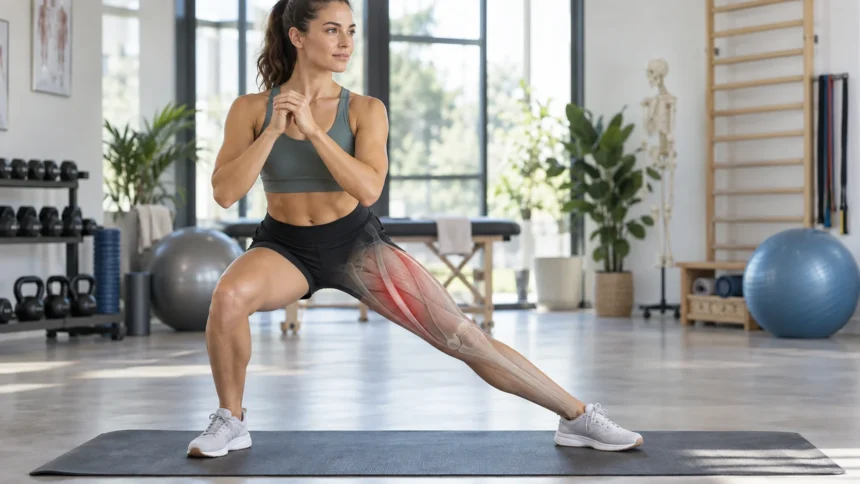
The gracilis muscle is a long, thin muscle that runs along the inner thigh. Although it is not as large as some other hip or leg muscles, it plays an important role in bringing the thigh toward the body, assisting knee movement, and supporting coordinated lower-body motion. It also crosses both the hip and knee joints, giving it several different functions.
Most people rarely think about the gracilis until they experience inner-thigh tightness, groin discomfort, or difficulty with certain movements. Athletes may notice it during running, kicking, cutting, or changing direction, while others may feel tension after suddenly increasing exercise intensity. Understanding its location and function makes it easier to appreciate how this relatively small muscle contributes to everyday movement.
The gracilis works alongside the other hip adductors, hamstrings, quadriceps, glutes, and core muscles rather than functioning alone. Healthy movement depends on these structures coordinating efficiently. This guide explains gracilis anatomy, its main functions, common causes of discomfort, useful strengthening and stretching exercises, and when inner-thigh symptoms may need professional evaluation.
Where Is the Gracilis Muscle Located?
The gracilis is located on the medial, or inner, side of the thigh. It begins near the front portion of the pelvis and travels down the inside of the leg before crossing the knee. Because it is superficial compared with some deeper adductor muscles, its general path can often be understood by tracing the inner thigh toward the upper inside portion of the shin.
Unlike several other hip adductors, the gracilis crosses both the hip and knee joints. This allows it to influence movement at two different areas of the lower body. Its long, strap-like shape also distinguishes it from broader inner-thigh muscles such as the adductor magnus and adductor longus.
The muscle lies close to other important structures, including adductor muscles, blood vessels, nerves, and connective tissues. Pain in the inner thigh therefore does not automatically mean the gracilis is responsible. A proper assessment may be needed when symptoms are severe, persistent, or difficult to connect with a specific movement or training event.
Gracilis Origin and Insertion Explained
The gracilis originates from the lower part of the pubic region of the pelvis. From there, its fibers travel almost vertically down the inside of the thigh. This relatively direct path allows the muscle to contribute to pulling the thigh inward while also influencing the knee because the tendon continues below the joint.
At the lower end, the gracilis attaches to the medial surface of the upper tibia. Its tendon joins the tendons of the sartorius and semitendinosus muscles in an area commonly called the pes anserinus. This shared attachment is positioned on the inner side of the shin just below the knee joint.
Understanding these attachments helps explain why gracilis problems can sometimes produce symptoms near both the groin and knee. A muscle that crosses two joints experiences tension during several different movements. Hip position, knee position, running mechanics, and sudden changes of direction can therefore all influence how much stress the gracilis receives.
What Does the Gracilis Muscle Do?
One of the gracilis muscle’s primary functions is hip adduction, which means bringing the thigh toward the midline of the body. This happens when you pull your legs together after stepping sideways or control the leg during certain sporting movements. Other adductor muscles contribute more force, but the gracilis supports the overall movement.
Because the muscle crosses the knee, it also assists with knee flexion. When the knee is bent, the gracilis can contribute modestly to rotating the lower leg inward. These actions are usually performed alongside other muscles rather than by the gracilis alone, especially during walking, running, squatting, and athletic activity.
Its role is therefore best understood as part of coordinated lower-body movement. The gracilis helps control the relationship between the pelvis, thigh, knee, and shin. This makes it relevant to balance, direction changes, stabilizing the inner thigh, and movements where the hip and knee need to work together smoothly.
How the Gracilis Works With Other Muscles
The gracilis belongs to the group of muscles commonly called the hip adductors. These include the adductor longus, adductor brevis, adductor magnus, and pectineus, along with the gracilis. Together, they help bring the leg toward the midline and control the thigh during walking, running, cutting, and other lower-body movements.
The gracilis also coordinates with muscles around the knee. The hamstrings assist knee flexion, while the quadriceps control extension and help stabilize the joint. The glutes, especially the gluteus medius and maximus, help control hip position so the adductors do not have to manage every movement or stability demand by themselves.
Core stability also influences lower-body control. Muscles such as the oblique muscles help manage trunk and pelvic position while the hips and legs move. Strong coordination between the core, hips, and thighs can make activities such as running, lifting, and changing direction feel more controlled and efficient.
Common Causes of Gracilis Muscle Pain
Gracilis discomfort can occur after sudden stretching or forceful contraction of the inner thigh. Sprinting, kicking, sliding, changing direction, or performing a wide lateral movement can place significant stress on the adductor region. A rapid increase in training volume may also irritate the muscle, particularly when the body has not adapted to the new workload.
Repetitive activity can create symptoms more gradually. Runners, football players, dancers, and athletes involved in multidirectional sports may develop inner-thigh soreness after repeated loading. Poor recovery, fatigue, limited strength, and sudden changes in exercise intensity can all increase the amount of stress experienced by the surrounding adductor muscles.
However, groin pain has many possible causes. Hip joint problems, tendon irritation, hernias, abdominal issues, and other conditions can produce discomfort in a similar region. If pain is severe, unexplained, persistent, or associated with swelling, weakness, fever, or another concerning symptom, medical evaluation is more appropriate than assuming it is a gracilis strain.
Signs of a Gracilis Strain
A mild strain may cause localized soreness or tenderness along the inner thigh. You may notice discomfort when squeezing your legs together, stretching the groin, running, or moving quickly from side to side. Some people can continue normal walking comfortably while finding faster or more powerful movements noticeably painful.
A more significant strain can produce sharper pain and greater difficulty with everyday movement. Swelling, bruising, weakness, or pain during walking may occur when more muscle fibers are involved. Symptoms may begin suddenly during exercise, sometimes creating a clear moment when the person knows something in the inner thigh was injured.
Severe pain, extensive bruising, inability to bear weight normally, or a noticeable loss of strength deserves professional assessment. A clinician can determine whether symptoms involve muscle, tendon, hip, knee, or another nearby structure. Early evaluation can also help guide rehabilitation and reduce the chance of returning to sport before the tissue is ready.
How to Stretch the Gracilis Safely
A gentle seated groin stretch can target the inner-thigh region. Sit with the soles of your feet together and allow your knees to move outward comfortably. Keep your spine relatively tall and lean forward slightly only until you feel mild tension through the inner thighs rather than pushing aggressively toward the floor.
A wide-stance side shift is another useful option. Stand with your feet comfortably apart, bend one knee, and move your hips toward that side while keeping the opposite leg straighter. You should feel a gentle stretch along the inner thigh of the extended leg without sharp pain in the groin or knee.
Stretching should feel controlled and comfortable, particularly if the muscle has recently been irritated. Forcing a deep stretch into painful tissue can worsen symptoms rather than speed recovery. Hold stretches gently, breathe normally, and avoid bouncing. If pain continues or increases, stop and consider whether the area needs rest or professional guidance instead.
Best Exercises for Strengthening the Gracilis
Adductor squeezes provide a simple starting point. Lie or sit comfortably with a soft ball or folded pillow between your knees, then squeeze inward gently for several seconds before relaxing. This creates an isometric contraction of the inner-thigh muscles without requiring large ranges of motion or heavy resistance.
Side-lying hip adduction can add more direct strengthening. Lie on one side, position the top leg out of the way, and slowly lift the lower leg a short distance from the floor. Keep the movement controlled and avoid rolling the pelvis backward. A small range performed correctly is more useful than swinging the leg for extra height.
More advanced training can include Copenhagen plank variations, lateral lunges, sliding adduction exercises, and multidirectional strength work. These movements should be introduced gradually because they can place substantial demand on the adductors. Build basic strength first, then progress resistance and range only when the exercises can be performed comfortably and with stable technique.
Gracilis Muscle and Knee Function
Because the gracilis crosses the knee, it contributes modestly to knee flexion and inward rotation of the lower leg when the knee is bent. Its tendon also forms part of the pes anserinus region with the sartorius and semitendinosus tendons. This location explains why the gracilis can sometimes be discussed in relation to inner-knee discomfort.
Pain near the pes anserinus does not automatically mean the gracilis itself is injured. Several tendons and a nearby bursa occupy the same region, and symptoms can be influenced by training volume, running, repeated stairs, or other lower-body activities. Accurate diagnosis becomes especially important when inner-knee discomfort persists.
Strengthening the hips, thighs, and lower legs generally provides a more balanced approach than trying to isolate the gracilis completely. Knee function depends on multiple muscles controlling movement together. Gradual training, appropriate footwear where relevant, and sensible progression of running or exercise volume can all support healthier lower-body loading.
Gracilis Tightness and Mobility
People sometimes describe the gracilis or inner thigh as “tight” when they feel restriction during wide stances, side lunges, or stretches. That sensation does not always mean the muscle is physically shortened. Fatigue, unfamiliar loading, joint mobility, nervous system sensitivity, and surrounding muscle tension can all influence how tight an area feels.
Stretching may provide temporary relief when general stiffness is present, but strengthening is also important. Muscles need the capacity to produce and control force throughout useful ranges of motion. Combining gentle mobility with progressive resistance training may therefore be more helpful than repeatedly stretching the inner thigh without improving its strength.
Avoid comparing your range of motion with someone else’s. Hip anatomy differs between individuals, and not everyone should achieve the same depth in wide-leg positions. Work within a comfortable range and focus on gradual improvement. Painful stretching or forcing extreme flexibility is unnecessary for most fitness, running, or everyday movement goals.
When to See a Healthcare Professional
Mild inner-thigh soreness after unfamiliar exercise often improves with time, reduced intensity, and gradual return to activity. Medical evaluation becomes more important when pain is severe, worsening, or prevents normal walking. Significant swelling, extensive bruising, or weakness following a sudden injury can also indicate a more substantial strain.
Seek prompt medical attention when groin pain is accompanied by symptoms that do not fit a simple muscle injury. These may include a noticeable bulge, fever, severe abdominal symptoms, numbness, sudden testicular pain, or pain after major trauma. Groin discomfort can occasionally come from conditions requiring treatment beyond exercise modification.
Persistent symptoms should also be evaluated even if they began during training. A physical therapist, sports medicine clinician, or other qualified professional can assess the hip, pelvis, knee, strength, range of motion, and movement patterns. This can help identify the likely source and create a rehabilitation plan appropriate to your specific situation.
Conclusion
The gracilis is a long, thin muscle running from the pelvis down the inner thigh to the upper tibia. It contributes to hip adduction, knee flexion, and inward rotation of the lower leg while working alongside several other muscles. Its two-joint anatomy gives it a useful role in both hip and knee movement.
Keeping the gracilis healthy requires more than stretching the inner thigh. Progressive strengthening, balanced lower-body training, sensible workload increases, and adequate recovery can help the muscle tolerate everyday and athletic demands. Exercises such as adductor squeezes, side-lying adduction, and gradually progressed lateral movements can develop useful strength.
Inner-thigh or groin pain should not automatically be blamed on the gracilis because many nearby structures can produce similar symptoms. Mild soreness may settle with conservative activity modification, but persistent, severe, or unusual pain deserves professional assessment. Understanding the muscle’s anatomy can help you train intelligently while recognizing when symptoms need closer attention.
FAQs
Where is the gracilis muscle located?
The gracilis runs along the inner thigh from the lower pubic region of the pelvis to the upper inner tibia. It crosses both the hip and knee joints.
What is the main function of the gracilis?
The gracilis helps bring the thigh toward the body’s midline, assists knee flexion, and contributes to inward rotation of the lower leg when the knee is bent.
What does a strained gracilis feel like?
A gracilis strain may cause inner-thigh or groin pain, tenderness, weakness, or discomfort when squeezing the legs together. More significant strains can also produce bruising, swelling, or difficulty walking.
How do you strengthen the gracilis muscle?
Adductor squeezes, side-lying leg lifts, controlled lateral lunges, and progressed Copenhagen plank variations can strengthen the inner thigh. Start with easier exercises and increase resistance gradually while maintaining pain-free technique.
Can gracilis problems cause inner-knee pain?
Yes, the gracilis tendon attaches near the inner knee as part of the pes anserinus region. However, several nearby structures can cause similar pain, so persistent symptoms should be properly assessed.
