

Why Are Bees Important to the Environment?
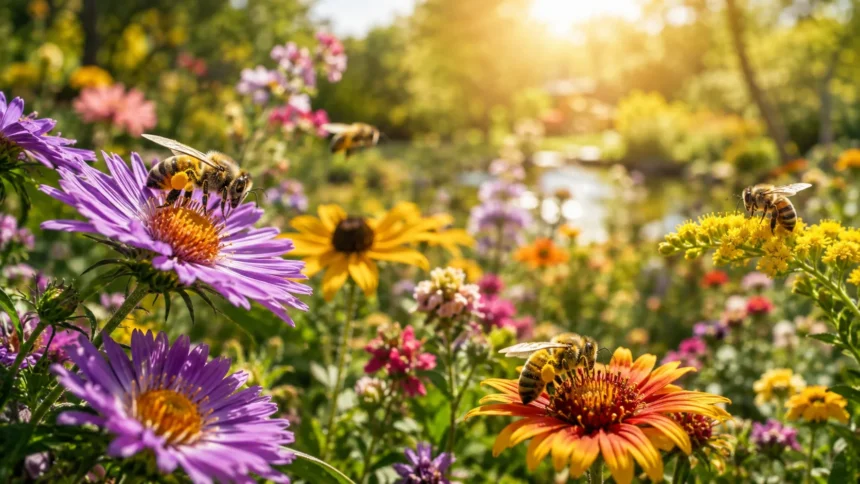
Bees are small insects with an enormous ecological role. As they move between flowers collecting nectar and pollen, they transfer pollen that allows many flowering plants to reproduce. This process, known as pollination, supports plant populations, wildlife habitats, agricultural crops, and many of the ecosystems people depend on every day.
Their importance reaches far beyond honey production. Thousands of bee species contribute to the reproduction of wild plants and crops in different habitats around the world. Honey bees are well known because they live in managed colonies, but native bees, including bumblebees, mason bees, and solitary bees, can also be highly effective pollinators.
Healthy bee populations contribute to biodiversity because flowering plants provide food and shelter for countless organisms. When plants successfully reproduce, they produce fruits, seeds, and new vegetation that feed birds, mammals, insects, and other wildlife. Bees therefore support connections that extend throughout entire food webs.
Understanding why bees are important to the environment also highlights why pollinator conservation matters. Habitat loss, reduced flower diversity, pesticide exposure, invasive species, diseases, and changing climate conditions can create challenges for different bee populations. Protecting pollinators means protecting many of the ecological processes connected to them.
What Do Bees Do for the Environment?
Bees are best known for pollination, the transfer of pollen from the male parts of flowers to structures involved in fertilization. When fertilization occurs successfully, flowering plants can produce seeds and, in many species, fruits. Bees perform this service while searching for nectar and pollen as food.
Plants cannot simply travel from one location to another to find reproductive partners. Many depend on animals to carry pollen between flowers, and bees are particularly effective because their bodies are adapted for gathering pollen. Tiny hairs can collect pollen grains as bees move across flowers.
Different bee species interact with different types of plants. Some are generalists that visit many flower species, while others have more specialized relationships with particular plants. This diversity of pollinators helps maintain plant reproduction across forests, meadows, farms, gardens, deserts, and urban environments.
By helping flowering plants reproduce, bees indirectly influence soil protection, wildlife habitat, carbon cycling, water systems, and food availability. Their environmental contribution therefore goes well beyond the individual flowers they visit. Pollination helps maintain the broader structure and resilience of many terrestrial ecosystems.
1. Bees Pollinate Flowering Plants
Pollination is the most important ecological service associated with bees. While feeding, bees regularly move between flowers and carry pollen on their bodies. Some of this pollen reaches another flower of the same species, where it can contribute to fertilization and seed production.
Many plants have evolved characteristics that encourage visits from pollinators. Bright colors, scents, nectar, flower shapes, and pollen rewards can all help attract bees. In return for food, the bee unintentionally provides the plant with a way to move reproductive material between flowers.
Not every flowering plant depends on bees because some use wind, water, birds, bats, butterflies, or other pollinators. Nevertheless, bees are among the most important animal pollinators and contribute to the reproduction of a remarkably diverse range of wild and cultivated plants.
Without effective pollination, some plant populations may produce fewer seeds and fruits. Over time, poor reproduction can affect plant abundance and genetic diversity. Protecting bee communities therefore supports not only individual flowers but also the long-term persistence of many flowering plant species.
2. Bees Help Maintain Biodiversity
Biodiversity describes the variety of living organisms within an ecosystem, including plants, animals, fungi, and microorganisms. Bees support biodiversity by pollinating many flowering plants, allowing those plants to reproduce and maintain populations across landscapes.
A diverse plant community creates many ecological opportunities. Different plants provide food, nesting materials, shelter, shade, and breeding spaces for different organisms. When pollination supports a wide variety of plants, it can indirectly support a wide variety of animals as well.
Bee diversity itself is also important. The word “bee” includes thousands of species with different body sizes, nesting habits, activity periods, flower preferences, and environmental requirements. A diverse pollinator community can provide more stable pollination across changing weather and flowering seasons.
Protecting biodiversity therefore means thinking beyond a single bee species. Honey bees are valuable, but wild and native bees are also essential components of natural ecosystems. Supporting multiple pollinator species helps maintain ecological relationships that have developed over long periods of evolutionary history.
3. Bees Support Food Production
Bees contribute significantly to agriculture by pollinating many crops that people eat. Fruits, vegetables, nuts, seeds, and other foods may benefit from or depend on animal pollination. Bees visit crop flowers while collecting food and can improve successful fertilization.
Pollination can influence more than whether a crop produces food at all. In some crops, effective pollination can affect fruit size, shape, quality, seed development, and overall yield. Farmers therefore benefit when healthy pollinator communities are available during flowering periods.
This does not mean every human food depends on bees. Major staple crops such as wheat, rice, and maize are largely wind-pollinated or otherwise do not rely heavily on bee pollination. However, bees are especially important for many foods that contribute variety and nutritional value to human diets.
Agricultural systems can support bees by maintaining diverse flowering resources, nesting habitat, hedgerows, field margins, and carefully managed pesticide practices. Food production and pollinator conservation do not have to be opposing goals when farming landscapes are designed with ecological functions in mind.
4. Bees Help Wild Plants Reproduce
Agricultural pollination receives considerable attention, but wild plants may be even more important when considering bees’ broader environmental role. Native flowering plants depend on pollinator interactions that allow them to produce seeds, maintain populations, and colonize suitable habitats.
These plants form the foundation of many ecosystems. Grasses, shrubs, trees, and wildflowers create vegetation that stabilizes landscapes and provides resources for wildlife. When flowering species decline, animals depending on their fruits, seeds, leaves, nectar, or shelter may also be affected.
Wild plant reproduction also supports genetic diversity. Pollen transported between different plants can contribute to gene flow, helping populations maintain variation that may improve their ability to respond to diseases, climate fluctuations, and changing environmental pressures.
Healthy relationships between bees and wild plants are therefore central to ecosystem resilience. Conserving pollinators can help natural areas continue regenerating rather than gradually losing plant species that depend on animal-assisted reproduction.
5. Bees Strengthen Food Webs
A food web describes the interconnected feeding relationships between organisms in an ecosystem. Bees support these networks because the plants they pollinate can produce fruits, seeds, leaves, and flowers that become food for many other species.
Birds may eat berries produced by pollinated shrubs, mammals may consume fruits or seeds, and other insects may feed on plant tissues. Those animals can then become food for predators, connecting bee-assisted plant reproduction with higher levels of the food web.
Bees themselves are also part of food webs. Birds, spiders, insects, amphibians, and other animals may prey on bees or their larvae. Their nests and biological activity therefore contribute directly as well as indirectly to energy movement through ecosystems.
Removing an important ecological relationship can create effects beyond the species directly involved. Although ecosystems are complex and often contain multiple pollinators, widespread declines in pollination can reduce plant reproduction and influence organisms that depend on those plants for survival.
6. Bees Help Create Wildlife Habitats
Flowering plants do more than provide food. Trees, shrubs, and other vegetation create nesting areas, shelter, shade, and protection for wildlife. By supporting plant reproduction, bees indirectly contribute to the continued development and regeneration of these habitats.
A pollinated tree might eventually produce new seedlings that become part of a woodland. A flowering shrub can spread and provide cover for birds or small mammals. Wildflower communities may offer habitat for butterflies, beetles, spiders, and many other organisms.
Vegetation also creates different layers within ecosystems, from ground-covering flowers to shrubs and large trees. These layers provide different ecological niches where species can feed, reproduce, hide from predators, or protect themselves from extreme weather.
The relationship illustrates why pollinators can have effects much larger than their body size suggests. A single bee may visit relatively few flowers during one trip, but the accumulated work of many pollinators helps maintain plant communities that physically shape entire habitats.
7. Bees Contribute to Healthy Ecosystems
Healthy ecosystems depend on interactions among organisms rather than on individual species living independently. Bees participate in mutual relationships with flowering plants: bees receive food while plants receive help moving pollen. These interactions support wider ecological processes.
Pollinated vegetation can contribute to soil stability by covering the ground with roots and plant material. Healthy plant communities may reduce erosion, slow water movement, and provide organic matter that supports soil organisms when leaves and other plant tissues decompose.
Vegetation also influences local temperature, moisture, and water cycles. Although bees are not directly responsible for these processes, their contribution to plant reproduction means they indirectly support ecological functions associated with healthy and diverse vegetation.
Ecosystem health is therefore one of the strongest reasons bees matter. They are part of a network involving plants, soil, microorganisms, herbivores, predators, and climate. Protecting bee populations helps preserve an important connection within that larger environmental system.
8. Native Bees Provide Essential Pollination
Honey bees receive enormous public attention, but they represent only part of the pollinator story. Many regions contain diverse native bee species that evolved alongside local plants and can be particularly well suited to pollinating certain flowers.
Native bees include bumblebees, mining bees, sweat bees, leafcutter bees, mason bees, carpenter bees, and many other groups. Some live socially, but a large number are solitary, meaning individual females construct and provision their own nests rather than living in large colonies.
Certain native bees also use specialized behaviors. Bumblebees, for example, can perform buzz pollination by vibrating flowers to release pollen. This technique is particularly effective for some plants whose pollen is difficult to access through ordinary flower visits.
Supporting native bees often requires more than installing managed honey bee colonies. Conservation should protect native flowering plants, nesting locations, undisturbed soil, hollow stems, dead wood, and diverse habitats so local pollinator communities can successfully complete their life cycles.
9. Bees Help Plants Adapt and Survive
Pollination between different plants can move genetic material through a population. This genetic exchange may help maintain diversity, giving plant populations a broader range of traits on which natural selection can act when environmental conditions change.
Genetic diversity can be important when plants encounter drought, temperature shifts, diseases, pests, or other environmental pressures. A population containing greater variation may have a better chance that some individuals possess characteristics suited to new conditions.
Bees therefore contribute indirectly to the evolutionary resilience of many plants by facilitating reproduction between individuals. Their movements can connect flowers across an area, allowing genes to move through plant populations rather than remaining completely isolated.
This relationship becomes especially relevant as habitats experience rapid environmental change. Pollination cannot guarantee that plants will successfully adapt, but maintaining healthy reproductive processes gives populations more opportunities to produce genetically varied generations capable of responding to new pressures.
10. Bees Support Local Economies and Communities
The environmental importance of bees also creates economic value. Farmers benefit from pollination services, while beekeeping can produce honey, wax, and other products. Gardens, orchards, nurseries, and food businesses also depend indirectly on healthy flowering plant systems.
Pollinator-friendly landscapes can improve community green spaces as well. Gardens containing diverse native flowers can provide attractive outdoor environments while supporting bees, butterflies, birds, and other wildlife. Urban conservation can therefore combine ecological benefits with human enjoyment.
Bees also provide educational opportunities. Community gardens, school projects, citizen science programs, and pollinator monitoring can help people learn about biodiversity, plant reproduction, food systems, and conservation through direct observation of local ecosystems.
Recognizing these benefits encourages communities to view bees as ecological partners rather than simply insects that produce honey or occasionally sting. Their contribution connects environmental health with agriculture, education, local livelihoods, and the quality of landscapes people experience.
What Would Happen If Bees Disappeared?
The complete disappearance of bees would not instantly eliminate all plant life or human food because many plants use other pollination methods. Wind-pollinated grasses and crops would remain, while birds, butterflies, flies, beetles, bats, and other animals would continue pollinating certain species.
However, losing bees would severely disrupt many plant-pollinator relationships. Some flowering plants would experience reduced reproduction, and agricultural crops that rely strongly on bee visits could become more difficult or expensive to produce at current levels.
Wildlife would also experience indirect effects. Animals depending on pollinated plants for fruits, seeds, or habitat could lose important resources. These changes could travel through food webs, altering ecological communities in ways that extend far beyond the original loss of pollinators.
A more realistic conservation concern is not that every bee suddenly disappears but that particular populations or species decline enough to weaken pollination networks. Preventing those declines helps maintain ecological redundancy, meaning ecosystems retain multiple pollinator species capable of supporting plant reproduction.
Why Are Some Bee Populations Declining?
Bee populations do not all follow the same trend, and conditions vary substantially among species and regions. Nevertheless, researchers have identified several pressures that can contribute to declines, including habitat destruction, loss of flowering plants, agricultural intensification, pesticides, diseases, parasites, and climate change.
Habitat loss can be particularly damaging because bees need both food and nesting locations. Landscapes dominated by a small number of crops or heavily developed areas may provide flowers only during limited periods, leaving pollinators without sufficient resources throughout the rest of the season.
Chemical exposure can also create risks depending on the pesticide, dose, timing, and method of application. Insecticides designed to kill pest insects may harm non-target pollinators, while interactions among chemicals, nutritional stress, diseases, and parasites can make ecological effects more complicated.
Climate change introduces additional pressures by altering temperatures, rainfall, flowering times, and species distributions. If plants and pollinators respond differently to seasonal changes, some ecological relationships may become disrupted, particularly for specialized species with narrow environmental requirements.
Why Habitat Loss Is a Major Threat to Bees
Bees need more than flowers. They require suitable places to nest, access to food throughout their active season, and environments where they can complete their life cycles. Different species have very different habitat requirements, which makes diverse landscapes especially valuable.
Many solitary bees nest in the ground and need patches of suitable bare soil. Others use hollow stems, holes in wood, or existing cavities. Bumblebees may nest underground, in grass tussocks, or in abandoned spaces depending on the species and local conditions.
When natural habitats are replaced by roads, buildings, intensive agriculture, or highly simplified lawns, both nesting opportunities and floral diversity may decline. Bees can sometimes survive in modified landscapes, but they need enough connected resources to feed and reproduce successfully.
Habitat restoration can therefore make a meaningful difference. Native flower plantings, hedgerows, less frequently mowed areas, natural nesting materials, and connected green spaces can provide bees with food and shelter while benefiting many other insects and wildlife species.
How Pesticides Can Affect Bees
Pesticides are designed to control organisms that damage crops, structures, or human health, but some can also affect non-target insects. The potential risk to bees depends heavily on the type of chemical, concentration, exposure route, application method, and timing.
Direct exposure can be particularly concerning when insecticides are applied while plants are flowering and bees are actively foraging. Residues may also occur in pollen, nectar, soil, water, or plant material depending on how a chemical behaves in the environment.
Not every pesticide has the same effect on every bee species. Risk assessment therefore considers both toxicity and realistic exposure. Scientists also examine possible sublethal effects, such as changes in navigation, feeding, reproduction, development, or colony performance.
Reducing unnecessary pesticide use and following pollinator-protective application practices can lower risk. Integrated pest management offers one approach by combining monitoring, prevention, biological controls, cultural practices, and carefully targeted chemical treatments instead of relying automatically on routine spraying.
How Climate Change Affects Bees
Climate change can influence bees through rising temperatures, altered rainfall, drought, extreme weather, and shifting seasons. Because bee activity and flowering times are strongly connected to weather, changing conditions can affect when and where pollinators find food.
Some plant species may begin flowering earlier as temperatures rise. If bee emergence does not shift at the same rate, mismatches can occur between pollinators and flowers. These effects vary among species, locations, and ecosystems rather than happening uniformly everywhere.
Extreme heat and drought can also reduce flowering and nectar production. A landscape that normally provides plentiful food may offer fewer resources during unusually dry or hot periods, potentially creating nutritional stress for pollinator populations.
Protecting diverse and connected habitats can improve resilience by giving bees access to different plants and microclimates. Greater ecological diversity provides more opportunities for pollinators to find resources as weather patterns and flowering schedules become less predictable.
Honey Bees vs Native Bees: Which Are More Important?
Honey bees are valuable pollinators and play an important role in agriculture, particularly because managed colonies can be transported to crops during flowering. Their social colonies contain large numbers of workers capable of visiting enormous numbers of flowers.
Native bees are equally important to consider from an ecological perspective. Different species pollinate wild plants and crops using behaviors and body structures adapted to particular flowers. Some native species can be especially efficient pollinators of certain plants.
The question is therefore not whether honey bees or native bees are universally more important. Their roles differ depending on the ecosystem, crop, location, and plant community. Healthy landscapes benefit from diverse pollinator communities rather than dependence on a single species.
Conservation strategies should protect wild bee habitat while recognizing the agricultural importance of managed honey bees. Plant diversity, responsible hive management, nesting habitat, and reduced environmental pressures can help create landscapes where different pollinator species can coexist.
How Can You Help Protect Bees?
Planting a variety of flowers is one of the most practical ways to support bees. Choose plants that bloom at different times so nectar and pollen remain available across the growing season. Native plants can be especially valuable because local pollinators have longstanding relationships with them.
Avoid unnecessary pesticide use, particularly when plants are flowering and bees are actively visiting them. When pest control is necessary, follow product directions carefully and consider integrated pest management strategies that prioritize prevention and targeted interventions.
Providing nesting habitat can also help. Leaving some areas of soil undisturbed, keeping hollow plant stems where appropriate, reducing overly intensive garden cleanup, and maintaining diverse vegetation can provide nesting opportunities for different native bee species.
Finally, think beyond individual gardens. Supporting pollinator-friendly parks, farms, road verges, school grounds, and community spaces can create larger connected habitats. Bee conservation becomes more effective when many small patches of resources form networks across entire landscapes.
Why Bee Conservation Matters for the Future
Protecting bees helps preserve ecological processes that people and wildlife depend upon. Pollination supports flowering plant reproduction, agricultural diversity, wildlife food, habitat regeneration, and many of the biological relationships that maintain functioning ecosystems.
Conservation is especially important because environmental pressures can interact. A bee population experiencing habitat loss may be less resilient to drought, disease, poor nutrition, or chemical exposure. Addressing several pressures together can therefore be more effective than focusing on a single threat.
Future conservation efforts increasingly need to recognize differences among bee species. Strategies designed only around honey bees may overlook the habitat requirements of solitary and native bees. Diverse flower communities and nesting resources are essential for maintaining diverse pollinator communities.
Protecting bees ultimately means protecting relationships between species. Bees depend on flowering plants, plants depend on pollinators, and countless organisms depend on those plants. Maintaining these connections helps ecosystems remain productive, diverse, and more capable of responding to environmental change.
Final Thoughts: Why Are Bees Important to the Environment?
Bees are important to the environment primarily because they are highly effective pollinators. By transferring pollen between flowers, they help many plants reproduce, produce seeds and fruits, maintain genetic diversity, and continue growing across natural and agricultural landscapes.
Their work supports biodiversity and food webs. Pollinated plants provide food and habitat for birds, mammals, insects, and countless other organisms. This means the ecological value of bees extends far beyond the flowers they directly visit.
Bees also support agriculture and human communities by pollinating many crops that contribute fruits, vegetables, nuts, and other foods to our diets. Healthy pollinator populations can therefore benefit both natural ecosystems and food production.
Protecting bees requires diverse habitats, abundant flowering plants, thoughtful pesticide use, suitable nesting sites, and attention to changing environmental conditions. Supporting both native bees and managed pollinators helps protect the interconnected ecosystems on which wildlife and people depend.
Frequently Asked Questions
Why are bees so important to the ecosystem?
Bees pollinate many flowering plants, helping them produce seeds and fruits. These plants then provide food, shelter, and habitat for numerous other organisms throughout the ecosystem.
What would happen if there were no bees?
Many bee-pollinated plants would reproduce less successfully, affecting some crops and wild plant populations. Animals dependent on their fruits, seeds, and habitats could also experience ecological consequences.
Why are bees important for food production?
Bees pollinate many fruits, vegetables, nuts, and seed-producing crops. Good pollination can improve successful fruit formation, crop yield, and quality in plants that depend on animal pollinators.
Are honey bees the only important bees?
No. Native bees such as bumblebees, mason bees, mining bees, and leafcutter bees are also important pollinators. Some are particularly effective at pollinating certain native plants and crops.
How can people help save bees?
People can grow diverse native flowers, reduce unnecessary pesticide use, provide nesting habitat, and support pollinator-friendly green spaces. Protecting diverse habitats benefits both bees and other wildlife.
