

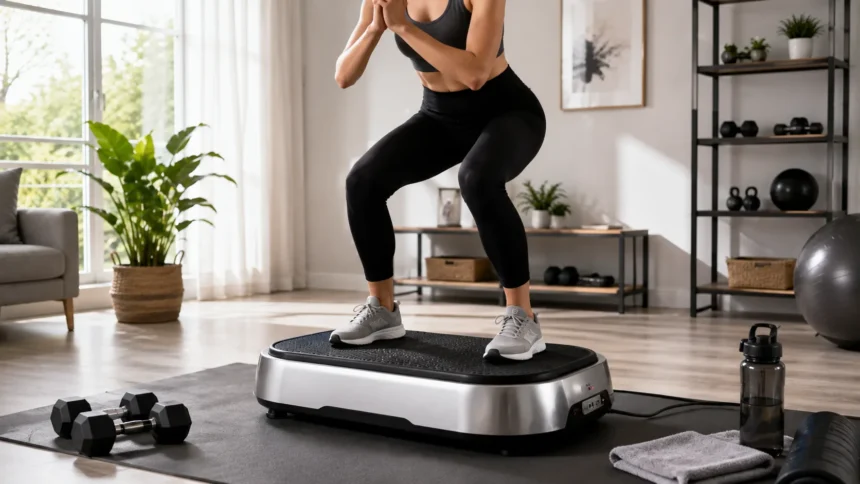
Vibration Plate: Benefits, Uses & Does It Work?
A vibration plate is a fitness platform that produces rapid mechanical vibrations while you stand, sit, or perform exercises on it. Also known as a whole-body vibration machine, it is promoted for improving muscle activation, balance, flexibility, circulation, exercise performance, and sometimes weight management. The idea sounds appealing because the machine makes muscles repeatedly contract and relax without requiring the same movement pattern as conventional exercise. However, vibration plates are not magic exercise devices, and their benefits depend heavily on how they are used, the vibration settings, the person’s health, and whether they are combined with regular physical activity. Research suggests that whole-body vibration may provide useful benefits in certain situations, particularly for strength, balance, and rehabilitation support. Understanding what a vibration plate can and cannot realistically do helps you decide whether it deserves a place in your fitness routine.
What Is a Vibration Plate?
A vibration plate is a motorized platform designed to move rapidly while a person stands or exercises on its surface. The vibrations travel through the feet and body, stimulating muscles to respond automatically to small changes in position. This reaction is sometimes described as a reflexive muscle contraction because the body continuously attempts to stabilize itself while the platform moves. Vibration machines come in different designs, including vertical, oscillating, and multidirectional models. Some are large commercial machines found in gyms or rehabilitation centers, while others are compact platforms designed for home workouts. Although the technology may appear unusual, the underlying goal is straightforward: provide an additional physical stimulus while the user maintains a position or performs an exercise.
Whole-body vibration is the broader term often used when discussing vibration plate exercise in fitness and rehabilitation. During a session, the user might simply stand with slightly bent knees or perform movements such as squats, calf raises, lunges, or supported balance exercises. The machine’s vibration frequency and amplitude influence how intense the experience feels. Frequency refers to how many vibration cycles occur each second, while amplitude describes how far the platform moves during each cycle. Manufacturers provide different settings because a level appropriate for gentle balance training may not be suitable for a demanding strength session. Higher settings are not automatically better, especially for beginners or people using the equipment under medical supervision.
Different vibration plates move in different ways, which can affect how the body experiences them. Oscillating platforms typically tilt from side to side around a central point, creating an alternating movement similar to shifting weight between the legs. Vertical vibration platforms move primarily upward and downward, while some machines combine multiple directions. These designs may produce different sensations and muscle responses, making direct comparisons between devices difficult. This variation also helps explain why research findings are not always identical across studies. A workout performed on one vibration system may not produce exactly the same physiological stimulus as a workout performed on another. Device settings therefore matter when evaluating vibration plate benefits.
The machine does not replace the need for muscles to work voluntarily during exercise. Standing passively on a vibration plate creates some muscular activity, but performing controlled exercises on the platform generally provides a stronger training stimulus. A squat, for example, already requires the quadriceps, glutes, calves, and core muscles to work. Adding vibration may increase the stabilization demands experienced during the movement. This is why many training programs use the vibration plate as an addition to exercise rather than as a substitute for exercise. People expecting meaningful fitness improvements should think of the platform as a training tool rather than a shortcut that eliminates movement.
Vibration plate exercise has been investigated in athletes, older adults, rehabilitation settings, and people with certain health conditions. Researchers have explored possible effects on muscle strength, balance, bone health, flexibility, circulation, and physical function. Results vary depending on the population, training duration, machine settings, and exercises used. Some groups appear to benefit more than others, particularly when vibration provides a manageable way to stimulate muscles that might otherwise receive limited training. At the same time, evidence for dramatic claims such as effortless weight loss or major muscle building from passive standing is much weaker. Understanding this distinction is essential when evaluating marketing claims surrounding whole-body vibration machines.
How Does a Vibration Plate Work?
A vibration plate works by creating repeated mechanical movements that challenge your body to maintain stability. As the platform shifts, muscles in the legs, hips, and trunk respond with rapid adjustments to help control posture. These contractions can occur many times during a short session because the vibration creates continuous changes in the forces acting on the body. The nervous system detects those changes through sensory receptors in muscles and joints. It then sends signals that help activate appropriate muscles for balance and stabilization. This interaction between vibration, muscles, and the nervous system is one of the main reasons whole-body vibration is studied as a potential training and rehabilitation method.
The muscle response does not mean that every vibration automatically creates an intense workout. How strongly the body responds depends on posture, knee angle, vibration frequency, amplitude, duration, and whether the user is actively exercising. Slightly bending the knees, for example, changes how vibration travels through the body compared with standing with locked legs. Performing a squat or lunge increases muscular demand further because the muscles are already working against body weight. Holding handrails or supports can reduce balance requirements when necessary. Because so many variables influence the training stimulus, a vibration plate session can range from extremely gentle to physically demanding.
The nervous system plays an important role in whole-body vibration exercise. Mechanical vibration stimulates receptors that detect changes in muscle length and body position, contributing to rapid neuromuscular responses. These responses may temporarily increase muscle activation and help train coordination under some conditions. Researchers have therefore studied vibration training for balance, strength, and functional performance, particularly in populations that may struggle with more strenuous exercise. However, increased muscle activity during vibration should not automatically be interpreted as superior muscle growth. Long-term strength and muscle development still depend on factors such as training intensity, progressive overload, nutrition, recovery, and consistent participation.
Vibration can also influence blood movement within the tissues being stimulated. Repeated muscle contractions and mechanical movement may temporarily increase local circulation, which helps explain why some people notice warmth or tingling during or after a session. Improved short-term blood flow does not mean a vibration plate can permanently “detox” the body or remove harmful substances, despite claims sometimes seen in advertising. The liver, kidneys, lungs, and other biological systems perform the body’s primary waste-processing functions. Vibration may provide a circulatory stimulus, but it should be described realistically. Sensations such as warmth are physiological responses to movement and muscle activity rather than evidence that toxins are being shaken out of the body.
The energy demands of vibration training also vary considerably. Active exercises performed on the platform use more energy than passive standing because the user must generate additional muscular force. Adding squats, lunges, push-up variations, or other movements can increase exercise intensity, although the vibration itself does not transform a short session into the equivalent of prolonged cardiovascular training. Heart rate and oxygen consumption may rise under certain conditions, but conventional aerobic exercise remains important for cardiovascular fitness. The most practical way to use a vibration plate is therefore as a supplement to an overall fitness program. Its value comes from adding a different mechanical stimulus rather than replacing established forms of exercise.
What Are the Potential Benefits of a Vibration Plate?
One of the most researched potential vibration plate benefits is improved muscle strength, particularly in the lower body. Repeated exposure to vibration while maintaining positions or performing exercises may increase muscle activation and provide a meaningful training stimulus. Older adults, people returning to activity, and individuals who cannot initially tolerate high-impact exercise may find this form of training particularly useful. Some research suggests improvements in leg strength and functional performance after consistent whole-body vibration programs. However, results are not uniform, and traditional resistance training often produces stronger improvements when it can be performed safely. Vibration training may therefore be most valuable as an additional or alternative exercise option rather than a universal replacement for strength training.
Balance is another area where vibration plate training may be helpful. Maintaining posture on a moving surface requires the nervous system and muscles to make continuous adjustments, which can challenge coordination and stability. Programs using whole-body vibration have been studied in older adults because improving balance can contribute to safer movement and greater confidence during daily activities. The platform can also be combined with supported positions so intensity can be adjusted according to ability. Balance benefits are more likely when the session includes appropriate exercises rather than passive standing alone. Anyone with significant balance problems or a history of falls should use the equipment with professional guidance and appropriate support to reduce the chance of injury.
Whole-body vibration may also help improve flexibility or range of motion in certain situations. A short vibration session can sometimes produce temporary improvements in flexibility, potentially because of changes in muscle activity, circulation, and stretch tolerance. Athletes sometimes incorporate vibration into warm-ups for this reason, although it should not replace a complete movement preparation routine. Long-term flexibility improvements still require appropriate mobility work and consistent training. Stretching aggressively while the platform is operating is not necessary and may be uncomfortable. Gentle movements performed with control are usually more appropriate. The potential flexibility benefit is useful, but it should be viewed as one component of a broader mobility strategy rather than a standalone solution.
There is also interest in the potential relationship between whole-body vibration and bone health. Mechanical loading is important for maintaining bone tissue, and vibration provides a mechanical stimulus that researchers have examined in populations at risk of declining bone density. Some studies suggest that particular vibration programs may provide modest benefits or help support physical function, but findings remain mixed. Traditional weight-bearing activity and resistance exercise have much stronger roles in general bone-health recommendations. Adequate nutrition and medical management are also essential for people with osteoporosis or significant fracture risk. A vibration plate should therefore not be treated as a proven replacement for established strategies intended to preserve or improve bone strength.
Another practical benefit is accessibility. Some people find conventional exercise intimidating, painful, or difficult because of reduced mobility, deconditioning, or limited confidence. A supervised vibration plate program may provide a way to introduce muscular and balance challenges without running, jumping, or lifting heavy weights. Sessions can also be relatively short, making the equipment convenient for people who struggle to maintain longer workouts. Convenience, however, should not be confused with guaranteed effectiveness. The most useful program is one that matches the person’s needs and can be performed consistently and safely. When vibration training encourages someone to become more physically active, its indirect benefits may be just as valuable as the vibration itself.
Can a Vibration Plate Help With Weight Loss?
Vibration plates are frequently marketed for weight loss, but expectations need to be realistic. Weight loss occurs primarily when the body uses more energy over time than it receives from food and drinks, creating an energy deficit. Exercise can contribute to that process, but the calories burned during passive standing on a vibration plate are unlikely to produce dramatic changes by themselves. Active whole-body vibration workouts may increase energy expenditure because they combine vibration with muscular exercise. Even then, they should not be considered a shortcut around nutrition and overall activity. Sustainable weight management typically depends on eating patterns, movement, sleep, stress management, and consistent habits rather than any single piece of fitness equipment.
Some research has examined whether whole-body vibration can influence body composition, waist size, or fat mass when used repeatedly. Certain programs have reported modest improvements, particularly when vibration training is combined with dietary changes or other exercise. However, outcomes differ significantly across studies, making it difficult to claim that vibration plates reliably cause substantial fat loss on their own. Program length, exercise intensity, participant health, and calorie intake all affect the results. Short sessions involving passive standing are unlikely to match the energy demands of brisk walking, cycling, running, or vigorous strength circuits. Anyone buying a machine specifically for weight loss should therefore consider it an optional exercise tool rather than a primary fat-loss strategy.
A vibration plate may indirectly support weight management by making exercise more engaging or accessible. Someone who dislikes conventional workouts may be more willing to perform squats, calf raises, or balance exercises when using a vibration platform. Regular participation can increase total activity, which contributes to energy expenditure and physical fitness. Building stronger muscles can also make everyday movement easier, potentially encouraging more activity outside the workout itself. These secondary effects can be valuable even when the vibration does not directly “burn fat” in a unique way. The best weight-loss exercise is often one that is safe, sufficiently challenging, and enjoyable enough to maintain consistently.
Claims that vibration directly breaks apart fat cells or melts belly fat should be treated skeptically. Fat loss cannot normally be targeted to one specific area simply by vibrating or exercising that body region. The body determines where stored fat is lost according to genetics, hormones, energy balance, and individual physiology. Performing abdominal exercises can strengthen abdominal muscles, but it does not guarantee selective abdominal fat loss. The same principle applies to standing on a vibrating platform. Changes in body composition require broader metabolic changes rather than mechanical shaking of fat tissue. Marketing language that promises rapid spot reduction usually oversimplifies how human metabolism works.
For people trying to lose weight, a vibration plate can fit into a more comprehensive activity plan. A short session might be added after walking, resistance training, or another workout, or it can be used for specific strength and balance exercises. Beginners who are currently sedentary may find even moderate vibration-assisted activity a useful starting point. Over time, however, the program should ideally include progressive resistance exercise and enough cardiovascular activity to improve overall fitness. Nutrition should support a realistic calorie deficit without extreme restriction. Used this way, a vibration plate may contribute to weight-management efforts, but the overall lifestyle pattern remains much more important than the machine itself.
Vibration Plates for Strength, Balance, and Mobility
Strength training on a vibration plate usually involves performing familiar movements while the platform is operating. Squats are among the most common exercises because they recruit large muscles in the thighs and hips while the vibration creates additional stabilization demands. Calf raises, split squats, partial lunges, and supported holds can also be performed depending on the machine and the user’s ability. Some platforms are large enough for upper-body exercises such as push-up variations with the hands on the vibrating surface. Beginners should prioritize posture and control rather than selecting the highest vibration setting. Poor exercise form does not become safe simply because a machine is involved.
Older adults are one population for whom whole-body vibration has attracted considerable interest. Aging is often accompanied by declines in muscle strength, balance, and physical function, particularly when activity levels decrease. A vibration plate may provide a relatively low-impact method of stimulating muscles and challenging postural control. Some individuals may find short, supported sessions easier to tolerate than conventional high-load exercise. However, older age also increases the likelihood of conditions such as osteoporosis, joint replacements, cardiovascular disease, and balance impairment. For that reason, older adults with significant medical concerns should discuss vibration training with an appropriate healthcare professional before beginning a program.
Mobility can benefit when vibration training is combined with controlled movement rather than used as a passive treatment. Gentle squats, ankle movements, and shifting exercises can help people practice joint motion while receiving sensory feedback from the platform. Temporary increases in muscle warmth may also make movement feel easier for some users. The vibration does not physically “unlock” joints or permanently lengthen muscles, however. Meaningful mobility improvement generally requires regular movement through appropriate ranges and sufficient muscular control. A vibration plate can provide another environment in which those movements are practiced. The goal should be improved function rather than chasing the strongest possible vibration sensation.
Athletes sometimes use whole-body vibration as part of warm-up, strength, or recovery routines. Short sessions may temporarily influence muscle activation, flexibility, or power, although outcomes depend heavily on the protocol. Competitive athletes should not assume that adding vibration automatically improves performance more than established training methods. Sport-specific skills, resistance training, conditioning, recovery, and nutrition remain far more important. The platform may be useful when it complements those foundations without creating unnecessary fatigue. Coaches and sports professionals can help determine whether the machine adds enough value to justify its place in a training program.
People recovering from injury may also encounter vibration platforms in rehabilitation environments. In those situations, the equipment is usually used strategically rather than simply at maximum intensity. A therapist may choose particular positions, frequencies, or durations to encourage muscle activation, balance, or functional movement. Rehabilitation requires individualization because the same vibration that feels comfortable for one injury could aggravate another. Pain should not be ignored simply because an exercise is being performed on specialized equipment. Anyone recovering from surgery, a fracture, significant joint injury, or neurological condition should follow professional advice before introducing vibration training independently.
Does a Vibration Plate Improve Circulation and Recovery?
A vibration plate can temporarily influence circulation, particularly in the muscles and tissues exposed to the mechanical movement. The repeated contractions produced while maintaining balance may encourage local blood flow, and some users notice that their legs feel warmer during a session. This effect can make vibration appealing as part of a warm-up or gentle movement routine. However, temporary circulation changes should not be exaggerated into claims that vibration machines cure vascular disease. Poor circulation can have many causes, some of which require medical assessment and treatment. Anyone experiencing persistent leg swelling, significant pain, skin color changes, or other unexplained circulatory symptoms should seek medical guidance rather than relying on a home vibration device.
Athletes and recreational exercisers sometimes use vibration plates after workouts because they hope to reduce muscle soreness or accelerate recovery. Some people report feeling looser after a low-intensity session, possibly because of movement, muscle stimulation, or temporary changes in circulation. Research on recovery effects is mixed, and the ideal vibration protocol has not been established for every type of exercise. Recovery also depends much more broadly on sleep, nutrition, hydration, training load, and adequate time between demanding sessions. A vibration plate may feel pleasant as part of recovery without being medically necessary. The user’s subjective comfort can still be valuable as long as vibration does not replace more important recovery habits.
Delayed onset muscle soreness often appears after unfamiliar or demanding exercise, particularly when muscles perform significant eccentric work. Vibration has been studied as a possible method for reducing soreness, but results vary. Even when soreness feels slightly better, that does not necessarily mean muscle tissue has recovered completely or is ready for another maximal workout. Pain perception and physiological recovery are related but not identical. Athletes should still manage training volume carefully rather than using a reduction in soreness as permission to overload fatigued muscles. Gentle vibration may be one recovery option, but it should be used alongside sensible programming.
Some marketing materials describe vibration platforms as tools for “lymphatic drainage.” Muscle movement can support normal lymph flow because the lymphatic system relies partly on muscle contractions and body movement rather than having a central pump like the heart. Standing or exercising on a vibration plate creates movement that may contribute to this normal physiological process. However, claims that a machine can detoxify the body or treat lymphedema without professional oversight are overly broad. Lymphedema is a medical condition that can require specialized assessment and management. People with unexplained swelling should determine the cause before attempting vibration as a self-treatment.
Recovery use should generally involve lower intensity than a challenging strength workout. A person might stand with soft knees, perform gentle calf movements, or complete a short mobility sequence rather than performing exhausting exercises. If vibration causes dizziness, headache, unusual numbness, pain, or nausea, the session should be stopped. More vibration is not necessarily more effective, and long sessions can become uncomfortable. Hydration and normal post-exercise recovery habits should continue regardless of whether a vibration plate is used. The equipment is best viewed as an optional recovery accessory rather than a scientifically guaranteed way to accelerate every aspect of muscle repair.
How to Use a Vibration Plate Safely
Beginners should start with short sessions and conservative settings instead of immediately selecting the highest vibration frequency or amplitude. Standing with the knees slightly bent can help the lower body absorb vibration rather than allowing excessive force to travel upward through locked joints. Comfortable athletic shoes may improve stability for many users, although specific instructions depend on the machine and exercise. Hold a nearby support if balance feels uncertain. The first few sessions should focus on learning how the platform feels rather than completing an intense workout. Gradually increasing duration or exercise difficulty allows the body to adapt while making it easier to identify uncomfortable responses.
A simple beginner session might include supported standing, shallow squats, calf raises, and short rest periods. Each exercise should be performed with controlled posture and normal breathing. There is no benefit in trying to remain on the platform as long as possible if technique starts deteriorating. Short bouts can provide a meaningful stimulus while keeping the total exposure manageable. Beginners may use the machine only a few times per week initially, depending on the intensity of the exercises and their broader training program. Recovery needs still apply because vibration-assisted squats and lunges challenge muscles just like other resistance exercises.
Proper positioning can affect both comfort and effectiveness. Avoid locking the knees during standing exercises because a slightly flexed position generally allows muscles to absorb more of the movement. When performing squats, keep the knees and hips controlled rather than allowing the vibration to dictate the movement. Upper-body exercises should also maintain stable wrists, shoulders, and trunk positioning. If the vibration causes uncontrollable shaking or makes it impossible to maintain exercise form, reduce the setting. The machine should add a manageable training challenge, not create chaos. Reading the manufacturer’s instructions is particularly important because platforms vary substantially in movement patterns and available settings.
Do not assume that higher frequencies or amplitudes automatically produce better results. Increasing vibration changes the mechanical stimulus, but the relationship between intensity and benefit is not simply linear. A setting that is appropriate for a healthy experienced athlete may be unnecessarily aggressive for a beginner. Exercise choice also changes the effective workload, meaning an active squat at a moderate setting can be more demanding than passive standing at another setting. Progress can come from improving exercise form, increasing time gradually, or performing more challenging movements rather than constantly increasing machine intensity. Controlled progression is safer and usually more sustainable.
Combine vibration training with conventional exercise if your goal is broad physical fitness. Adults generally benefit from cardiovascular activity, resistance training, mobility, and regular movement throughout the day. A vibration plate can support some of these goals, but it cannot provide every physical adaptation the body needs. Walking, cycling, swimming, resistance exercises, and recreational activities should still have a place according to individual ability and preferences. People with specific rehabilitation or medical goals may need a different approach designed by a healthcare professional. The machine is most useful when it fills a clear role within a balanced activity plan.
Vibration Plate Side Effects and Who Should Be Cautious
Most healthy users can tolerate appropriately chosen whole-body vibration sessions, but side effects can occur. Some people experience dizziness, headache, tingling, muscle fatigue, joint discomfort, or temporary nausea, particularly when the vibration setting is too strong or the session is too long. New users may also develop muscle soreness if they perform challenging exercises on the platform. These effects are reasons to progress gradually rather than assuming the equipment is harmless simply because no heavy weights are involved. Stop the session if symptoms feel unusual or significant. Persistent pain, neurological symptoms, or repeated dizziness deserves appropriate medical evaluation rather than continued experimentation.
Pregnancy is a situation in which people should seek professional guidance before using a whole-body vibration machine. Research is not sufficient to support casual unsupervised use during pregnancy, and manufacturers commonly advise against it. The same cautious approach applies to people recovering from recent surgery, fractures, or major injuries. Mechanical vibration may not be appropriate for tissues that are still healing. A doctor, physical therapist, or other qualified professional can consider the specific condition rather than relying on general online recommendations. Safety decisions should be based on individual medical circumstances, especially when the body is undergoing significant physiological or structural changes.
People with cardiovascular or implanted medical-device concerns should also obtain individualized advice. Certain heart conditions, blood pressure problems, or implanted devices may change whether vibration training is appropriate, although risks vary considerably between individuals and devices. Someone with a pacemaker should not automatically assume that every vibration platform is forbidden, but should not make the decision based solely on marketing materials either. Medical professionals familiar with the condition and device can provide better guidance. The same principle applies to significant neurological disorders or conditions affecting balance. Whole-body vibration challenges multiple body systems simultaneously, making personal health history relevant to safe use.
People with severe osteoporosis, recent fractures, significant spinal conditions, or serious joint problems should be particularly cautious about vibration intensity. Although whole-body vibration has been studied in relation to bone and musculoskeletal health, this does not mean every machine or setting is appropriate for a person with fragile bones. Different platforms generate different forces, and some exercises may increase fall or injury risk. Supervised rehabilitation programs cannot be assumed to be equivalent to using a high-powered consumer device at home. A clinician can help determine whether vibration is suitable and how it should be introduced. Safety depends on both the machine and the person using it.
Unexplained pain or swelling should not be treated with a vibration plate before the cause is understood. Sudden one-sided leg swelling, warmth, redness, chest pain, or unexplained shortness of breath can indicate serious conditions requiring urgent medical attention rather than exercise. Likewise, new weakness, numbness, severe dizziness, or neurological symptoms deserve proper assessment. Fitness equipment is designed to support training, not diagnose or treat unexplained medical problems. People sometimes purchase vibration machines hoping to fix circulation, pain, or swelling without determining why those symptoms exist. Getting an accurate diagnosis first is far safer than experimenting with increasingly intense vibration.
Does a Vibration Plate Really Work?
A vibration plate can work, but whether it “works” depends on what result you expect. Evidence suggests that structured whole-body vibration training can improve certain measures of muscle strength, balance, physical function, and possibly flexibility in some populations. Those benefits are more credible than claims that simply standing on the platform effortlessly transforms the body. People who perform actual exercises on the machine are also providing their muscles with conventional mechanical work in addition to vibration. This combination can create a legitimate fitness stimulus. The most accurate conclusion is therefore that vibration plates can be useful training tools, but they are not replacements for every other form of physical activity.
The strongest argument for vibration training may be its usefulness for people who need an accessible way to challenge muscles and balance. Older adults, deconditioned individuals, and some rehabilitation patients may benefit when the machine allows them to perform manageable exercises they can repeat consistently. A person who cannot initially perform heavy resistance training may still be able to practice supported squats or standing exercises on a vibration platform. In that context, even moderate improvements can have practical value. The goal does not need to be extreme athletic performance. Better leg strength, confidence, and functional movement can meaningfully improve everyday activity for someone starting from a lower level of physical capacity.
For healthy active adults, a vibration plate is more likely to function as an accessory than a central training method. Traditional resistance exercise allows precise control over load and progression, while running, cycling, swimming, and similar activities provide well-established cardiovascular benefits. Vibration can add variety, challenge stabilization, or provide a different warm-up stimulus. Some users may enjoy the novelty enough to exercise more regularly, which itself has value. However, someone with limited time and money does not need a vibration machine to become fit. Basic resistance exercises, walking, and other accessible forms of activity can produce substantial health and fitness benefits without specialized equipment.
Results also depend on consistency. Using a vibration plate once or twice and expecting visible body composition changes is unrealistic. Like other exercise methods, adaptations occur when the body receives an appropriate stimulus repeatedly over time. The program should gradually become more challenging as strength and coordination improve. Nutrition, sleep, stress, and the rest of the exercise routine also influence outcomes. A well-designed vibration program performed consistently will generally be more useful than randomly standing on the machine at different settings. The platform provides the stimulus, but training structure determines how effectively that stimulus contributes to a goal.
Marketing claims should therefore be separated into realistic and unrealistic categories. Claims involving possible improvements in muscle activation, balance, strength, flexibility, or physical function have plausible scientific support when vibration is used appropriately. Claims promising dramatic weight loss, effortless muscle growth, spot reduction of belly fat, instant detoxification, or treatment of serious medical conditions deserve much greater skepticism. No fitness machine can eliminate the basic need for healthy habits and appropriate medical care. If you enjoy vibration training and can use it safely, it may be a worthwhile addition to your routine. Its greatest value comes from complementing movement rather than replacing it.
FAQs About Vibration Plates
What does a vibration plate actually do?
A vibration plate sends rapid mechanical vibrations through the body, causing muscles to make repeated adjustments to maintain posture and stability. When combined with exercises such as squats or calf raises, it can increase the muscular and neuromuscular challenge of the movement.
Do vibration plates help you lose belly fat?
A vibration plate cannot selectively remove belly fat, and passive standing is unlikely to cause significant weight loss by itself. It may support a broader weight-management program when combined with active exercise, balanced nutrition, and an overall calorie deficit.
How long should you use a vibration plate?
Beginners are generally better starting with short sessions and gradually increasing exposure as they become comfortable with the machine. The appropriate duration depends on vibration intensity, exercises performed, fitness level, health status, and the manufacturer’s instructions.
Is it safe to use a vibration plate every day?
Daily use may be tolerated by some healthy people when sessions are gentle, but challenging vibration workouts still require adequate recovery. People with medical conditions, pregnancy, recent injuries, surgery, severe osteoporosis, or implanted medical devices should seek individualized professional guidance before regular use.
Are vibration plates worth buying?
A vibration plate can be worthwhile if you enjoy using it and want an additional tool for strength, balance, mobility, or low-impact exercise. It is less worthwhile if you expect effortless fat loss or believe it can replace resistance training, cardiovascular exercise, good nutrition, and regular daily movement.