

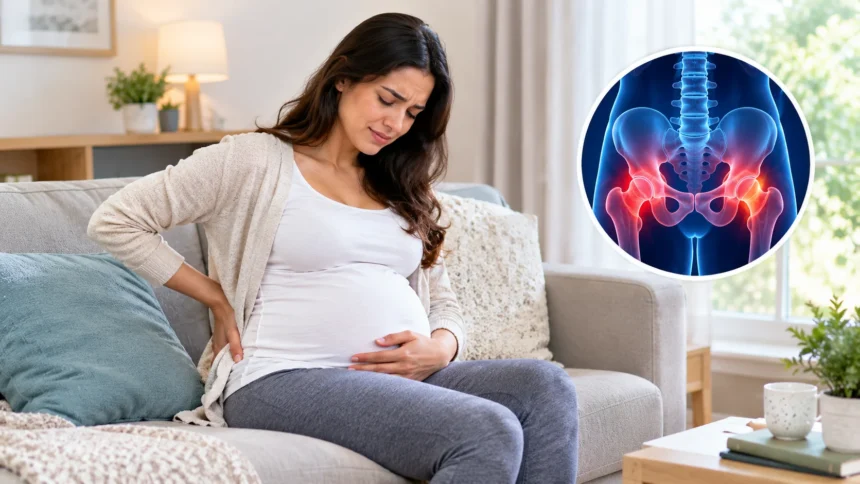
Pelvic girdle pain during pregnancy is a common condition that can make everyday movements uncomfortable. Many pregnant women experience aching, stiffness, or sharp pain around the pelvis, hips, lower back, or pubic bone. Although these symptoms can feel worrying, understanding their causes and learning safe relief techniques can make pregnancy more comfortable.
Pelvic girdle pain pregnancy symptoms may develop at any stage, but they often become more noticeable as pregnancy progresses. Hormonal changes, increased pressure on pelvic joints, and changes in posture can contribute to discomfort. Fortunately, gentle exercises, supportive positioning, and appropriate medical care can help manage symptoms and improve mobility.
What Is Pelvic Girdle Pain During Pregnancy?
Pelvic girdle pain, commonly called PGP, refers to discomfort affecting the joints and surrounding structures of the pelvis during pregnancy. These joints connect the spine to the pelvic bones and help support body weight during movement. When the pelvic region becomes painful or movement coordination changes, ordinary activities such as walking, standing, or climbing stairs may become uncomfortable.
Pregnancy-related pelvic girdle pain can affect the sacroiliac joints at the back of the pelvis or the pubic symphysis at the front. Some women experience discomfort in only one location, while others notice pain spreading across several areas. Symptoms may range from mild stiffness to significant movement-related pain that interferes with daily activities and restful sleep.
Although pelvic girdle pain can be uncomfortable, it does not usually harm the developing baby. The condition is primarily associated with changes in joint loading, muscle function, and movement patterns during pregnancy. Early recognition and appropriate support can reduce discomfort, maintain mobility, and help expectant mothers continue daily activities with greater confidence throughout pregnancy.
Common Causes of Pelvic Girdle Pain in Pregnancy
Hormonal changes play an important role in preparing the body for childbirth. Pregnancy hormones, including relaxin, influence connective tissues and ligaments around the pelvis, although hormones alone do not explain every case of pelvic pain. Changes in how muscles and joints work together can contribute to discomfort, particularly when movements place uneven demands on the pelvic region.
As pregnancy progresses, the growing uterus changes the body’s center of gravity and increases the physical demands placed on supporting muscles. These changes can influence posture, walking patterns, and pelvic joint loading. Activities such as turning in bed, standing on one leg, or carrying heavy objects may become more uncomfortable because they require coordinated pelvic stability.
Previous lower back problems, pelvic injuries, or pelvic girdle pain during an earlier pregnancy may increase the likelihood of experiencing symptoms. Individual differences in muscle function and physical demands can also influence discomfort. However, pelvic girdle pain can develop without any obvious risk factors, meaning even otherwise healthy pregnancies may involve unexpected pelvic discomfort.
Signs and Symptoms of Pregnancy-Related Pelvic Girdle Pain
One of the most recognizable symptoms of pelvic girdle pain is aching around the pubic bone, groin, hips, or lower back. Some pregnant women describe sharp discomfort during specific movements, while others experience persistent soreness. Pain may also extend toward the buttocks or thighs, making it difficult to identify exactly where the discomfort originates.
Everyday activities often reveal pelvic girdle pain symptoms more clearly than resting positions. Walking longer distances, climbing stairs, getting dressed while standing, and stepping into a vehicle may trigger discomfort. Turning over in bed can also become difficult because the movement requires both sides of the pelvis to work together while supporting body weight.
Some women notice clicking or grinding sensations around the pelvic joints, although these sounds do not always indicate a serious problem. Symptoms can fluctuate throughout the day and may worsen after prolonged activity. Persistent pain, difficulty walking, or increasing discomfort should be discussed with a healthcare professional for proper assessment and individualized pregnancy care.
When Does Pelvic Girdle Pain Start During Pregnancy?
Pelvic girdle pain can begin during any trimester, although many women first notice symptoms during the second or third trimester. As the uterus grows, changing physical demands may make pelvic discomfort more noticeable. However, symptoms can also appear during early pregnancy, even before significant changes in abdominal size become visible.
During the second trimester, pregnant women may notice discomfort after walking, exercising, or remaining in one position for extended periods. Pain can develop gradually, initially appearing as mild stiffness around the hips or lower back. Recognizing these early signs provides an opportunity to modify uncomfortable activities and seek guidance before symptoms become more disruptive.
Third-trimester pelvic girdle pain may feel more pronounced because movement becomes increasingly demanding as pregnancy advances. Turning in bed, sitting down, or changing positions can require additional effort. However, severe pain is not an inevitable part of late pregnancy, and appropriate physiotherapy, supportive equipment, and activity adjustments can often improve comfort.
Pelvic Girdle Pain vs. Normal Pregnancy Discomfort
Pregnancy naturally involves physical changes that can produce occasional soreness, particularly around the abdomen, back, and hips. Mild discomfort after activity may improve with rest or changing positions. Pelvic girdle pain differs because it frequently occurs around specific pelvic joints and becomes more noticeable during movements that place uneven pressure on the pelvis.
Round ligament pain is another common pregnancy complaint, typically producing brief, sharp sensations around the lower abdomen or groin. Unlike pelvic girdle pain, round ligament discomfort is often associated with sudden stretching movements. However, symptoms can overlap, so the location of pain alone may not reliably distinguish these conditions without clinical assessment.
Persistent pelvic pain should never automatically be dismissed as a normal pregnancy symptom. A healthcare professional can evaluate movement patterns, symptoms, and possible alternative causes. This assessment helps distinguish musculoskeletal discomfort from conditions requiring additional attention, allowing pregnant women to receive appropriate treatment while avoiding unnecessary worry or activity restrictions.
Safe Exercises for Pelvic Girdle Pain Relief
Gentle movement can help maintain muscle function and reduce stiffness associated with pregnancy-related pelvic girdle pain. Exercises should focus on comfortable movement, controlled breathing, and appropriate support rather than pushing through discomfort. A physiotherapist experienced in pregnancy care can recommend activities based on individual symptoms, pregnancy stage, and physical ability.
Pelvic tilts are sometimes recommended to improve awareness of pelvic positioning and support gentle mobility. These movements may be performed in a supported sitting or hands-and-knees position when comfortable. The goal is to move slowly within a pain-free range while avoiding exaggerated movements that increase pressure on already sensitive pelvic structures.
Individualized strengthening exercises may target the gluteal muscles, abdominal support muscles, and other muscles involved in pelvic stability. Gentle pelvic floor exercises may also be appropriate when performed correctly. However, not every exercise suits every pregnant woman, and movements that worsen symptoms should be modified or discontinued under professional guidance.
Best Sleeping Positions for Pelvic Girdle Pain During Pregnancy
Finding a comfortable sleeping position can become challenging when pelvic girdle pain causes discomfort around the hips or pubic bone. Side sleeping is often recommended during later pregnancy and may be made more comfortable with supportive pillows. Keeping the knees comfortably aligned can reduce uncomfortable twisting and help maintain a relaxed resting position.
Placing a pillow between the knees and ankles may provide additional support for the hips and pelvic region. Some women also benefit from placing a small pillow beneath the abdomen for extra comfort. These adjustments help support the body during rest, although the ideal arrangement depends on individual symptoms and preferred sleeping positions.
Turning over in bed may trigger pain because the pelvis moves while the body changes position. Moving slowly, keeping the knees relatively close together, and using the arms for support may reduce discomfort. If sleep continues to be disrupted by pelvic pain, speaking with a maternity healthcare professional can help identify additional relief strategies.
Daily Activities That May Worsen Pelvic Girdle Pain
Certain everyday movements can increase pelvic girdle discomfort by placing uneven pressure on the joints. Standing on one leg while dressing, repeatedly climbing stairs, and carrying heavy objects may aggravate symptoms. Identifying activities that trigger pain allows pregnant women to make practical adjustments without unnecessarily avoiding all physical movement.
Sitting down while putting on trousers or shoes can reduce the need to balance on one leg. When entering a car, sitting on the seat before bringing both legs inside may feel more comfortable. These small adjustments help limit painful twisting and asymmetric movements while allowing daily routines to continue more comfortably.
Prolonged standing or sitting can also contribute to stiffness and discomfort in some pregnant women. Alternating between comfortable positions and taking regular movement breaks may help manage symptoms. Rather than following strict rules about every activity, it is generally more effective to adjust movements according to pain levels and professional advice.
Pregnancy Support Belts and Other Pain Relief Options
A maternity support belt may help some pregnant women manage pelvic girdle pain by providing external support around the pelvic region. These belts are designed to reduce discomfort during selected activities, particularly walking or standing. However, effectiveness varies, and proper fitting is important to avoid unnecessary pressure or an uncomfortable position.
Physiotherapy is another important treatment option for pregnancy-related pelvic girdle pain. A qualified physiotherapist can assess joint movement, muscle function, and activities that trigger symptoms. Treatment may include tailored exercises, movement education, manual therapy when appropriate, and practical techniques for reducing strain during everyday tasks.
Warm or cool packs may provide temporary relief when used carefully and comfortably around painful muscles. Medication decisions require additional caution during pregnancy because some common pain relievers are unsuitable at certain stages. Always consult a qualified healthcare professional before taking medication or using unfamiliar treatments for persistent pelvic discomfort.
When to Seek Medical Help for Pelvic Pain During Pregnancy
Although pelvic girdle pain is often musculoskeletal, new or persistent pelvic discomfort deserves appropriate medical attention. Contact your maternity healthcare professional if pain interferes with walking, sleeping, or completing normal activities. Early assessment can help identify the cause, exclude other conditions, and establish a suitable management plan.
Seek urgent medical assessment if pelvic pain occurs alongside vaginal bleeding, fluid leakage, fever, painful urination, or regular painful contractions. Severe or sudden abdominal or pelvic pain also requires prompt evaluation, particularly when accompanied by dizziness or faintness. These symptoms may indicate conditions unrelated to pelvic girdle pain that need timely medical care.
Pregnant women should also report significant changes in fetal movements once they have established their baby’s usual movement pattern. A noticeable reduction in movement should be assessed promptly rather than attributed to pelvic discomfort. Open communication with maternity professionals supports safer pregnancy care and ensures unusual symptoms receive appropriate attention.
Can Pelvic Girdle Pain Affect Labor and Delivery?
Experiencing pelvic girdle pain does not automatically mean vaginal delivery will be difficult or impossible. Many women with pregnancy-related pelvic discomfort give birth vaginally without major complications. Discussing symptoms with the maternity team helps ensure that labor positions and movement strategies accommodate individual comfort and physical limitations.
During labor, supported positions may reduce unnecessary strain around painful pelvic joints. Side-lying, kneeling, or other comfortable positions can sometimes be considered depending on the clinical situation. Women experiencing significant pain should discuss their comfortable range of hip movement with healthcare professionals, particularly if regional anesthesia changes their awareness of discomfort.
A cesarean delivery is not generally required solely because of pelvic girdle pain. Delivery decisions depend on overall pregnancy health, obstetric considerations, and individual circumstances. Creating a birth plan that includes comfortable positioning preferences can help expectant mothers communicate their needs while remaining flexible about necessary medical care.
Recovery From Pelvic Girdle Pain After Childbirth
For many women, pelvic girdle pain improves significantly during the weeks or months following childbirth. As pregnancy-related physical demands decrease, the pelvic region may gradually become more comfortable. However, recovery varies, and some women continue experiencing discomfort beyond the early postpartum period, particularly when symptoms were substantial during pregnancy.
Gentle rehabilitation can support postpartum recovery by restoring comfortable movement and improving muscle function. Depending on symptoms, healthcare professionals may recommend individualized strengthening, mobility exercises, or pelvic health physiotherapy. The focus should remain on gradual progress rather than rushing into demanding activities before the body is ready.
Persistent pelvic discomfort after childbirth should be evaluated instead of simply waiting indefinitely for improvement. A physiotherapist or other qualified clinician can assess ongoing pain and recommend suitable management options. With appropriate support, many women experience meaningful improvements in daily function, movement confidence, and overall physical comfort.
Conclusion
Pelvic girdle pain during pregnancy is a common condition that can affect walking, sleeping, and everyday movement. Changes in pelvic joint loading, muscle coordination, posture, and pregnancy-related physical demands can contribute to symptoms. Understanding these factors helps pregnant women recognize discomfort and choose appropriate ways to manage it.
Safe relief strategies may include gentle exercises, comfortable sleeping positions, maternity support belts, and physiotherapy. Making practical adjustments during daily activities can also reduce unnecessary pelvic strain. Because symptoms differ between individuals, a personalized approach guided by qualified healthcare professionals is generally more effective than relying on a single treatment.
Although pregnancy-related pelvic girdle pain can be frustrating, many women experience improvement after childbirth. Seeking help early, remaining comfortably active, and recognizing warning signs can support a healthier pregnancy experience. With appropriate care and realistic expectations, pelvic discomfort can often become more manageable throughout pregnancy and recovery.
Frequently Asked Questions (FAQs)
Is pelvic girdle pain normal during pregnancy?
Pelvic girdle pain is relatively common during pregnancy and usually does not harm the baby. However, persistent or severe discomfort should be assessed by a healthcare professional to confirm the cause and recommend suitable treatment.
How can I relieve pelvic girdle pain naturally?
Gentle exercises, supportive pillows, comfortable movement techniques, and appropriate rest may reduce symptoms. Pregnancy physiotherapy can provide individualized guidance, helping you remain active without repeatedly aggravating painful pelvic joints.
Does walking make pelvic girdle pain worse?
Walking may worsen pelvic girdle pain for some pregnant women, especially over long distances. Shorter walks, comfortable footwear, and appropriate support may help, but activities should be adjusted according to individual symptoms.
Can pelvic girdle pain harm my baby?
Pelvic girdle pain itself generally does not harm the developing baby. However, unusual or severe pelvic pain may have other causes, particularly when accompanied by bleeding, fever, or contractions, and requires medical assessment.
Will pelvic girdle pain disappear after delivery?
Many women notice substantial improvement after childbirth, although recovery times vary. Some experience lingering discomfort that benefits from postpartum physiotherapy, gradual strengthening, and professional assessment to support comfortable movement and long-term recovery.
