

Mullein: Benefits, Uses & What to Know Before Trying It
Mullein has become increasingly visible in herbal teas, tinctures, capsules, and social-media wellness content, particularly products promoted for coughs and respiratory health. The tall flowering plant has a much longer history than its recent online popularity suggests, with different Verbascum species traditionally used for respiratory, skin, digestive, and other complaints. Modern scientific interest has identified several potentially active plant compounds, but strong human evidence for many popular claims remains limited.
When people talk about mullein benefits, they are usually referring to common mullein, scientifically known as Verbascum thapsus. Its leaves and flowers are commonly prepared as herbal tea or extracts, while commercial products may also contain mullein in capsules, drops, oils, or multi-herb respiratory blends. Traditional use is extensive, but traditional use does not automatically establish that a treatment works for a particular medical condition.
This distinction is important because mullein is frequently marketed as something that can “cleanse the lungs,” eliminate mucus, fight respiratory infections, or dramatically improve breathing. Laboratory studies have reported potentially interesting biological activity, including antimicrobial and other effects, but laboratory findings are not the same as demonstrating meaningful benefits in people. High-quality clinical research remains insufficient for many of the health claims surrounding the plant.
That does not mean mullein has no place in a wellness routine. Some people simply enjoy mullein tea as a warm herbal beverage, while others use traditional preparations for temporary throat or respiratory comfort. The key is approaching the herb with realistic expectations, choosing products carefully, and recognizing when a cough or breathing problem needs medical evaluation instead of relying on an herbal remedy.
What Is Mullein?
Mullein is the common name for plants belonging to the Verbascum genus, with Verbascum thapsus, or common mullein, being among the best known. The plant typically develops large, soft, fuzzy leaves and can eventually produce a tall flowering stalk covered with yellow flowers. It originated across parts of Europe, Asia, and northern Africa and has become established in many other regions.
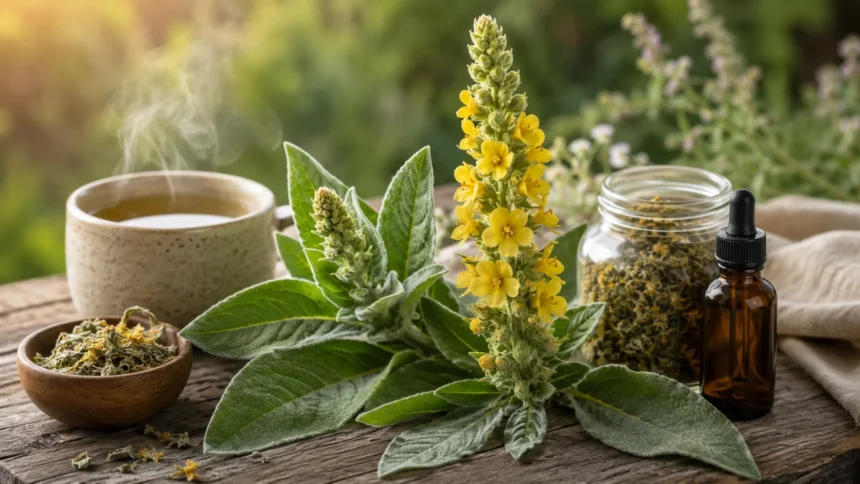
The distinctive fuzzy leaves are one reason mullein is easy to recognize. During its first year, common mullein often forms a low rosette of broad leaves, while mature plants can develop an impressive flowering stalk. Historically, different cultures have used the leaves, flowers, and other parts of Verbascum species in traditional preparations for a wide range of conditions.
Respiratory complaints are among the best-known traditional uses. Historical and ethnobotanical literature describes mullein preparations for cough, hoarseness, colds, sore throats, and other respiratory symptoms. It has also appeared in folk medicine for digestive complaints, skin problems, inflammatory conditions, and other purposes. These historical uses have helped shape the way mullein products are marketed today.
However, it is useful to separate ethnobotanical history from proven medical treatment. A plant may contain biologically active chemicals without being clinically effective for a disease at typical doses. Much of the modern research on mullein consists of laboratory investigations, phytochemical studies, historical reviews, or other evidence that does not yet provide strong answers about its effectiveness in humans.
What Are the Potential Benefits of Mullein?
Potential mullein benefits are often linked to compounds found naturally within the plant. Researchers have identified various phytochemicals in Verbascum species, including flavonoids, phenolic compounds, saponins, iridoids, and other plant constituents. Some of these compounds have demonstrated biological activities in laboratory settings, which provides a scientific reason for continuing to investigate traditional mullein uses.
Respiratory support attracts the most attention. Mullein has traditionally been consumed to soothe irritated throats and manage cough-related discomfort, and commercial supplements frequently advertise respiratory support. However, there is currently a major difference between traditional use and established clinical effectiveness because robust human trials confirming that mullein treats respiratory diseases are lacking.
Laboratory research has also explored antimicrobial activity. Extracts of common mullein have demonstrated activity against selected microorganisms under experimental conditions, while researchers have continued studying the plant’s chemical constituents. These findings can help identify promising compounds, but they do not mean that drinking mullein tea will cure bacterial or viral infections in people.
The most balanced way to view mullein is therefore as a traditional herb with interesting preliminary research rather than a clinically proven cure. Someone may choose to drink it as an herbal tea or use a commercially prepared supplement, but claims involving asthma, pneumonia, COPD, serious infection, or other medical conditions should not substitute for appropriate diagnosis and evidence-based treatment.
Mullein for Lungs and Respiratory Health
Searches for mullein for lungs have increased partly because the plant is often promoted as a natural respiratory herb. Traditional medicine has used mullein preparations for coughs, throat irritation, and various respiratory complaints for generations. Reviews of Verbascum plants document this long history, but they also highlight the need for substantially better clinical evidence before strong treatment claims can be made.
One proposed explanation involves mucilage and other plant compounds that may contribute to the soothing characteristics of herbal preparations. Drinking any warm, non-irritating beverage can also temporarily make a dry or irritated throat feel more comfortable. This may partly explain why people enjoy mullein tea during periods of mild respiratory discomfort even when it is not treating the underlying cause.
It is much less accurate to say that mullein “detoxes” or “cleanses” the lungs. Human lungs already contain specialized mechanisms for removing mucus and inhaled material, and there is no good clinical evidence that mullein can remove accumulated toxins from lung tissue. The American Lung Association similarly cautions against the broader concept of products marketed as lung cleanses or detoxes.
Persistent coughing, wheezing, chest pain, coughing up blood, unexplained shortness of breath, or breathing difficulty should not be managed with herbal tea alone. Such symptoms can have many causes, including asthma, infections, cardiovascular problems, and chronic lung conditions. Mullein should never delay medical assessment when symptoms are severe, worsening, recurrent, or otherwise concerning.
Does Mullein Really Help With Coughs?
Mullein’s reputation as a herb for coughs largely comes from traditional herbal medicine rather than large modern clinical trials. Historical sources describe mullein flower or leaf preparations for coughs, colds, hoarseness, and irritation of the mouth or throat. This traditional use has continued into modern herbal products marketed for respiratory comfort.
A warm cup of tea may provide temporary throat comfort by supplying warm fluid and hydration, whether or not mullein itself adds a specific medicinal effect. Staying adequately hydrated can also make thick respiratory secretions easier to manage. If honey is appropriate for the individual, adding some to tea can provide another familiar soothing option for a simple irritated throat.
What is not yet clear is how much additional benefit mullein itself provides compared with ordinary supportive measures. The European Medicines Agency’s assessment of mullein flower noted an absence of clinical efficacy data, illustrating how limited the human evidence remains despite the herb’s long traditional history.
A short-lived cough from a mild upper respiratory illness may resolve naturally, but prolonged coughing deserves attention. Seek healthcare advice if a cough persists, becomes severe, occurs with significant shortness of breath or fever, produces blood, or is accompanied by other concerning symptoms. Herbal products should complement appropriate care rather than obscure warning signs.
Mullein Tea: Why Is It So Popular?
Mullein tea is probably the easiest form of the herb for most people to encounter. It is generally made by steeping dried mullein leaves or flowers in hot water and then filtering the liquid before drinking. The resulting herbal infusion typically has a mild, earthy flavor that some people combine with honey, lemon, ginger, or other herbs.
Part of its appeal comes from simplicity. Unlike a concentrated extract or multi-ingredient supplement, tea provides a familiar way to incorporate an herb into an everyday routine. The warmth itself can feel soothing when the mouth or throat is dry, and drinking tea contributes to daily fluid intake.
Preparation deserves a little attention because mullein leaves have very fine hairs. A carefully strained beverage is generally more pleasant than one containing visible plant particles, which may be irritating to sensitive mouths or throats. Using a fine tea filter, coffee filter, or similar method can help remove small particles before the tea is consumed.
Do not assume that stronger tea automatically provides greater benefits. There is no well-established therapeutic dose of mullein for most conditions because human evidence remains limited. If you purchase prepared tea bags or loose herbal products, following the manufacturer’s directions rather than dramatically increasing the concentration is a more sensible starting point.
Mullein Drops, Capsules, Extracts, and Oils
Mullein supplements come in numerous forms, including liquid extracts, tinctures, capsules, dried herbs, teas, and combination respiratory formulas. The amount of mullein can differ dramatically among these products. The NIH Dietary Supplement Label Database, for example, contains commercial mullein products with substantially different serving sizes and formulations.
Liquid tinctures are usually concentrated herbal extracts placed in water or another liquid before consumption according to product directions. Capsules provide powdered or extracted plant material in measured amounts. Neither form should automatically be considered more effective than tea because comparative human research establishing the ideal preparation or dose is lacking.
You may also encounter mullein oil, particularly products marketed for ear comfort. Applying substances into the ear requires caution, however, because ear pain can result from infection, injury, impacted wax, or other conditions requiring different treatment. Products placed in the ear should not replace medical evaluation for significant pain, discharge, hearing loss, fever, or a suspected damaged eardrum.
Another consideration is that a bottle containing mullein may also contain numerous other herbs. This changes the safety profile because side effects or medication interactions could come from another ingredient rather than mullein itself. Always read the entire ingredient list instead of assuming a product labeled “mullein lung support” contains only one botanical.
Can Mullein Reduce Inflammation?
Researchers have identified multiple plant compounds in Verbascum species that may influence inflammatory pathways in laboratory or experimental models. This has led to interest in mullein’s potential anti-inflammatory properties and may help explain why the plant appears in traditional remedies for such a wide range of complaints.
The term “anti-inflammatory,” however, is easy to overinterpret. Showing an effect on cells, isolated compounds, or experimental models does not establish that drinking mullein tea will meaningfully reduce inflammation throughout a person’s body. Absorption, metabolism, dose, preparation method, and many other factors influence whether laboratory findings translate into clinical benefits.
This distinction matters because chronic inflammation is involved in numerous diseases, and online wellness marketing sometimes uses that fact to imply that any plant containing anti-inflammatory compounds can prevent or treat those diseases. The evidence for mullein does not currently justify such broad conclusions. More controlled human research would be needed.
For someone who enjoys mullein tea, preliminary biochemical findings can be interesting without turning the herb into a treatment. People managing inflammatory diseases should continue following medical recommendations rather than replacing prescribed therapy with mullein or another supplement based primarily on laboratory findings.
Does Mullein Have Antibacterial or Antiviral Properties?
Laboratory studies have examined mullein extracts for activity against selected bacteria and other microorganisms. One frequently cited investigation of common mullein evaluated extracts using several laboratory bioassays and found biological activity worth further study. This research contributed to scientific interest in the herb but did not establish mullein as an antibiotic medication.
Researchers have continued exploring the phytochemistry and antimicrobial potential of different Verbascum preparations. A 2026 laboratory study, for example, investigated the composition and antifungal activity of mullein oils. Research of this kind helps scientists understand plant compounds but remains very different from a clinical trial showing that a product successfully treats an infection in humans.
This difference is especially important because people may see words such as “antibacterial,” “antiviral,” or “antifungal” and assume they can substitute an herbal preparation for medical treatment. An effect demonstrated in a laboratory dish does not guarantee that the substance reaches an effective concentration safely inside the human body.
Do not rely on mullein to treat pneumonia, influenza, bacterial throat infections, serious ear infections, or other conditions that may require diagnosis and targeted care. When infection symptoms are significant or persistent, appropriate medical evaluation is more important than choosing among herbal remedies.
Is Smoking Mullein Safe for Your Lungs?
One of the more concerning online trends involves smoking mullein because it is described as a traditional respiratory herb. Some people assume that because mullein is a plant, inhaling its smoke must be gentler than tobacco smoke. Natural origin, however, does not make combustion products harmless to lung tissue.
Burning vegetation creates smoke containing gases and fine particles. Public-health evidence from other types of plant smoke shows that inhaled smoke can irritate the respiratory system and contribute to coughing, wheezing, breathing difficulties, and other symptoms. The exact composition varies with what is burned, but intentionally inhaling smoke is not a logical way to “clean” the lungs.
There is also no convincing clinical evidence that smoking mullein removes toxins, repairs smoking damage, or cleans accumulated material from the respiratory system. People trying to improve their lungs after smoking cigarettes or vaping are better served by reducing and eliminating inhaled irritants rather than introducing smoke from another burned plant.
If you are interested in mullein specifically for its traditional respiratory use, a non-inhaled preparation such as tea avoids exposing your lungs to combustion smoke. Even then, the herb should not be considered a substitute for proven treatment of asthma, COPD, infections, or other diagnosed respiratory conditions.
Mullein Side Effects and Safety Concerns
One challenge when discussing mullein side effects is that high-quality human safety data are limited. The European Medicines Agency’s assessment found little clinical safety information for mullein flower, while broader reviews of the herb also emphasize that much of the available evidence comes from traditional use and preclinical research rather than extensive human studies.
People can also respond differently to herbal products. Plant material or concentrated extracts may potentially cause irritation or sensitivity in some individuals. If you develop a rash, swelling, significant stomach upset, breathing difficulty, or another unexpected reaction after using a mullein product, discontinue it and obtain appropriate medical advice.
The safety profile may become more complicated with blended supplements because multiple herbs are being taken simultaneously. Alcohol-based tinctures also contain ingredients beyond the herb itself, and the concentration varies among manufacturers. Read ingredient labels carefully, particularly if you have allergies or need to avoid alcohol or particular additives.
More is not necessarily better with herbal supplements. Taking substantially larger quantities than suggested by the manufacturer can increase exposure without proven additional benefit. Because standardized clinical dosing has not been established for many proposed mullein uses, cautious use is preferable to experimenting with extremely concentrated preparations.
Can Mullein Interact With Medications?
Specific information about mullein drug interactions is limited, which should not be confused with proof that interactions cannot occur. Herbal products contain biologically active compounds, and supplements may theoretically alter drug absorption, metabolism, or physiological effects depending on the ingredients and formulation.
Herb-drug interactions are a broader concern with dietary supplements, especially for people taking medications that have narrow safety margins or serious consequences if their levels change. The FDA advises consumers to discuss supplements with healthcare professionals because combining certain supplements and medications can cause harmful effects.
If you regularly take prescription medication, it is sensible to tell your doctor or pharmacist about mullein before using a concentrated supplement or blended herbal formula. This is particularly important when you take several medications or are receiving treatment for a significant chronic condition.
Bring the actual product label or ingredient list if possible. Saying that you take “mullein” may not provide enough information when the supplement contains multiple herbs, alcohol, vitamins, minerals, or other active ingredients. Your healthcare professional can make a more useful assessment when they know everything the product contains.
Can You Take Mullein During Pregnancy or Breastfeeding?
Pregnancy and breastfeeding require additional caution because there is insufficient high-quality evidence establishing the safety of mullein preparations during these periods. Lack of documented harm is not the same as proof of safety, particularly when research involving pregnant or breastfeeding people is limited.
The European Medicines Agency’s assessment noted an absence of clinical information in special populations for mullein flower. That uncertainty makes it difficult to establish reliable doses or confidently predict effects during pregnancy or breastfeeding.
Pregnant or breastfeeding individuals should therefore discuss medicinal use of mullein with an appropriate healthcare professional before taking concentrated extracts, tinctures, capsules, or multi-herb supplements. A product marketed as “natural” does not automatically receive an exemption from normal pregnancy-safety considerations.
This caution is especially important for formulas containing several botanicals. Even if information about mullein itself is limited, another ingredient may have better-documented pregnancy concerns or medication interactions. Always assess the complete supplement rather than looking at the headline herb alone.
How to Choose a Mullein Supplement
Start by checking the botanical name and ingredient list. Ideally, the packaging should clearly identify the Verbascum species used and state which plant part is included. A vague label describing a product simply as an “ancient lung detox blend” provides much less useful information than transparent ingredient and serving details.
Quality also matters because dietary supplements are regulated differently from prescription medicines. In the United States, the FDA does not approve dietary supplements for safety and effectiveness before they reach the market, although manufacturers are responsible for meeting applicable requirements and the FDA can take action against adulterated or misbranded products.
Avoid interpreting the words “FDA registered,” “natural,” or “doctor formulated” as proof that a product has been clinically shown to work. The FDA specifically notes that dietary supplements are not FDA-approved to treat or prevent diseases. Claims promising rapid lung cleansing, guaranteed infection treatment, or cures for serious conditions deserve particular skepticism.
When possible, choose products from manufacturers that clearly disclose ingredients and quality-control information. Independent quality testing can provide additional assurance about identity or contaminants, although certification still does not prove that the herb will produce the advertised health benefit.
Mullein Tea vs. Supplements: Which Is Better?
Tea may appeal to someone who simply wants to explore mullein as a traditional herbal beverage. It offers a relatively straightforward preparation and encourages slower, moderate consumption rather than delivering a highly concentrated extract. Carefully filtering the infusion is helpful because of the fine hairs naturally found on mullein leaves.
Capsules and extracts offer convenience and more compact dosing, but concentration varies enormously among products. One bottle may contain dried leaf, another a concentrated extract, and another a mixture of mullein with several additional botanicals. Comparing the number printed on two labels therefore does not necessarily tell you which product is stronger.
There is not enough high-quality clinical research to declare one form universally superior for respiratory health or other proposed benefits. Selecting a product should depend more on why you want to use it, ingredient transparency, product quality, tolerance, and professional medical guidance than on promises that one formulation is dramatically more powerful.
For someone with persistent health symptoms, the better question may not be whether tea or capsules work faster. It may be whether the symptom needs a medical diagnosis. Herbal products are most appropriately considered after making sure a potentially important underlying condition is not being overlooked.
Who Should Be Extra Careful With Mullein?
People who have experienced allergic or sensitivity reactions to herbal products should introduce any new botanical cautiously. Stop using the product if you experience a significant rash, swelling, breathing difficulty, or another concerning reaction. Severe allergic symptoms require urgent medical care regardless of whether the trigger is a food, medicine, or herbal supplement.
People taking prescription medications should also be careful because formal interaction information for mullein is incomplete. The absence of a well-documented interaction does not prove that every formulation is compatible with every medication, particularly when mullein appears in multi-ingredient supplements.
Pregnant or breastfeeding people and individuals considering giving concentrated herbal preparations to children should seek professional guidance because clinical safety information in these groups is limited. Similarly, anyone with a chronic lung condition should not replace prescribed inhalers or other treatments with mullein unless their treating clinician specifically advises a change.
Most importantly, people experiencing severe respiratory symptoms should focus on obtaining medical assessment rather than experimenting with an herbal “lung cleanse.” Sudden or significant breathing difficulty, chest pain, blue or gray lips, confusion, or other severe symptoms can represent an emergency and require immediate professional care.
Is Mullein Worth Trying?
Mullein has an interesting history and remains a popular herbal remedy for respiratory comfort, particularly in the form of tea. Its long traditional use and diverse phytochemicals provide valid reasons for continued scientific research. Laboratory studies have identified promising biological activities, but current evidence does not justify treating mullein as a proven therapy for major respiratory diseases.
If you are generally healthy and simply want to try a commercially prepared mullein tea, a modest amount used according to product directions may be a reasonable way to explore the herb. Choose a clearly labeled product, strain loose-leaf preparations carefully, and pay attention to how your body responds rather than assuming that natural products are automatically harmless.
Be more cautious with concentrated extracts, multi-herb supplements, products promising dramatic lung detoxification, or remedies intended to replace conventional treatment. Dietary supplements do not undergo the same premarket approval process for safety and effectiveness that medications do in the United States.
Ultimately, mullein is best viewed with curiosity rather than hype. It may offer a pleasant traditional herbal option for some people, but its most dramatic health claims remain ahead of the science. Knowing both the potential and the limitations allows you to make a more informed decision about whether mullein tea, extracts, or supplements belong in your routine.
Frequently Asked Questions
What is mullein mainly used for?
Mullein has traditionally been used for coughs, throat irritation, colds, and other respiratory complaints. However, strong human clinical evidence confirming these benefits remains limited.
Is mullein actually good for your lungs?
Mullein has a long history as a respiratory herb, but there is not enough clinical evidence to say it cleans, detoxifies, or treats lung disease. Persistent breathing symptoms should be evaluated medically.
Can I drink mullein tea every day?
There is no universally established clinical dose for daily mullein use. Follow the product directions, avoid excessive amounts, and ask a healthcare professional about regular use if you take medications or have health conditions.
Does mullein remove mucus from the lungs?
Mullein is traditionally described as an expectorant-type herb, but strong clinical trials proving that it clears lung mucus are lacking. Staying hydrated and treating the underlying cause of excessive mucus are more important.
Is it better to smoke mullein or drink it as tea?
Drinking properly prepared tea avoids intentionally inhaling combustion smoke. Smoking mullein has not been shown to cleanse the lungs, and inhaling smoke and fine particles can irritate the respiratory system.
