

Clit Piercing: Risks, Healing & What to Know First
A clit piercing is a personal form of body modification that deserves more thought than choosing jewelry or deciding whether you like the appearance. The genital area contains sensitive tissue, blood vessels, and nerves, so correct placement, suitable anatomy, sterile technique, and careful aftercare all matter. Understanding exactly what will be pierced is one of the most important steps you can take before making a decision.
The phrase “clit piercing” is also commonly misunderstood. In many cases, people using this term are actually talking about a clitoral hood piercing, where jewelry passes through tissue covering or surrounding the clitoris rather than directly through the clitoral glans itself. Direct piercing of the clitoral glans is much less common and carries greater concern for injury to nerves and blood vessels.
Different genital piercings also have different anatomical requirements, healing periods, jewelry options, and potential complications. A placement that works well for one person may be unsuitable for another because vulvar anatomy varies naturally. That is why an experienced genital piercer should examine the anatomy before recommending a particular piercing rather than promising a specific placement before seeing you.
If you are considering genital piercing, the safest approach is to understand the risks without becoming unnecessarily alarmed. Many piercings heal successfully when performed under hygienic conditions and treated gently afterward, but infection, bleeding, irritation, migration, scarring, allergic reactions, and traumatic injury remain possible complications of body piercing.
What Is a Clit Piercing, Exactly?
A true clitoral piercing passes directly through the clitoral glans, the highly sensitive external portion of the clitoris. However, direct glans piercing is relatively uncommon. When someone casually talks about getting their “clit pierced,” they are often referring instead to jewelry placed through the clitoral hood, the fold of tissue that partially or completely covers the glans.
This distinction matters because the clitoral glans contains an extensive network of nerves and blood vessels involved in sensation. Published medical literature has associated direct clitoral glans piercing with a greater potential for injury to these structures, fibrosis, and diminished function compared with piercing the clitoral hood. This makes accurate anatomy and placement particularly important.
Clitoral hood piercings pass through hood tissue rather than directly through the clitoris. Vertical clitoral hood and horizontal clitoral hood piercings are among the placements people commonly mean when searching for information about clit piercings. Other genital piercings, such as triangle and Christina piercings, involve different areas and should not be treated as interchangeable procedures.
Before agreeing to any genital piercing, ask the piercer to show you precisely what tissue they intend to pierce. You should understand whether the proposed placement is through the hood, another area of vulvar tissue, or the clitoral glans itself. A knowledgeable professional should be willing to explain the anatomy, risks, jewelry choice, healing process, and whether your anatomy supports the requested piercing.
Clitoral Hood Piercing vs. Direct Clitoral Piercing
A clitoral hood piercing generally involves either a vertical or horizontal placement through suitable hood tissue. A vertical clitoral hood piercing, commonly shortened to VCH, usually places jewelry vertically through the hood. A horizontal clitoral hood piercing, or HCH, travels horizontally through appropriate tissue and requires suitable anatomy for stable placement.
Direct clitoral glans piercing is considerably different. Because the glans itself contains important nerves and vascular structures, piercing it requires exceptional anatomical knowledge and carries greater potential consequences if placement is incorrect. Medical literature describing genital piercing complications specifically identifies direct glans piercing as having greater risk of damage to nerves and blood supply than hood piercing.
Neither option should be selected solely because you saw a particular style online. Vulvar anatomy varies significantly in the amount of hood tissue, positioning of structures, tissue depth, and how jewelry would naturally sit. An experienced genital piercer should assess these factors before deciding whether a VCH, HCH, or another placement is anatomically appropriate.
This anatomical assessment also helps reduce problems such as poorly positioned jewelry, excessive pressure, migration, rejection, or unintended contact with sensitive structures. A professional who performs genital piercings regularly should be comfortable telling you that a requested placement is unsuitable when your anatomy cannot safely accommodate it. That willingness to say no can be an important sign of responsible practice.
Why Do People Get Clitoral Hood Piercings?
People choose genital piercings for many reasons. Some appreciate the appearance of body jewelry, while others view the piercing as a form of self-expression, body confidence, or personal ownership. There is no single “right” motivation, and the decision should ultimately belong to the person getting pierced without pressure from a partner, trend, or social expectation.
Some people also seek a clitoral hood piercing because they hope the jewelry will change or increase stimulation. Depending on placement, anatomy, jewelry style, and individual sensitivity, some wearers report differences in sensation. However, the experience varies considerably, and increased sexual pleasure should never be presented as a guaranteed outcome of the procedure.
A VCH piercing, for example, may position jewelry close to the clitoral area, but its effect depends heavily on anatomy and how the jewelry rests against surrounding tissue. An HCH piercing behaves differently because its orientation and contact points are different. This is another reason why choosing a piercing based entirely on someone else’s experience can create unrealistic expectations.
It is equally possible for someone to choose genital jewelry primarily for appearance and feel little change in sensation. Your goal should be discussed privately with an experienced piercer so they understand what you expect from the placement. A responsible consultation should include realistic possibilities as well as limitations rather than promising a specific sensory result.
Does a Clit Piercing Hurt?
Pain is one of the most common concerns before a genital piercing, but there is no universal pain score that applies to everyone. Individual sensitivity, anxiety, anatomy, piercing location, practitioner skill, and previous piercing experience can all influence how the procedure feels. The actual needle portion of a professionally performed piercing is usually brief, although soreness can continue afterward.
Clitoral hood tissue is sensitive, so a quick sharp or intense sensation is possible during placement. Temporary tenderness, localized swelling, mild bleeding, bruising, or sensitivity can also occur during the early healing period. The Association of Professional Piercers considers some initial bleeding, swelling, tenderness, and bruising normal responses following a new body piercing.
A direct piercing of the clitoral glans should not be treated as simply another version of a hood piercing. The greater concentration of nerves and vascular structures means the potential consequences of incorrect placement are more significant. Anyone considering direct glans piercing should fully understand these additional concerns before proceeding.
Pain that becomes progressively worse rather than gradually improving is different from expected early tenderness. Increasing heat, pronounced redness or discoloration, severe swelling, pus-like drainage, fever, chills, or feeling generally unwell can indicate infection and should be medically assessed.
How Long Does a Clit Piercing Take to Heal?
Healing time depends on the specific type of genital piercing rather than the broad label “clit piercing.” The Association of Professional Piercers’ procedure guidance lists approximately six to eight weeks or longer as an average healing period for both clitoral hood and clitoral piercings. Individual healing may take longer because bodies do not follow an exact schedule.
Other placements can require significantly more time. For example, APP guidance lists the triangle piercing at roughly three to four months or longer. The type of tissue involved, jewelry fit, friction, movement, individual health, aftercare, and accidental trauma can all affect how quickly a genital piercing becomes stable.
A piercing can also look healed before the inside of the piercing channel has fully recovered. The exterior may stop appearing swollen or tender while the internal tissue remains fragile. Changing jewelry too early or repeatedly disturbing a seemingly healed piercing may therefore cause irritation and extend the overall healing process.
Rather than judging healing only by the calendar, look at how the tissue behaves. Persistent tenderness, frequent bleeding, worsening swelling, recurring irritation, unusual discharge, or pain during normal movement suggests that the piercing may need more time or professional evaluation. Your piercer can assess jewelry-related irritation, while signs of infection or significant medical symptoms should be assessed by a healthcare professional.
Clit Piercing Risks You Should Understand First
Infection is one of the main risks associated with any piercing because the procedure creates an opening through tissue. Contaminated equipment, poor hand hygiene, inappropriate aftercare, or repeated contact with bacteria during healing can increase problems. Piercing equipment that is not appropriately sterilized can also expose clients to bloodborne infections.
Bleeding, swelling, irritation, and traumatic tearing are other possible complications. Genital jewelry can be exposed to substantial movement and friction from underwear, exercise, sexual activity, and everyday movement. Jewelry that catches or receives sudden force can injure the healing tissue, while continuous pressure may contribute to irritation and delayed healing.
Migration and rejection can happen when jewelry gradually moves from its original position or is pushed toward the surface. Incorrect placement, unsuitable anatomy, excessive friction, poor jewelry sizing, or repeated trauma may contribute. Scarring is another possibility whenever tissue is pierced, even after jewelry is eventually removed.
For direct clitoral glans piercing, nerve and vascular injury deserve particular attention. Damage involving these structures can potentially change sensation or function, which is why direct glans piercing is generally considered more medically concerning than piercing suitable clitoral hood tissue.
How to Choose a Safe and Experienced Piercer
Do not attempt a genital piercing at home or allow an inexperienced friend to perform one. Genital piercing requires knowledge of anatomy, placement, infection control, jewelry sizing, sterilization, and aftercare. Mayo Clinic recommends having piercings performed by properly trained professionals rather than attempting to pierce yourself.
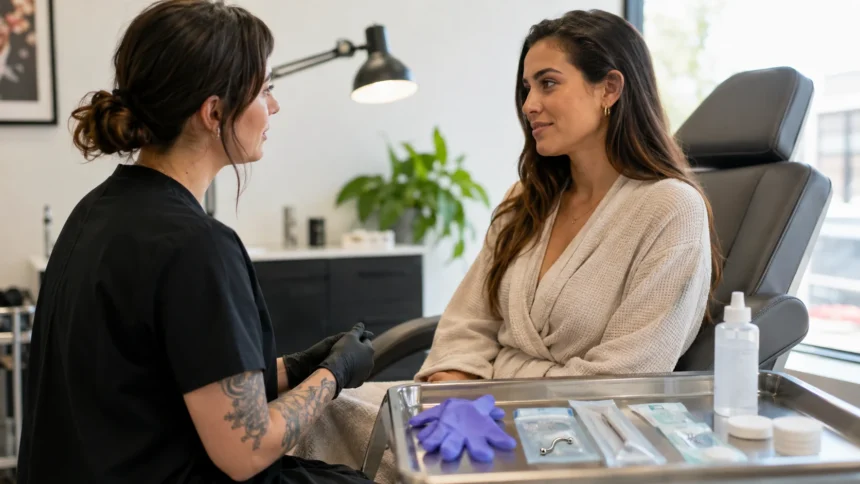
Ask specifically about the piercer’s experience with genital piercings rather than assuming that someone who performs ear, nose, or navel piercings regularly has equivalent experience with vulvar anatomy. A responsible piercer should conduct an anatomical assessment and explain whether the desired placement is appropriate before performing the procedure.
You should also be able to observe good infection-control practices. Professional piercing guidance states that needles should be sterile and single-use, while reusable equipment requiring sterilization should be processed appropriately. The piercer should wash their hands, use fresh gloves, and open sterile equipment in a controlled environment.
Ask about the studio’s autoclave and sterilization procedures, jewelry materials, written aftercare instructions, and what follow-up support is available. A studio looking clean is not enough by itself; safe piercing depends on procedures that prevent cross-contamination. An experienced piercer should welcome reasonable safety questions rather than making you feel uncomfortable for asking them.
Choosing Jewelry for a Clitoral Hood Piercing
Jewelry quality matters because the material remains in direct contact with a fresh wound while the piercing heals. Poorly finished or inappropriate jewelry may contribute to irritation, allergic reactions, or mechanical problems. Initial jewelry should also provide enough room for normal early swelling without being so large that it constantly catches or moves excessively.
High-quality titanium is commonly considered for initial piercing jewelry, while appropriately manufactured niobium and certain forms of solid gold may also be suitable. The Association of Professional Piercers emphasizes materials compatible with the body and capable of being properly sterilized for initial piercings.
Nickel sensitivity is an important consideration because nickel-containing jewelry can trigger allergic contact reactions in susceptible people. Mayo Clinic notes that allergic reactions are a recognized piercing complication and are particularly associated with nickel-containing jewelry.
Material is only one part of jewelry selection. Diameter, gauge, shape, surface finish, length, and placement must all fit your anatomy. Jewelry that is too tight may create pressure during swelling, whereas excessively long jewelry can move and snag. If downsizing becomes necessary after swelling decreases, have an experienced piercer handle the change rather than replacing jewelry prematurely yourself.
Clit Piercing Aftercare: How to Support Healing
Start with clean hands. Wash your hands thoroughly before touching or cleaning the piercing, and otherwise leave the jewelry alone as much as possible. Professional piercing aftercare guidance recommends sterile saline wound wash and advises against unnecessary twisting, spinning, or rotating of jewelry because excessive movement can irritate healing tissue.
Avoid trying to “disinfect” the piercing aggressively with alcohol, hydrogen peroxide, iodine, or other harsh products. Strong chemicals can irritate healing tissue rather than speeding recovery. Over-cleaning can create similar problems, so gentle care is more appropriate than repeatedly scrubbing the piercing throughout the day.
Wear clean, comfortable clothing that does not repeatedly rub, compress, or snag the jewelry. Friction and pressure can contribute to irritation, migration, scar formation, and prolonged healing. Clean bedding and good general hygiene can also reduce unnecessary contamination while the tissue remains vulnerable.
Avoid pools, hot tubs, lakes, rivers, and other bodies of water while the piercing is actively healing unless your professional aftercare plan specifically provides an appropriate protective strategy. These environments can expose a healing wound to microorganisms and additional irritation.
Sex and a Healing Clitoral Hood Piercing
Sexual activity deserves extra care because friction, pressure, jewelry movement, and exposure to bodily fluids can irritate a fresh genital piercing. There is some variation in professional guidance: conservative health guidance may recommend avoiding sex until a genital piercing has healed, while professional piercing guidance allows gentle activity when comfortable if hygiene and barrier precautions are carefully maintained.
If sexual activity does occur during healing, avoid rough contact or anything that pulls, presses, twists, or catches the jewelry. Pain should be treated as a signal to stop rather than something to push through. A newly pierced area is healing tissue, so activities that would normally feel comfortable can temporarily create irritation.
The Association of Professional Piercers recommends protecting healing genital piercings from partners’ bodily fluids with appropriate barriers and also recommends barriers on sex toys. It advises using fresh water-based lubricant rather than saliva and emphasizes careful hygiene during the healing period.
There is no prize for returning to sexual activity quickly. If the piercing remains tender, swollen, easily irritated, or prone to bleeding, giving it additional time can reduce repeated trauma. When you are uncertain about what is safe for your specific piercing, follow the individualized instructions provided by your experienced piercer and seek medical advice for concerning symptoms.
What Is Normal During Clit Piercing Healing?
Some localized tenderness, swelling, bruising, or small amounts of bleeding can occur shortly after piercing. As healing continues, mild itching, temporary discoloration, or a small amount of pale whitish-yellow fluid that dries into crust can also occur with normal body-piercing healing.
Normal healing should generally move in the direction of improvement. The piercing may remain sensitive for a while, but severe pain should not steadily increase each day. Temporary irritation after accidental friction may occur, although recurring symptoms can suggest jewelry fit, pressure, inappropriate aftercare, or another issue requiring professional attention.
Do not pick crust aggressively from the jewelry or force the jewelry to move simply because it appears stuck. Irritating the tissue can restart bleeding and disrupt the fragile healing channel. Gentle rinsing and following appropriate saline-based aftercare is usually preferable to vigorous cleaning.
Healing also varies between individuals, so comparing your piercing day by day with another person’s experience can be misleading. Your anatomy, placement, immune response, lifestyle, jewelry, friction exposure, and aftercare habits all influence recovery. Use estimated healing times as guidelines rather than guaranteed deadlines.
Signs Your Clit Piercing May Be Infected
Increasing pain, significant swelling, heat, pronounced redness or darker discoloration around the piercing can indicate infection, especially when symptoms become progressively worse instead of improving. Pus-like drainage or feeling feverish, chilled, or generally unwell are additional reasons to seek medical attention.
Not every bump, discharge, or red area is automatically an infection. Healing piercings can naturally produce small amounts of pale fluid and crust, while friction or inappropriate jewelry can cause irritation that resembles infection. The difference can be difficult to determine from appearance alone, particularly in sensitive genital tissue.
If you believe your piercing is infected, avoid removing the jewelry without medical guidance. The NHS advises leaving jewelry in place unless a doctor tells you to remove it, because medical management depends on the circumstances of the infection and the condition of the piercing.
Seek timely medical evaluation rather than repeatedly applying home remedies when symptoms suggest infection. Treatment may sometimes involve antibiotics, but the correct treatment depends on what is causing the symptoms. Severe swelling, rapidly spreading redness, intense pain, fever, systemic illness, or other significant symptoms deserve prompt professional attention.
Irritation, Allergy, Migration, or Infection?
Irritation is common and may result from tight clothing, excessive cleaning, frequent touching, rough sexual contact, poorly fitting jewelry, or accidental snagging. An irritated piercing can look red or feel tender without necessarily being infected. Identifying and removing the source of mechanical irritation often becomes an important part of resolving the problem.
A jewelry allergy can produce itching, redness, swelling, or skin irritation and may resemble other piercing complications. Nickel is a common trigger, which is one reason appropriate jewelry material matters from the beginning. If symptoms repeatedly return despite careful aftercare, ask a qualified professional whether jewelry material could be contributing.
Migration means the piercing gradually changes position within the tissue, while rejection occurs when the body progressively pushes the jewelry toward the surface. Signs can include thinning tissue, increasingly visible jewelry beneath the skin, or changes in the position of the piercing openings. These problems need assessment by an experienced piercer before significant tissue damage occurs.
Infection, by comparison, becomes more concerning when pain, heat, swelling, redness or discoloration intensify or when pus and systemic illness develop. Because irritation, allergy, rejection, and infection can overlap in appearance, avoid diagnosing a serious problem from photos alone. A professional piercer can help with mechanical issues, while suspected infection requires healthcare evaluation.
Can a Clit Piercing Affect Sensation?
A correctly positioned clitoral hood piercing may alter how jewelry contacts the surrounding area, and some wearers describe increased or simply different sensations. Others notice minimal sensory difference. Anatomy, placement, jewelry style, clothing, movement, and individual nerve sensitivity all influence how the piercing feels after healing.
It is therefore unrealistic to guarantee that getting a clitoral hood piercing will increase sexual pleasure. A piercing should be viewed as body modification first, with any sensory changes treated as individual rather than predictable. Someone considering the procedure primarily for enhanced sensation should discuss expectations carefully during the consultation.
Loss or unwanted alteration of sensation is a more significant concern with direct piercing of the clitoral glans because of its nerve and vascular anatomy. Medical reports have associated direct glans piercing with a greater risk of nerve or blood-vessel injury and possible diminished function compared with clitoral hood piercing.
This distinction is one of the strongest reasons to confirm precisely which structure is being pierced before consenting. If a piercer dismisses questions about anatomy, cannot clearly explain the proposed placement, or suggests that direct clitoral piercing carries no meaningful risk, consider seeking another experienced professional.
When Should You See a Doctor?
Contact a healthcare professional if the piercing becomes increasingly painful, hot, severely swollen, or produces pus-like discharge. Feeling feverish, shivery, weak, or generally unwell alongside local symptoms is particularly important because it can indicate that an infection is becoming more significant.
Medical care is also appropriate for uncontrolled or recurrent bleeding, significant tissue tearing, embedded jewelry, rapidly progressing swelling, severe pain, or suspected injury to deeper structures. Genital tissue is highly vascular, so substantial bleeding should not simply be ignored while waiting for the piercing to “settle.”
Changes in sensation that are severe, persistent, or accompanied by significant pain also deserve professional assessment, particularly after a direct clitoral glans piercing. A healthcare professional can evaluate possible nerve, vascular, or tissue injury rather than relying on guesswork about whether the symptoms will eventually disappear.
For minor mechanical irritation without signs of infection, an experienced piercer may be able to assess whether jewelry size, angle, pressure, or placement is contributing. Medical symptoms, however, belong with a qualified healthcare professional. Knowing when to use both types of expertise can make troubleshooting a genital piercing considerably safer.
What to Ask Before Getting a Clit Piercing
Start by asking, “Which exact tissue will you pierce?” A professional should clearly explain whether you are considering a VCH, HCH, direct clitoral glans piercing, triangle, or another genital placement. You should never leave the consultation unsure about where the needle and jewelry will actually pass.
Next, ask whether your anatomy is suitable for the placement you want. Experienced genital piercers understand that not everyone has enough appropriately positioned tissue for every piercing. They should be able to recommend alternatives if necessary without attempting to force a technically unsuitable piercing.
Ask about sterile needles, autoclave procedures, gloves, jewelry composition, healing time, downsizing, aftercare, and how frequently the piercer performs the specific genital piercing you are considering. Professional piercing guidance emphasizes sterile single-use needles, appropriate sterilization, suitable jewelry, and practitioner knowledge of both aseptic technique and the procedure being performed.
Finally, ask what happens if something goes wrong. You should know how to contact the studio for follow-up, which symptoms require a piercing check, and which symptoms mean you should seek medical care. A professional consultation should leave you better informed and more comfortable making your own decision rather than feeling pressured to book immediately.
Is a Clit Piercing Right for You?
A genital piercing is a personal decision, and there is no need to rush it. Consider why you want it, how comfortable you are with the healing period, whether your lifestyle allows you to minimize friction and trauma, and whether you have access to an experienced genital piercer who follows appropriate hygiene practices.
Understand that the commonly requested “clit piercing” is frequently a clitoral hood piercing rather than a piercing directly through the clitoral glans. The distinction is medically important because direct glans piercing carries greater concern for damage involving nerves and blood supply.
Successful healing also requires participation after you leave the studio. Gentle cleaning, appropriate jewelry, clean hands, avoiding unnecessary movement, managing friction, and knowing the signs of infection all matter. Even an expertly performed piercing can become irritated when repeatedly exposed to trauma or inappropriate aftercare.
Before proceeding, choose skill and safety over price or convenience. Ask detailed questions, understand your anatomy, know exactly what tissue is being pierced, and have realistic expectations about sensation and healing. Being informed before the appointment gives you a much stronger foundation for deciding whether this particular body modification makes sense for you.
Frequently Asked Questions
How long does a clit piercing take to heal?
Clitoral hood piercings commonly have an estimated healing period of around six to eight weeks or longer, although individual recovery varies. Other genital piercing placements may take several months to heal fully.
Is a clit piercing actually through the clitoris?
Usually, what people call a “clit piercing” is a piercing through the clitoral hood rather than directly through the clitoral glans. Direct clitoral glans piercing is less common and carries greater concern for nerve and blood-vessel injury.
Can a clit piercing increase sensitivity?
Some people report changed or increased stimulation with certain clitoral hood piercings, while others notice little difference. Results depend on anatomy, placement, jewelry, and individual sensitivity, so increased pleasure cannot be guaranteed.
How do you clean a clitoral hood piercing?
Wash your hands first and use sterile saline wound wash according to appropriate aftercare guidance. Avoid harsh chemicals, vigorous scrubbing, unnecessary jewelry rotation, and excessive cleaning that could irritate the healing tissue.
What are the warning signs of an infected clit piercing?
Increasing pain, heat, severe swelling, significant redness or discoloration, pus-like drainage, fever, chills, or feeling generally unwell can indicate infection. Seek medical care rather than removing the jewelry or attempting to treat a significant infection yourself.
