

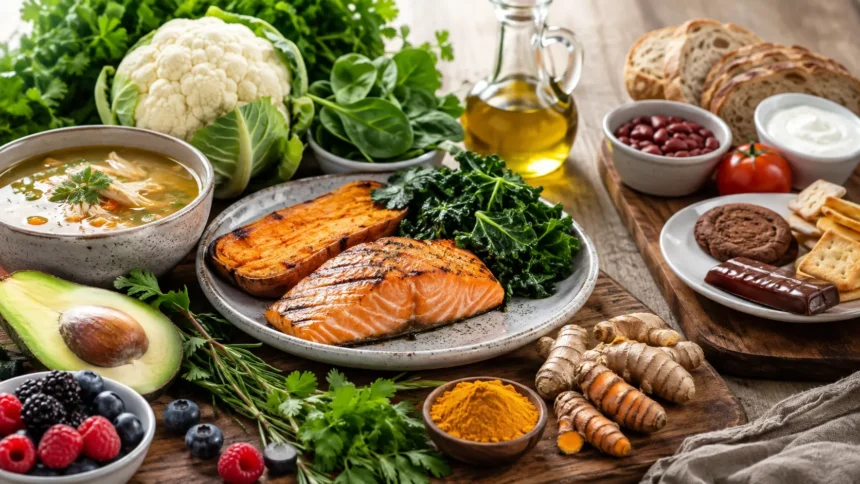
AIP Diet: Foods to Eat, Avoid & Does It Really Work?
The AIP diet, short for Autoimmune Protocol diet, is an elimination-style eating plan designed for people looking to identify foods that may be connected with their symptoms. It grew from the Paleo diet concept but is considerably more restrictive during its elimination phase. The approach emphasizes nutrient-dense whole foods while temporarily removing several food groups before gradually reintroducing them.
Interest in the Autoimmune Protocol has grown among people living with conditions such as Hashimoto’s thyroiditis, inflammatory bowel disease, rheumatoid arthritis, lupus, and other immune-mediated conditions. The theory is that identifying personally tolerated foods may help some people manage symptoms or improve diet quality. However, autoimmune diseases are complex medical conditions, and food is only one part of a much larger picture.
Research into AIP remains relatively limited. Small studies involving people with inflammatory bowel disease and Hashimoto’s thyroiditis have reported improvements in certain symptoms or quality-of-life measures, but these studies have been small, often lacked control groups, and have not established AIP as a treatment or cure for autoimmune disease. Larger randomized controlled trials are still needed.
Perhaps the most useful way to understand AIP is not as a forever diet but as a structured elimination-and-reintroduction experiment. The goal should eventually be to create the least restrictive diet that works for the individual rather than permanently avoiding every food on the elimination list. Because AIP removes several nutritious food groups, professional guidance can be especially valuable before starting.
What Is the AIP Diet?
The Autoimmune Protocol diet is a highly structured elimination diet. It temporarily removes foods that the protocol considers potential dietary triggers while emphasizing vegetables, fruits, meat, seafood, and other minimally processed foods. After the elimination period, foods are gradually reintroduced so individuals can observe whether particular foods appear to correspond with recurring symptoms.
AIP is often described as an extension of a Paleolithic eating pattern because both approaches exclude grains and legumes while emphasizing minimally processed foods. Traditional AIP goes further by temporarily removing additional foods such as eggs, dairy products, nuts, seeds, nightshade vegetables, coffee, and alcohol. Research descriptions of AIP have also included avoidance of refined sugars and certain additives during elimination.
The rationale involves possible relationships among diet, the intestinal barrier, gut microbiome, inflammation, and immune regulation. These areas are legitimate subjects of scientific research, but that does not mean researchers have proven that all foods excluded by AIP cause inflammation or autoimmune symptoms in everyone. Individual responses to foods vary significantly, and many foods eliminated by AIP are nutritious for people who tolerate them.
Modern discussions of AIP increasingly emphasize personalization rather than indefinite restriction. A 2024 scientific review described the approach as a personalized elimination diet intended to eventually identify tolerated and potentially problematic foods. That distinction matters because permanently avoiding large food groups without a clear reason may make a person’s diet unnecessarily restrictive.
How Does the AIP Diet Work?
The AIP diet generally revolves around three concepts: transition, elimination, and reintroduction followed by personalization. During transition, people gradually adjust meals toward foods compatible with the protocol. Making changes progressively can make an already restrictive diet easier to understand and may reduce the feeling that every familiar food has disappeared overnight.
During the AIP elimination phase, several food groups are temporarily removed while meals focus on foods permitted by the protocol. The purpose is to establish a relatively consistent dietary baseline. Someone following AIP can then monitor symptoms such as gastrointestinal discomfort, energy changes, skin symptoms, or other condition-specific concerns with guidance from their healthcare team.
Reintroduction is arguably the most important part of a properly structured elimination diet. Instead of automatically deciding that every excluded food is harmful, individual foods or food groups are introduced methodically. Symptoms and tolerance can then be monitored before another food is tested, helping the person build a more varied long-term diet around foods they actually tolerate.
The final goal is personalization. A successful elimination diet should ideally increase knowledge about your own eating pattern rather than create permanent fear around food. If eggs, rice, dairy, nuts, tomatoes, or another excluded food can be reintroduced without problems, there may be little benefit in continuing to avoid it solely because it appeared on the original AIP elimination list.
AIP Diet Foods to Eat
Vegetables form a major part of traditional AIP eating, except for nightshade vegetables during the elimination phase. Leafy greens, broccoli, cauliflower, carrots, squash, sweet potatoes, mushrooms, onions, cucumbers, beets, and numerous other vegetables can provide fiber, vitamins, minerals, and plant compounds. Eating a variety of colors and types can also help make restrictive meals more nutritionally diverse.
Fresh fruit is generally included as well. Berries, apples, pears, citrus fruits, melons, mangoes, bananas, and other fruits can provide vitamin C, potassium, fiber, and numerous phytochemicals. AIP does not need to become a very low-carbohydrate diet, although individual carbohydrate requirements vary according to activity level, health, medications, and personal nutritional needs.
Animal protein sources commonly include fish, shellfish, poultry, beef, lamb, pork, and other meats. Seafood can be particularly useful because oily fish such as salmon, sardines, trout, and mackerel provide long-chain omega-3 fatty acids. A well-designed diet also considers variety rather than relying heavily on one protein source every day.
Traditional AIP also emphasizes minimally processed fats and nutrient-dense ingredients such as olive oil, avocado, coconut products, herbs, and permitted vegetables and fruits. Fermented foods may also appear in AIP meal plans when their ingredients otherwise meet the protocol. The overall aim is not simply to eliminate foods but to maintain a diet capable of providing sufficient nutrients while restrictions are in place.
Foods to Avoid During the AIP Elimination Phase
Traditional AIP eliminates all grains during its strict phase, including wheat, barley, rye, oats, rice, corn, and grain-derived foods. This automatically makes the elimination phase gluten-free, but AIP extends well beyond gluten avoidance. Someone following the protocol therefore needs alternative carbohydrate sources such as sweet potatoes, squash, fruit, plantains, cassava, or other permitted foods.
Legumes are also removed, including beans, lentils, chickpeas, peanuts, soy, and foods produced from these ingredients. Dairy products such as milk, cheese, yogurt, cream, and conventional butter are typically eliminated as well. Eggs are another major category temporarily removed even though they are normally nutrient-rich foods for people without a reason to avoid them.
AIP also excludes nuts and seeds during the traditional elimination phase. Nightshade vegetables—including tomatoes, white potatoes, peppers, eggplant, and spices derived from certain nightshade plants—are generally removed. Coffee and alcohol are also traditionally avoided, along with heavily processed foods, refined sugars, and certain food additives.
The size of this exclusion list illustrates why AIP should not automatically become a permanent lifestyle. Whole grains, legumes, dairy, eggs, nuts, seeds, tomatoes, and other excluded foods can all contribute valuable nutrients in ordinary diets. Removing them may be useful during a structured experiment for some people, but continued restriction should ideally have an identifiable purpose.
What Can You Actually Eat in a Day on AIP?
Breakfast on AIP looks different because eggs, dairy, oats, bread, and many conventional breakfast foods are initially excluded. A meal might instead contain leftover chicken with roasted sweet potato and spinach, a vegetable-and-meat hash without nightshades, or fruit served alongside an appropriate protein source. Thinking beyond traditional breakfast foods makes the diet significantly easier to manage.
Lunch could combine grilled salmon or chicken with a large salad containing leafy greens, cucumber, carrots, avocado, herbs, and an olive-oil-based dressing made from permitted ingredients. Roasted root vegetables or squash can provide additional carbohydrate and make the meal more satisfying. Fruit can be added depending on appetite and individual energy needs.
Dinner could include beef, turkey, fish, or another protein with steamed or roasted vegetables and sweet potato, cauliflower, plantain, or winter squash. Seasoning becomes particularly important because several familiar spices may temporarily disappear from an AIP kitchen. Fresh herbs, garlic, ginger, turmeric, citrus, and permitted seasonings can keep meals flavorful.
Snacks may include fruit, vegetables with an AIP-compatible dip, leftover protein, coconut-based foods, or homemade combinations using permitted ingredients. The objective should be to eat enough rather than accidentally turning AIP into a severe calorie-restriction diet. People sometimes lose weight unintentionally on highly restrictive diets simply because finding convenient foods becomes harder. NCCIH notes that restrictive elimination diets can create unintended weight loss and nutritional concerns.
Why Does AIP Remove So Many Foods?
Supporters of AIP propose several mechanisms for removing particular foods, including potential effects on intestinal permeability, microbiome composition, immune signaling, or individual food sensitivity. These hypotheses have encouraged research into connections among dietary patterns, gut health, and immune-mediated diseases. The science of diet and immunity is developing, but many simplified internet explanations go further than current evidence supports.
For example, eliminating nightshade vegetables is a recognizable feature of traditional AIP, yet this does not mean tomatoes, peppers, potatoes, and eggplant are inherently inflammatory foods for everyone with autoimmune disease. Similarly, nuts, seeds, eggs, legumes, and whole grains contain nutrients that can fit comfortably into healthy diets for many people.
This is one reason the reintroduction phase is so important. The elimination list functions as the starting point of the protocol rather than proof that every eliminated food is harmful to an individual’s immune system. Without reintroduction, someone may continue avoiding nutritious foods unnecessarily and attribute ordinary symptom fluctuations to foods that were never actually responsible.
Autoimmune diseases also differ considerably from one another. Rheumatoid arthritis, Hashimoto’s thyroiditis, multiple sclerosis, inflammatory bowel disease, type 1 diabetes, and autoimmune hepatitis do not have identical disease mechanisms or nutritional requirements. For example, NIDDK recommends a healthy, balanced diet for autoimmune hepatitis and notes that diet has not been shown to cause or prevent that condition.
Does the AIP Diet Really Work?
The answer depends on what “work” means. If the claim is that AIP can cure autoimmune disease, current research does not establish that. If the question is whether some people may experience symptom or quality-of-life improvements while following a structured dietary program, small preliminary studies suggest that this is possible in certain populations.
One frequently discussed pilot study involved 15 adults with active Crohn’s disease or ulcerative colitis who completed an AIP intervention. Researchers reported improvement in clinical disease activity, with 73% reaching clinical remission by week six. However, the study was small, uncontrolled, and included participants receiving medical therapies, so it cannot establish that AIP itself caused the improvement.
Additional research in inflammatory bowel disease reported improvements in patient-reported quality of life, while a small substudy examined changes in intestinal gene expression. These findings are interesting enough to justify further investigation, but the researchers themselves emphasized the need for larger randomized controlled trials before firm conclusions can be drawn.
Research involving Hashimoto’s thyroiditis has produced similarly preliminary findings. One multidisciplinary AIP-style intervention reported improvements in quality of life and symptom burden but no statistically significant changes in thyroid function or thyroid antibodies. This is an important distinction: feeling better is meaningful, but it does not automatically mean the underlying autoimmune disease has been reversed.
AIP Diet for Hashimoto’s Thyroiditis
People with Hashimoto’s disease are among the groups most frequently searching for AIP information. Fatigue, weight changes, digestive symptoms, and other concerns can make dietary approaches appealing, especially when someone continues experiencing symptoms despite treatment. However, Hashimoto’s can cause hypothyroidism and requires appropriate medical assessment and treatment rather than dietary management alone.
A small study of women with Hashimoto’s evaluated a 10-week multidisciplinary diet and lifestyle program based on the Autoimmune Protocol. Participants reported improvements in health-related quality of life and symptom burden. Researchers also observed some inflammatory-marker changes, but thyroid-stimulating hormone, free thyroid hormone levels, and thyroid antibodies did not significantly improve.
Another AIP study has investigated thyroid parameters in people with Hashimoto’s, adding to the early research base. Nevertheless, systematic reviews examining nutritional interventions for Hashimoto’s continue to conclude that it remains unclear which specific dietary strategy is best. The available evidence is not strong enough to prescribe AIP as a universal Hashimoto’s treatment.
Anyone using thyroid hormone replacement should continue medication according to their clinician’s instructions unless their healthcare professional changes the plan. Diet should complement appropriate treatment rather than replace it. Symptoms such as fatigue or weight changes can also have many causes, so automatically blaming food can sometimes distract from medication dosing, nutrient deficiencies, sleep issues, or other medical factors.
AIP Diet for Inflammatory Bowel Disease
Inflammatory bowel disease, which includes Crohn’s disease and ulcerative colitis, is the autoimmune-related area where some of the earliest AIP clinical research occurred. Researchers have investigated dietary modification because diet, intestinal microbes, immune activity, and the gut environment can interact in complicated ways. That makes nutrition an important research area, but not every proposed IBD diet has been proven effective.
In the small 2017 AIP pilot study, participants gradually eliminated grains, legumes, nightshades, dairy, eggs, coffee, alcohol, nuts, seeds, refined sugars, certain oils, and additives during six weeks, followed by a five-week maintenance period. Clinical symptoms improved in many participants, although objective inflammatory measures did not uniformly show statistically significant changes.
That distinction between symptoms and objective disease activity is particularly important in IBD. Someone can feel better while intestinal inflammation remains present, and persistent inflammation can still cause complications. Dietary changes therefore should not be used as a reason to discontinue medications, colonoscopies, laboratory monitoring, or other care recommended by a gastroenterologist.
A registered dietitian familiar with inflammatory bowel disease can also be valuable because nutritional needs may already be complicated by diarrhea, reduced appetite, intestinal narrowing, surgery, anemia, or nutrient deficiencies. In the original AIP IBD study, participants were evaluated for nutritional deficiencies, and some required vitamin D or iron repletion.
What Are the Potential Benefits of the AIP Diet?
One practical benefit of AIP is that it forces close attention to food choices. A person who previously relied heavily on packaged snacks, sugary beverages, refined carbohydrates, and convenience meals may suddenly consume considerably more vegetables, fruit, seafood, and minimally processed foods. Some improvements may therefore come from what the diet adds or replaces rather than from eliminating a particular “trigger.”
A structured elimination period may also help certain people identify foods that consistently correspond with symptoms. This concept is not unique to AIP. Elimination-and-reintroduction strategies are used in several areas of nutrition, although the foods removed and scientific evidence supporting each diet differ depending on the medical condition.
Another potential benefit is greater awareness of symptom patterns. Keeping a food-and-symptom diary during reintroduction can make observations more systematic. Instead of labeling dozens of foods as inflammatory based on social-media advice, people can record what they ate, portions, symptoms, sleep, stress, medications, menstrual cycle changes, and other factors that could influence how they feel.
AIP may also encourage nutrient-dense foods such as vegetables and seafood, but these benefits are not exclusive to the protocol. Less restrictive eating patterns can provide similar nutritional advantages without excluding as many food groups. The best approach ultimately depends on the individual’s diagnosis, nutritional status, preferences, finances, relationship with food, and ability to sustain the plan.
AIP Diet Risks and Nutritional Concerns
The biggest drawback of traditional AIP is its restrictiveness. Removing grains, legumes, dairy, eggs, nuts, seeds, and nightshades simultaneously dramatically reduces food variety. Unless meals are carefully planned, this can make it more difficult to obtain adequate energy, calcium, vitamin D, certain B vitamins, fiber, and other nutrients depending on the foods selected.
NCCIH specifically cautions that special diets eliminating one or more major food groups can increase the risk of nutritional deficiencies. It also notes that unintended weight loss has occurred in studies of restrictive diets, which may be particularly undesirable for people who are already underweight or experiencing disease-related weight loss.
AIP can also become expensive and time-consuming. People may feel pressure to buy specialty flours, coconut products, grass-fed meats, organic foods, supplements, or branded AIP products. None of these should distract from the basic goal of adequate nutrition. A restrictive dietary strategy is unlikely to support health if it makes eating financially or practically unmanageable.
Finally, elimination diets can affect someone’s relationship with food. Constantly categorizing foods as “safe,” “toxic,” or “inflammatory” may increase food anxiety in susceptible individuals. Anyone with a current or previous eating disorder, significant food anxiety, unintended weight loss, or severe dietary restriction should discuss elimination diets with an appropriate healthcare professional before attempting AIP.
How Long Should You Stay in the AIP Elimination Phase?
The elimination stage is intended to be temporary. In published clinical research, protocols have varied; for example, the initial IBD study used a six-week staged elimination period before maintenance. Popular implementations may use different timelines, which is one reason internet advice can appear inconsistent.
Staying in strict elimination longer is not necessarily better. Once symptoms have reached a reasonably stable baseline, reintroduction allows you to gather the information the elimination phase was supposed to create. Extending restriction indefinitely can increase nutritional, social, and practical burdens without necessarily providing additional insight.
Symptom improvement also does not prove that every removed food contributed to the original symptoms. Imagine simultaneously removing dairy, wheat, alcohol, ultra-processed snacks, and several other foods and then feeling better. Without systematic reintroduction, you cannot know whether one ingredient mattered, several mattered, or the overall dietary change produced the difference.
Someone with an autoimmune condition may benefit from planning the timeline with a registered dietitian and treating clinician. This is especially useful when symptoms change rapidly, medications are being adjusted, weight is falling, laboratory abnormalities exist, or the underlying disease requires ongoing monitoring.
How to Reintroduce Foods After AIP
Reintroduction should be deliberate rather than returning to every eliminated food simultaneously. Choose one food to test while keeping the rest of your eating pattern relatively stable. Begin with a manageable amount and observe how you feel before increasing intake or moving to another food, following the reintroduction strategy recommended by your dietitian or healthcare team.
Keeping a simple diary can be helpful during this phase. Record the food, approximate serving, timing, and any symptoms that follow. Digestive changes, skin symptoms, headaches, fatigue, pain, or other concerns may be worth documenting, but remember that symptoms can fluctuate naturally and may be influenced by stress, sleep, illness, medications, and other variables.
If a particular food appears to cause symptoms repeatedly, remove it again and discuss the pattern with a professional when appropriate. A single bad afternoon after eating a tomato, egg, or bowl of rice does not necessarily establish an immune-mediated food reaction. Repeated and reasonably consistent observations are more useful than drawing conclusions from one experience.
Foods that are tolerated can be returned to the diet. This is a success, not a failure of AIP. Each successful reintroduction increases variety, simplifies eating, and can improve nutritional adequacy. The destination should ideally be an individualized diet containing as many nourishing and enjoyable foods as your health allows.
Is AIP an Anti-Inflammatory Diet?
AIP is frequently called an anti-inflammatory diet, but that phrase needs context. The protocol emphasizes many foods associated with nutritious eating patterns while removing highly processed products and alcohol. At the same time, it also eliminates numerous whole foods that should not automatically be described as inflammatory for the general population.
Food and inflammation cannot be reduced to a universal online chart where every ingredient is either inflammatory or anti-inflammatory. The effects of diet depend on the overall eating pattern, health condition, nutrient intake, metabolic health, gut microbiome, lifestyle, and numerous other factors. Individual food intolerance should not be confused with universal inflammatory properties.
For rheumatoid arthritis, for example, NCCIH states that the effects of special diets, including elimination diets, remain uncertain because relatively little research has been performed. This does not mean nutrition is irrelevant; it means the evidence does not currently justify claiming that a highly restrictive diet is a proven treatment for everyone with RA.
A less restrictive Mediterranean-style eating pattern may be easier for many people to maintain and provides vegetables, fruits, whole grains, legumes, nuts, seeds, fish, and olive oil. Whether AIP or another dietary strategy is appropriate should therefore depend on a person’s medical situation and goals rather than the assumption that stricter automatically means more anti-inflammatory.
Should You Try the AIP Diet?
AIP may be worth discussing with your healthcare team if you have an autoimmune condition, ongoing symptoms, and a genuine interest in systematically exploring possible food triggers. It makes the most sense when approached as a temporary, organized experiment with a reintroduction plan rather than an indefinite list of forbidden foods.
Working with a registered dietitian can make the process considerably safer. A dietitian can help maintain adequate calories, protein, fiber, calcium, vitamins, minerals, and dietary variety while restrictions are in place. They can also help determine whether your symptoms suggest another dietary strategy might be more appropriate than AIP.
Do not stop immunosuppressants, thyroid medication, biologic therapy, insulin, corticosteroids, or other prescribed treatments because symptoms improve after changing your diet. Autoimmune disorders can damage tissues even when symptoms fluctuate, and established treatments often target disease processes that diet alone has not been proven to control. NCCIH emphasizes that early and appropriate medical treatment remains important in diseases such as rheumatoid arthritis.
The current evidence makes a balanced conclusion possible: the AIP diet may help some people identify dietary triggers or experience symptom improvements, but it has not been proven to cure autoimmune disease. Its strongest role is potentially as a personalized nutrition strategy used alongside appropriate medical treatment, with restrictions eventually reduced whenever foods are successfully tolerated.
Frequently Asked Questions
What foods can you eat on the AIP diet?
Traditional AIP includes most non-nightshade vegetables, fruit, meat, poultry, fish, seafood, sweet potatoes, squash, avocado, olive oil, coconut products, and other permitted whole foods. Exact choices depend on the version of AIP being followed.
What foods are not allowed on the AIP diet?
During traditional elimination, AIP removes grains, legumes, dairy, eggs, nuts, seeds, nightshades, coffee, alcohol, refined sugars, and certain processed foods and additives. The intention is to reintroduce tolerated foods later rather than necessarily avoid them forever.
How long does it take for the AIP diet to work?
There is no scientifically established timeline that applies to everyone. Published studies have used interventions lasting several weeks, but symptom responses vary according to the condition, individual, medications, dietary changes, and many other factors.
Can the AIP diet cure autoimmune disease?
No evidence currently shows that AIP cures autoimmune diseases. Small studies suggest possible improvements in symptoms or quality of life in selected populations, but AIP should complement—not replace—medical treatment.
Can you lose weight on the AIP diet?
Some people lose weight because AIP removes many calorie-dense and convenient foods, but weight loss is not guaranteed or necessarily desirable. Unintended weight loss can become a concern if the restrictive diet does not provide enough calories and nutrients.