

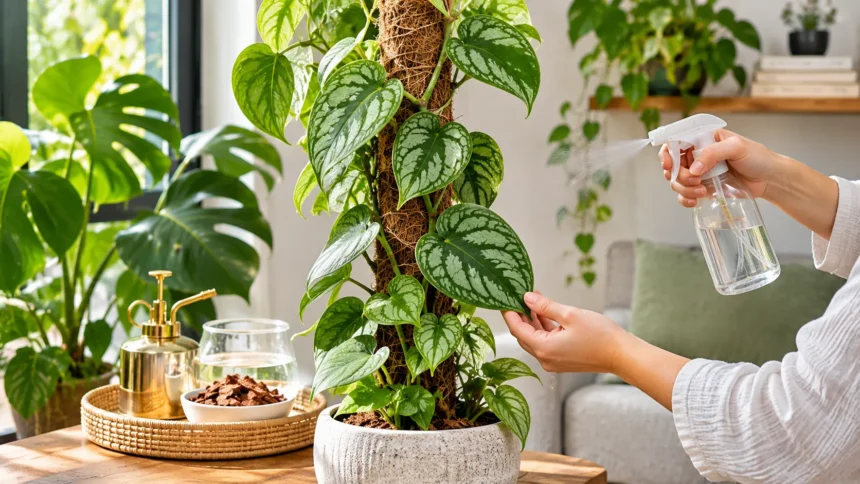
Monstera Dubia is a fascinating tropical houseplant known for its beautiful patterned leaves and unusual climbing growth. Unlike many other Monstera plants, its young leaves grow flat against tree trunks or other vertical surfaces, creating a distinctive appearance. However, keeping this plant healthy can be challenging when its lighting, watering, and humidity requirements are misunderstood. Learning proper Monstera Dubia care can help support healthy growth and attractive foliage.
Scientifically known as Monstera dubia, this climbing plant belongs to the Araceae family and grows naturally in tropical regions of Central and South America. Its juvenile leaves feature attractive silvery patterns, while mature leaves can develop a dramatically different appearance. This transformation makes it particularly interesting to indoor plant enthusiasts.
This guide explains everything you need to know about growing Monstera Dubia, including sunlight requirements, watering, soil selection, humidity, propagation, and common problems. You will also learn about its growth stages, similar Monstera species, and practical ways to encourage healthy climbing.
What Is Monstera Dubia?
Monstera Dubia is a tropical climbing plant belonging to the Araceae family. It is recognized for its unusual juvenile growth pattern, where leaves remain closely attached to vertical surfaces. The plant produces small, overlapping leaves with green and silvery markings, creating a decorative appearance that differs from many other indoor climbing plants.
In its natural habitat, Monstera Dubia climbs trees using aerial roots that attach to suitable surfaces. This behavior is known as shingling because the leaves lie relatively flat and overlap in a pattern resembling roof shingles. Providing climbing support indoors helps encourage the plant to maintain this distinctive growth habit.
As Monstera Dubia matures, its appearance can change significantly. Older plants may develop larger leaves with openings or divisions that differ from their juvenile foliage. However, reaching this stage usually requires suitable growing conditions, adequate vertical support, and considerable time, particularly when the plant is maintained indoors.
Monstera Dubia Origin and Natural Habitat
Monstera Dubia originates from tropical areas of Central and South America, where it grows in warm, humid forest environments. These regions provide relatively consistent moisture, filtered sunlight, and natural climbing surfaces. Understanding these conditions helps explain why the plant responds well to bright indirect light and suitable humidity.
In tropical forests, young Monstera Dubia plants grow along tree trunks and other vertical structures. Their aerial roots attach to the climbing surface, allowing the stems and leaves to remain close to the support. As the plant grows upward, it can reach brighter conditions and gradually develop more mature foliage.
Indoor environments are usually different from tropical forests because humidity, light, and temperatures change throughout the year. However, growers can recreate some important conditions by providing a suitable climbing board, well-draining soil, and consistent care. These adjustments help support the plant’s natural growth without requiring an exact reproduction of its native habitat.
Monstera Dubia Varieties and Similar Plants
Monstera Dubia is generally grown and sold as the species Monstera dubia, rather than as a collection of widely established named varieties. Plants may show differences in leaf size, color, or growth depending on their maturity and growing conditions. These variations do not necessarily indicate separate botanical varieties.
The juvenile Monstera Dubia is sometimes confused with Rhaphidophora cryptantha, another climbing plant that produces shingling leaves. Both have attractive foliage that grows against vertical surfaces, but they belong to different genera. Leaf patterns and growth characteristics can help distinguish them, although young plants may appear similar.
Other related Monstera species include Monstera deliciosa, Monstera adansonii, and Monstera siltepecana. These plants have their own leaf shapes and growth habits, making them different from Monstera Dubia. Checking the scientific name when purchasing a plant helps ensure that its identification and care requirements are understood correctly.
How Much Sunlight Does Monstera Dubia Need?
Monstera Dubia grows best in bright, indirect sunlight that resembles the filtered light found in tropical forests. Placing the plant near a bright window can provide suitable conditions without exposing its leaves to excessive heat. An east-facing window often works well because it provides gentler morning sunlight.
Strong direct afternoon sunlight can damage foliage, particularly when a plant has been grown under lower light conditions. Excessive exposure may cause faded patches or brown areas on the leaves. If your Monstera Dubia receives intense sunlight, a sheer curtain or slightly more distant placement can reduce unnecessary exposure.
Insufficient light can also affect growth by producing longer spaces between leaves and reducing the plant’s compact appearance. The attractive silver patterns may become less noticeable under unsuitable conditions. Providing consistent bright indirect light helps encourage stronger climbing growth and supports healthy leaf development.
How Often Should You Water Monstera Dubia?
Monstera Dubia prefers a growing medium that receives regular moisture while allowing excess water to drain freely. A useful approach is to water when the upper portion of the potting mixture begins to dry. The appropriate frequency depends on room temperature, light exposure, pot size, and soil composition.
When watering, apply enough water to moisten the root zone and allow excess moisture to escape through drainage holes. Avoid leaving the container standing in a saucer filled with water. Constantly saturated soil can reduce oxygen around the roots and increase the likelihood of root damage.
During cooler months, the plant may use water more slowly because growth often decreases. However, indoor heating and dry air can influence how quickly moisture evaporates. Checking the actual soil condition is more reliable than following a fixed watering schedule throughout the year.
Best Soil for Monstera Dubia Plants
Monstera Dubia grows well in a loose, airy potting mixture that provides both drainage and moisture retention. As a climbing tropical plant, it benefits from a growing medium that allows oxygen to reach its roots. Dense soil that remains continuously wet can create unfavorable conditions and contribute to root problems.
A suitable mixture may include indoor potting soil combined with orchid bark and perlite. These ingredients create spaces within the medium while retaining enough moisture for normal root function. Coco coir or other suitable organic materials can also contribute to moisture retention when used in balanced amounts.
The ideal soil mixture depends on the container, environment, and watering habits. Plants in warm, bright rooms may dry faster than those in cooler spaces. Choose a mix that supports consistent moisture without prolonged saturation, and ensure that the pot has functioning drainage holes.
Ideal Temperature and Humidity for Monstera Dubia
Monstera Dubia prefers warm temperatures similar to those in its tropical natural environment. Indoor temperatures around 18°C to 29°C are generally suitable for healthy growth. Protect the plant from cold drafts, sudden temperature changes, and prolonged exposure to conditions that are too cold for tropical foliage.
Humidity is important because the plant naturally grows in environments with relatively moist air. Moderate to high indoor humidity can support healthy foliage and encourage aerial root development. Very dry conditions may contribute to leaf edges becoming brown or make it more difficult for the plant to attach to its climbing support.
A room humidifier can help when indoor air is consistently dry. Grouping compatible houseplants may also create a slightly more humid environment around their leaves. However, good airflow remains important because excessively damp, stagnant conditions can encourage fungal problems and other plant health concerns.
How to Help Monstera Dubia Climb
Providing climbing support is one of the most important parts of Monstera Dubia care. Unlike trailing houseplants that grow freely from hanging baskets, juvenile Monstera Dubia naturally attaches itself to vertical surfaces. A suitable board or climbing panel allows the plant to display its distinctive shingling foliage.
Wooden boards, cork panels, and appropriate moss-covered supports are commonly used for indoor cultivation. The surface should provide enough texture for aerial roots to attach. If necessary, the stem can be positioned gently against the support using plant-safe ties until the roots begin establishing themselves.
Choose a support that remains stable as the plant grows taller. Avoid forcing leaves or stems into unnatural positions, as this can cause damage. With suitable light, humidity, and consistent care, the plant may gradually attach itself and produce overlapping leaves along the climbing surface.
How to Fertilize Monstera Dubia
Monstera Dubia can benefit from occasional fertilization during periods of active growth. A balanced fertilizer formulated for indoor plants may provide nutrients that support leaf and root development. However, this tropical plant does not require heavy feeding, especially when grown in a nutrient-containing potting mixture.
Follow the fertilizer manufacturer’s instructions and consider using a diluted solution when appropriate. Excessive fertilization can cause salt accumulation in the growing medium and may damage sensitive roots. Providing more nutrients than the plant requires does not necessarily produce larger leaves or faster growth.
Reduce fertilizer applications when growth slows during cooler months or when the plant experiences environmental stress. A recently repotted plant may also need time to adjust before additional feeding. Consistent lighting, suitable watering, and climbing support generally have a greater influence on growth than frequent fertilizer use.
How to Repot Monstera Dubia
Monstera Dubia should be repotted when its roots become crowded or the growing medium no longer provides suitable drainage. Signs may include roots emerging from drainage holes or soil that dries unusually quickly. However, slow growth alone does not always indicate that a larger container is necessary.
Choose a pot only slightly larger than the previous one and ensure it has drainage holes. Carefully remove the plant while protecting its attached climbing support and delicate roots. Fresh, well-draining potting material can help maintain suitable conditions for continued development.
When repotting, avoid unnecessarily disturbing aerial roots attached to the climbing surface. These roots help support the plant’s natural growth habit. After transferring the plant, return it to a bright, warm location and monitor soil moisture while the root system adjusts.
How to Propagate Monstera Dubia
Monstera Dubia can be propagated through stem cuttings that contain at least one healthy node. A node is the part of the stem where leaves and roots can develop. Cuttings without a viable node generally cannot produce a complete new plant, making correct identification of this structure important.
Propagation can be attempted using water, damp sphagnum moss, or another suitable rooting medium. Warm conditions, appropriate moisture, and bright indirect light can support root development. Avoid leaving the cutting continuously saturated in poorly aerated material because excess moisture may encourage decay.
Once a cutting has developed a suitable root system, it can be transferred into an appropriate potting mixture. Introducing a climbing support early helps encourage the characteristic shingling growth pattern. Propagation success varies depending on cutting health, growing conditions, and the care provided during establishment.
Why Are Monstera Dubia Leaves Turning Yellow?
Yellow leaves can indicate that a Monstera Dubia is experiencing environmental stress or a problem with its root system. Overwatering is one possible cause because excessively wet soil can reduce oxygen availability. However, insufficient light, nutrient problems, and natural leaf aging may also contribute.
If several leaves begin turning yellow, check the soil moisture and drainage before making changes. A container without drainage holes can retain too much water around the roots. If the soil remains wet for extended periods, adjusting watering and improving the growing medium may help prevent further damage.
Occasional yellowing of an older leaf does not always indicate a serious problem. Plants naturally replace some foliage as they grow. However, widespread discoloration, soft stems, or declining growth should be investigated because these symptoms may suggest a more significant issue.
Why Are Monstera Dubia Leaves Curling or Turning Brown?
Curling leaves can occur when Monstera Dubia experiences moisture stress, low humidity, or unsuitable temperatures. A plant growing in excessively dry soil may struggle to maintain normal leaf firmness. However, stressed roots in overly wet soil can also reduce the plant’s ability to absorb water effectively.
Brown leaf edges may develop when indoor humidity remains low or when the plant receives excessive sunlight. Fertilizer buildup and inconsistent watering can also contribute to foliage damage. Examining several growing conditions together helps identify the most likely cause rather than assuming one issue explains every symptom.
Damaged leaves generally do not return to their original appearance once tissue has become brown. The main goal is to correct the growing conditions so healthy new leaves can develop. Avoid making several drastic changes simultaneously because sudden environmental shifts may create additional stress.
Common Monstera Dubia Pests and Diseases
Monstera Dubia can occasionally experience pest problems involving spider mites, mealybugs, thrips, and scale insects. These pests feed on plant tissues and may contribute to discoloration, weakened growth, or damaged foliage. Regular inspection helps identify early symptoms before infestations become difficult to manage.
Mealybugs may appear as small cotton-like clusters, while spider mites can produce fine webbing and tiny discolored spots. Thrips may cause irregular silvering or damage to leaves. Identifying the pest accurately is important because treatment recommendations vary according to the organism and severity of the infestation.
Root rot is another concern when the potting mixture remains wet for too long. Poor drainage can damage roots and lead to yellowing or declining foliage. Maintaining suitable moisture, clean growing conditions, and adequate airflow can help reduce the risk of several common plant health problems.
How to Encourage Mature Monstera Dubia Leaves
Young Monstera Dubia plants produce small, patterned leaves that remain close to their climbing surfaces. As the plant grows and reaches more mature developmental stages, its foliage may change significantly. Mature leaves can become much larger and may develop splits or openings, creating an appearance different from the juvenile form.
Providing stable vertical support is important because the plant naturally grows upward along trees in its native habitat. Suitable light, humidity, and root conditions also support healthy development. However, maturity depends on several biological and environmental factors, making it difficult to predict exactly when leaf changes will occur.
Indoor plants often remain in the juvenile stage for extended periods, particularly when growing conditions limit their development. This does not necessarily mean the plant is unhealthy. The attractive shingling leaves are a normal part of its lifecycle and are one of the main reasons people grow this species.
Is Monstera Dubia Toxic to Cats and Dogs?
Monstera Dubia contains insoluble calcium oxalate crystals, which can irritate the mouth and digestive tract when plant tissues are chewed or swallowed. This makes it unsuitable for consumption by cats, dogs, and people. Keeping the plant away from pets and young children helps reduce accidental exposure.
Possible signs of chewing or ingestion include mouth discomfort, drooling, pawing at the mouth, or vomiting. The severity depends on the amount consumed and the individual animal’s reaction. If you suspect your pet has eaten part of the plant, contact a veterinarian for appropriate guidance.
Place Monstera Dubia on a secure climbing display that curious pets cannot easily reach. Remove fallen leaves and cuttings during plant maintenance. A well-positioned plant can still provide decorative value while helping create a safer indoor environment for animals and household members.
How to Keep Monstera Dubia Healthy Indoors
Healthy Monstera Dubia growth depends on combining suitable light, moisture, warmth, and climbing support. Place the plant in bright indirect light and use a loose, well-draining growing medium. Maintaining moderate humidity can also help encourage foliage development and aerial root attachment.
Regularly inspect the leaves, stems, soil, and climbing surface for changes. Yellowing, browning, or unusual growth may indicate that adjustments are needed. Checking the plant frequently allows smaller problems to be identified before they affect a large portion of its foliage.
Avoid unnecessary repotting, excessive fertilizer, and constantly changing the plant’s location. Monstera Dubia often responds best to consistent growing conditions that support its natural climbing behavior. With patient care and appropriate support, it can become a distinctive feature of an indoor plant collection.
Conclusion
Monstera Dubia is a distinctive tropical climbing plant known for its silvery juvenile leaves and unusual shingling growth habit. Its ability to attach closely to vertical surfaces makes it different from many common houseplants. Providing bright indirect sunlight, suitable humidity, well-draining soil, and stable climbing support helps maintain healthy development.
Successful Monstera Dubia care also involves consistent watering, occasional fertilization, and careful monitoring for pests or root problems. Yellow leaves, browning edges, and slow growth may indicate unsuitable environmental conditions. Understanding the plant’s natural habitat makes it easier to identify these problems and provide appropriate care.
Whether you are growing Monstera Dubia for its patterned juvenile foliage or hoping to see mature leaf development, patience is important. Its growth can change considerably as the plant becomes established. With proper maintenance and a suitable climbing surface, Monstera Dubia can remain an attractive and fascinating addition to your indoor garden.
Frequently Asked Questions (FAQs)
Is Monstera Dubia easy to care for?
Monstera Dubia can be manageable for indoor plant enthusiasts when provided with bright indirect light, suitable humidity, well-draining soil, and climbing support. Consistent moisture and environmental conditions are important for healthy growth.
How often should I water Monstera Dubia?
Water Monstera Dubia when the upper portion of its potting mixture begins to dry. The exact frequency depends on temperature, humidity, light, and container size, so checking soil moisture is recommended.
Does Monstera Dubia need a moss pole?
Monstera Dubia benefits from vertical support, but a moss pole is not the only option. Wooden boards, cork panels, and other suitable textured surfaces can support its natural shingling growth.
Why is my Monstera Dubia not growing bigger leaves?
Small leaves may result from juvenile growth, limited light, or unsuitable climbing conditions. Mature foliage can take considerable time to develop, and indoor plants may retain their juvenile appearance for years.
Is Monstera Dubia the same as Monstera deliciosa?
No, Monstera Dubia and Monstera deliciosa are different species within the same genus. Monstera Dubia is particularly known for its flat-growing juvenile leaves with silvery patterns.
