

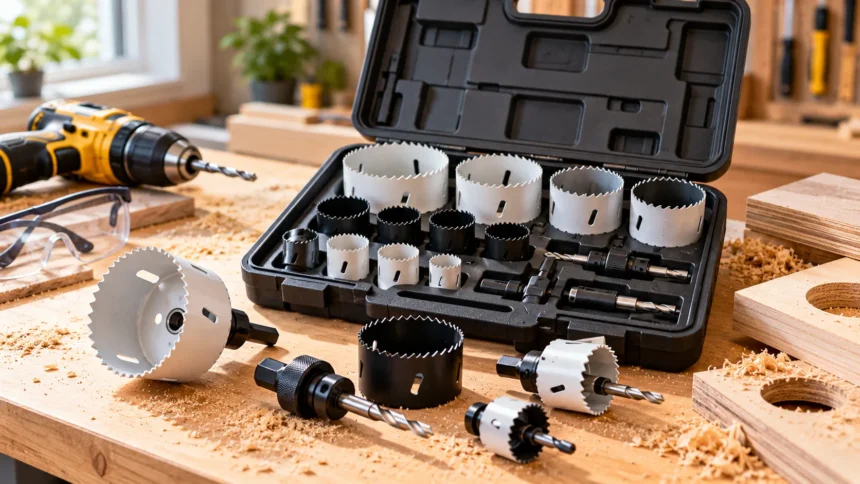
A hole saw kit is a useful addition to any toolbox, especially for projects that require clean, circular holes in different materials. Whether you are installing door hardware, working on furniture, or completing home improvement projects, the right hole saw set can make the job easier. These tools are available in several sizes, materials, and designs to suit different applications.
Choosing a hole saw kit involves understanding more than the diameter of the cutting attachment. The type of cutting teeth, material compatibility, arbor system, and drill requirements all influence performance. Selecting the wrong kit may result in rough cuts, premature tool wear, or damage to the workpiece.
This guide explains hole saw kit sizes, common types, essential components, and important buying considerations. It also covers material compatibility, maintenance, and practical safety tips to help you understand which features matter most when comparing different hole saw sets.
What Is a Hole Saw Kit?
A hole saw kit is a collection of circular cutting attachments designed to create holes in materials such as wood, plastic, drywall, and certain metals. Unlike standard drill bits, hole saws remove material around the outside edge of a circle. This cutting method allows them to create relatively large holes without removing the entire interior section.
Most hole saw kits contain several cutting cups in different diameters, along with compatible arbors and pilot drill bits. Some sets also include adapters, replacement components, or a storage case. The number of attachments varies depending on whether the kit is intended for occasional home improvement tasks or professional applications.
Hole saw kits are commonly used in carpentry, electrical installation, plumbing, and general maintenance projects. Their usefulness depends on selecting an appropriate saw for the material and application. Understanding the basic components and available cutting technologies can help buyers choose tools that match their existing equipment and project requirements.
How Does a Hole Saw Work?
A hole saw features a cylindrical cutting edge that creates a circular opening as the tool rotates. Its teeth or abrasive cutting surface remove material around the perimeter of the intended hole. The remaining center section forms a circular plug, which may stay inside the cutting cup until removed.
A pilot drill bit is commonly positioned in the center of the hole saw assembly. It helps establish the cutting location and guide the tool during operation. The pilot bit is connected through an arbor, which attaches the hole saw to a compatible drill or other suitable equipment.
Different hole saw designs use different cutting methods depending on the intended material. Toothed saws are common for wood and certain metals, while abrasive or diamond-coated attachments are used for selected masonry and tile applications. Material compatibility, equipment condition, and proper tool selection are essential for reliable cutting performance.
What Comes in a Hole Saw Kit?
A typical hole saw kit contains several hole saw cups designed for different hole diameters. These attachments allow users to select an appropriate size without purchasing every cutting tool separately. The available sizes and materials depend on the manufacturer’s intended applications and the overall quality of the set.
Many kits also include one or more arbors and pilot drill bits. The arbor connects the hole saw to the drill, while the pilot bit helps guide the cutting assembly. Some systems use quick-change mechanisms that make attachment changes easier, although compatibility varies between brands and product designs.
A storage case is another useful feature included with many hole saw sets. Organized compartments help protect cutting edges and reduce the likelihood of losing small components. Premium kits may provide additional adapters, replacement pilot bits, or specialized accessories, making it important to review the actual contents before buying.
Common Hole Saw Kit Sizes
Hole saw kits are available in a wide range of diameters to accommodate different projects. Common sizes include 3/4 inch, 1 inch, 1-1/4 inches, 1-1/2 inches, 2 inches, 2-1/2 inches, and 3 inches. Larger specialty attachments are also available for applications requiring wider openings.
Smaller hole saws are often used for cable openings and compact fittings, while medium sizes can accommodate certain plumbing and door hardware requirements. Larger diameters may be useful for ventilation openings or other specialized projects. However, the required size must always match the specific component or product being installed.
| Hole Saw Diameter | Common Applications |
|---|---|
| 3/4 inch (19 mm) | Small cable openings |
| 1 inch (25 mm) | Small fittings and pass-throughs |
| 1-1/4 inches (32 mm) | Cable routing and selected fittings |
| 1-1/2 inches (38 mm) | Door lock bores in some hardware systems |
| 2 inches (51 mm) | Larger cable openings |
| 2-1/8 inches (54 mm) | Common door lockset face bores |
| 2-1/2 inches (64 mm) | Selected plumbing and fixture openings |
| 3 inches (76 mm) | Ventilation and larger access openings |
| 4 inches (102 mm) | Certain duct and ventilation applications |
Buying a kit with numerous sizes is not always necessary. A smaller set containing frequently used diameters may provide better value for occasional projects. Before purchasing, compare the included sizes with your planned applications and check the manufacturer’s specified dimensions.
Different Types of Hole Saw Kits
Hole saw kits come in several types, including bi-metal, carbide-tipped, diamond-grit, and specialty wood-cutting sets. Each type is designed for particular materials and working conditions. Choosing the appropriate cutting technology helps improve performance while reducing unnecessary wear on the attachment.
Bi-metal hole saws are commonly used for general woodworking and selected metalworking applications. Carbide-tipped designs offer increased wear resistance for certain dense or abrasive materials. Diamond-grit attachments are intended for specific hard surfaces, such as ceramic, porcelain, stone, or glass, depending on manufacturer specifications.
Different kits also vary in the quality of their arbors, pilot bits, and storage systems. Some are designed for occasional household projects, while others target frequent professional use. Understanding the available types helps buyers avoid purchasing a general-purpose kit for a specialized material it cannot safely or effectively handle.
Bi-Metal Hole Saw Kits
Bi-metal hole saws combine different metals to create a cutting edge that balances hardness and flexibility. They are commonly selected for wood, plastic, drywall, and certain sheet-metal applications. Their versatility makes them a popular option for general maintenance and woodworking projects.
Many bi-metal hole saws use high-speed steel cutting teeth attached to a more flexible steel body. This construction helps the cutting edge resist wear while reducing some risks associated with brittle materials. However, performance varies according to product quality, tooth design, and the material being cut.
Bi-metal kits are often a practical choice for buyers who need several common diameters. They generally offer a balance between purchase cost and versatility. Before selecting a set, check its material ratings and confirm that the included accessories are compatible with the intended equipment.
Carbide-Tipped Hole Saw Kits
Carbide-tipped hole saws feature cutting edges made with hard, wear-resistant carbide materials. They are often used for selected dense or abrasive materials that can wear down ordinary cutting teeth. Their exact capabilities depend on the tooth design and intended application.
Some carbide-tipped models are designed for hardwood, fiber cement, fiberglass, laminates, or specific metalworking tasks. However, not every carbide hole saw is suitable for the same materials. Product descriptions should be reviewed carefully because different carbide cutting systems may have substantially different limitations.
Carbide-tipped kits can cost more than basic alternatives, but their wear resistance may justify the investment for frequent professional work. Buyers should consider the expected workload and compatible materials. Selecting the correct product helps avoid unnecessary replacement expenses and problems caused by using unsuitable cutting attachments.
Diamond Hole Saw Kits
Diamond hole saw kits use industrial diamond abrasives rather than conventional cutting teeth. These attachments are commonly designed for hard or brittle materials such as ceramic tile, porcelain, stone, and certain glass products. They differ from ordinary wood-cutting hole saws in both construction and intended applications.
Diamond-coated cutting edges are available in several grades and designs. Some models are intended for specific materials or equipment systems, while others have broader stated compatibility. Their performance depends on product quality and whether the attachment matches the hardness and characteristics of the workpiece.
Diamond hole saw kits are useful for specialized renovation and installation projects involving hard surface materials. However, they are not universal replacements for conventional toothed saws. Buyers should verify manufacturer instructions, required equipment, and material suitability before selecting a diamond-grit set for a particular project.
Hole Saw Kits for Woodworking
Woodworking hole saw kits are designed for creating circular openings in materials such as solid wood, plywood, and certain engineered wood products. They are commonly used in furniture production, cabinetry, and interior construction. The required cutting attachment depends on the material’s density and the quality of the opening needed.
Wood-cutting hole saws are available with different tooth arrangements and cutting-edge materials. Some products prioritize general versatility, while others are optimized for particular wood types. Buyers should also consider cutting depth because the maximum supported material thickness varies across models.
For occasional woodworking, a compact kit containing common diameters may be sufficient. Professional cabinetmakers or carpenters may prefer more durable attachments and specialized accessories. A suitable selection should provide the required sizes without including numerous unused components that unnecessarily increase the purchase price.
Hole Saw Kits for Metalworking
Metalworking hole saw kits are designed for creating openings in compatible metal materials. These may include certain types of steel, aluminum, and other alloys, depending on the cutting-edge construction. Because metals vary considerably in hardness and thickness, product compatibility is especially important.
Some bi-metal hole saws are rated for selected metalworking tasks, while specialized carbide models may be intended for more demanding applications. Material specifications should clearly identify supported metals and limitations. The presence of metal-cutting teeth alone does not guarantee suitability for every alloy or workpiece.
Buyers should choose kits with clearly documented performance ratings and durable construction. Frequent professional applications may justify higher-quality cutting attachments and replacement accessories. Appropriate training, protective equipment, and manufacturer guidance are important because metal-cutting operations can involve sharp edges, heat, and moving machinery.
Hole Saw Kits for Plastic and PVC
Plastic and PVC are common materials used in household fixtures, plumbing components, and general construction. Certain hole saw kits are designed to accommodate these materials. The most suitable attachment depends on the plastic type, thickness, and manufacturer’s stated compatibility.
Plastic materials can respond differently to mechanical cutting compared with wood or metal. Some products are more sensitive to heat or mechanical stress, which can affect finished openings. A hole saw designed for the relevant material is generally preferable to an attachment selected only because it has the required diameter.
For occasional household projects, a general-purpose kit may include the sizes required for certain plastic fittings. However, specialty materials may require different equipment. Checking product specifications helps buyers understand whether a kit is suitable for the particular plastic components involved in their planned work.
Hole Saw Kits for Tile and Masonry
Tile and masonry materials require cutting tools that match their hardness and surface characteristics. Conventional woodworking hole saws are generally unsuitable for these applications. Specialized abrasive or carbide-based attachments may be required, depending on the material and the manufacturer’s product rating.
Ceramic wall tile, porcelain, natural stone, and masonry products have different cutting requirements. A hole saw suitable for one type of tile may not work effectively on another. Some dense materials require specifically rated diamond-grit attachments rather than general-purpose carbide or steel-tooth products.
Buyers should identify the exact surface material before purchasing a specialized kit. Equipment compatibility and manufacturer safety requirements are especially important for these applications. Professionals may also consider durability, replacement costs, and the range of materials they regularly encounter when selecting suitable products.
Hole Saw Kit Arbor and Pilot Bit Compatibility
The arbor is an essential component that connects the hole saw attachment to compatible power equipment. Different kits use various arbor sizes, thread designs, and connection systems. A saw cup cannot necessarily be used with every arbor, even when the components appear similar.
Pilot drill bits are commonly included to provide guidance during cutting. Their dimensions, attachment mechanisms, and materials vary between systems. Buyers should confirm that replacement pilot bits are available and that the kit includes the necessary connecting components.
Compatibility becomes particularly important when adding new hole saw sizes to an existing collection. Some manufacturers provide interchangeable systems, while others use proprietary connections. Reviewing specifications before purchase can prevent wasted money on attachments that do not fit the equipment already owned.
Quick-Change Hole Saw Kits
Quick-change hole saw kits use specialized connection systems designed to simplify switching between different cutting diameters. These systems can be convenient for professionals who regularly work with several hole sizes. Their main advantage is reducing the amount of equipment adjustment required between different tasks.
Quick-change systems vary by manufacturer, and their accessories are not always interchangeable. Some designs also include features intended to simplify removal of the material plug left inside the cutting cup. These conveniences can improve workflow, particularly during repetitive professional applications.
However, quick-change features may increase the initial cost of a hole saw set. Buyers should compare the convenience against their expected frequency of use. Occasional users may find a conventional kit sufficient, while professionals may appreciate more efficient accessory management.
Hole Saw Kit vs. Individual Hole Saws
A complete hole saw kit provides several diameters and accessories in one package. This can be economical when multiple sizes are needed for different projects. Kits also offer organized storage and may include components that would otherwise require separate purchases.
Individual hole saws can be a better choice when only one specific diameter is required. They allow buyers to select a specialized attachment without paying for additional sizes that may never be used. However, separate arbors or compatible accessories may still be necessary depending on the product.
The best purchasing option depends on expected usage and existing equipment. Someone completing one specialized project may prefer an individual attachment, while a professional handling varied work may benefit from a comprehensive kit. Comparing total accessory costs helps determine which option offers better overall value.
Important Features to Look for in a Hole Saw Kit
A good hole saw kit should include sizes that match the intended projects and cutting edges suitable for the relevant materials. Durable construction is particularly important when attachments will be used frequently. Clear product specifications also help buyers understand performance limitations before making a purchase.
Compatibility is another essential consideration. Check arbor connections, equipment requirements, and the availability of replacement components. Kits with reliable storage cases may also be easier to organize and protect between jobs, especially when they contain several small accessories.
Warranty coverage and manufacturer support can provide additional value. Reputable products typically offer clearer documentation about compatible materials and intended uses. Buyers should compare these details alongside price rather than assuming that the most expensive kit automatically provides the best solution.
Common Mistakes When Buying a Hole Saw Kit
One common buying mistake is selecting a kit based only on the number of included pieces. A large set may appear economical but provide limited value if most diameters are unnecessary. Choosing a smaller kit with frequently needed sizes can sometimes be more practical.
Another mistake is assuming that every hole saw can cut all materials. Wood, metal, ceramics, and stone have different mechanical characteristics. Using an incompatible cutting attachment can produce poor results and increase the risk of equipment damage or injury.
Ignoring compatibility with existing equipment is another expensive oversight. A kit may contain suitable cutting cups but require a different arbor or equipment connection. Reviewing product specifications, material ratings, and included accessories before purchase helps prevent unnecessary returns or additional expenses.
How Much Does a Hole Saw Kit Cost?
Hole saw kit prices vary according to the number of pieces, cutting-edge material, manufacturing quality, and included accessories. Basic general-purpose kits are usually less expensive than professional carbide or specialized diamond sets. Brand, packaging, and retailer pricing can also influence the final purchase cost.
An inexpensive set may be sufficient for occasional light-duty projects when its specifications match the intended materials. Professional users may prefer higher-quality attachments that offer better durability under repeated use. However, a higher price does not automatically mean that every component performs better for every application.
When comparing costs, evaluate the useful sizes, available accessories, and expected service life. Replacement pilot bits and compatible arbors may affect long-term ownership expenses. Considering the complete package can provide a more accurate measure of value than comparing purchase prices alone.
How to Maintain a Hole Saw Kit
Proper maintenance can help preserve the condition and service life of hole saw attachments. Cutting edges should be inspected regularly for visible damage, excessive wear, or missing teeth. Damaged components should be replaced rather than used beyond their intended condition.
Cleaning attachments after use can help prevent debris accumulation and protect metal components during storage. Manufacturer-approved maintenance practices may also reduce corrosion and unnecessary deterioration. Keeping the kit dry and properly organized is especially useful when equipment is stored for extended periods.
Storage cases protect attachments from impacts and make it easier to identify missing accessories. Separating damaged components from usable equipment can also prevent accidental reuse. A well-maintained kit remains easier to inspect and helps support safer, more reliable performance during future projects.
Safety Considerations for Hole Saw Kits
Hole saws are cutting tools that require suitable equipment, training, and protective measures. Their rotating components and sharp cutting edges can cause injury when handled incorrectly. Users should follow manufacturer instructions and applicable workplace safety requirements rather than relying on general descriptions alone.
Appropriate protective equipment and a stable working environment are important considerations. Damaged attachments, incompatible equipment, and unsecured materials can increase risk. Young or inexperienced users should not operate these tools without qualified adult supervision and appropriate practical instruction.
Different materials may create additional hazards, including sharp debris, airborne particles, or damaged surface coatings. Professional guidance may be necessary when working with unfamiliar building materials. Prioritizing equipment condition and safety requirements helps reduce avoidable risks during woodworking and renovation projects.
How to Choose the Best Hole Saw Kit for Your Needs
Choosing the best hole saw kit begins with identifying the materials and hole sizes required for your projects. A general-purpose set may suit occasional woodworking and household maintenance, while specialized professional work may require more specific cutting technologies. Material compatibility should always take priority over the number of attachments.
Next, review the included arbor, pilot bits, storage case, and any additional accessories. Confirm that the components match your existing equipment and that replacement parts are available. This step helps prevent purchasing a kit that requires unexpected accessories or cannot support the intended applications.
Finally, compare product quality, warranty information, and overall value. A well-chosen kit should contain useful sizes, suitable materials, and reliable components without unnecessary extras. Taking time to review these factors can help buyers make a practical purchasing decision that matches their experience and project requirements.
Conclusion
A hole saw kit is a versatile collection of cutting attachments used for creating circular openings in different materials. Available options include bi-metal, carbide-tipped, diamond-grit, and specialized wood-cutting kits. Understanding these differences helps buyers select tools that match their projects rather than relying on a single general-purpose option.
Hole saw sizes, arbor compatibility, cutting depth, and material ratings are important considerations when comparing kits. A larger collection is not automatically better than a compact set with useful diameters. Buyers should also consider storage quality, accessory availability, and expected long-term maintenance requirements.
Choosing the right hole saw kit involves balancing functionality, quality, safety, and cost. Reviewing manufacturer specifications and understanding the limitations of different cutting technologies can help prevent unsuitable purchases. With an appropriate selection and proper professional guidance, a hole saw kit can be a valuable addition to a woodworking or maintenance toolkit.
Frequently Asked Questions
1. What Is a Hole Saw Kit Used For?
A hole saw kit contains circular cutting attachments for making openings in compatible materials such as wood, plastic, drywall, and selected metals. Applications include furniture manufacturing, maintenance, and construction projects.
2. What Sizes Come in a Hole Saw Kit?
Common hole saw sizes include 3/4 inch, 1 inch, 1-1/4 inches, 1-1/2 inches, 2 inches, and 3 inches. Larger and specialized diameters are available depending on the manufacturer’s kit.
3. What Is the Difference Between Bi-Metal and Carbide Hole Saws?
Bi-metal hole saws are commonly used for general woodworking and compatible metals. Carbide designs offer increased wear resistance for selected dense or abrasive materials, depending on the specific product.
4. Can One Hole Saw Kit Cut Wood, Metal, and Tile?
Some kits support several materials, but no single cutting technology is suitable for every application. Wood, metal, and tile may require different attachments, so always verify manufacturer material ratings.
5. Is It Better to Buy a Hole Saw Kit or Individual Saws?
A kit can offer better value when several diameters are needed. Individual saws may be more economical for a single specialized project, especially when compatible accessories are already available.
