

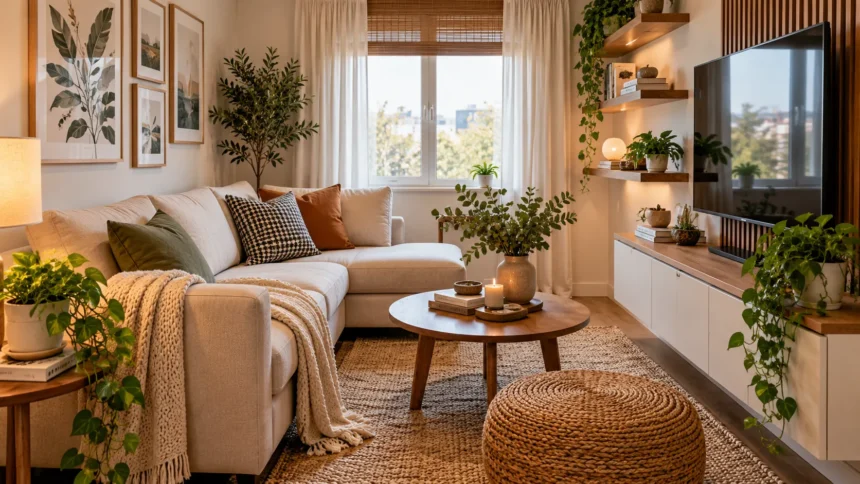
A small living room can still feel comfortable, stylish, and highly functional when every design choice has a clear purpose. Limited square footage does not mean you have to sacrifice personality or visual appeal. With the right furniture, colors, storage, lighting, and layout, even a compact room can feel open, welcoming, and thoughtfully designed.
The key is to avoid overcrowding the space and focus on items that serve more than one function. Instead of filling the room with large furniture and unnecessary decor, choose pieces that support how you actually live. Smart small living room ideas can help you create a space that feels balanced, practical, and much larger than its physical dimensions.
Choose Furniture That Fits the Scale of the Room
Large sofas and oversized chairs can quickly dominate a compact living room. Choose furniture with slimmer arms, exposed legs, and proportions that match the available floor area. A smaller sofa can still provide comfortable seating while leaving enough room for movement and additional pieces such as a side table or compact chair.
Avoid assuming that every small living room needs miniature furniture. The goal is not to shrink everything but to select fewer pieces with appropriate dimensions. One well-proportioned sofa and a versatile chair often work better than several tiny seats that create visual clutter and make the room harder to navigate.
Measure the room before purchasing anything. Pay attention to doorways, walking paths, windows, and the space needed to open drawers or cabinets. Furniture that fits comfortably within these boundaries will make the room feel intentional rather than squeezed together, and careful planning can prevent expensive mistakes.
Use Light Colors to Open Up the Space
Light colors can make a small living room feel brighter and more spacious. Soft whites, warm creams, pale beige, muted gray, and light natural tones reflect more light and create a cleaner visual background. These shades are especially useful in rooms with limited windows or lower levels of natural light.
You do not have to create an entirely white room to achieve an open feeling. Add subtle contrast through cushions, rugs, artwork, and furniture finishes while keeping the main walls relatively light. This allows the room to feel airy without becoming flat, cold, or lacking in character.
If you prefer deeper colors, use them strategically. A darker accent wall, rich throw, or bold chair can create depth when balanced with lighter surroundings. The goal is to prevent heavy colors from covering every surface, which can sometimes make an already compact room feel more enclosed.
Use Mirrors to Create More Visual Depth
Mirrors are one of the easiest tools for making a small living room appear larger. A large mirror can reflect light and create the impression of additional depth, especially when placed opposite or near a window. This can help brighten darker corners while making the room feel more open.
Choose a mirror size that suits the wall rather than using several small mirrors without a clear reason. One larger piece often creates a cleaner visual effect and reduces decorative clutter. Framed mirrors can also support the room’s overall style, whether you prefer modern, traditional, rustic, or minimalist interiors.
Placement matters as much as size. Try to position mirrors where they reflect something attractive, such as natural light, artwork, plants, or an open doorway. Reflecting clutter or a crowded storage area may make the room feel busier instead of creating the calm, spacious effect you want.
Choose Multi-Functional Furniture
Multi-functional furniture can make a small living room much easier to manage. Storage ottomans, nesting tables, sofa beds, benches with hidden compartments, and coffee tables with shelves can perform more than one job. These pieces reduce the need for additional furniture and help you make better use of limited square footage.
A storage ottoman, for example, can work as a footrest, extra seat, coffee table, and place to store blankets. Nesting tables can be separated when guests arrive and stacked together when you need more floor space. This flexibility allows the room to adapt to different activities without feeling permanently crowded.
Before purchasing a multi-purpose item, make sure each function is genuinely useful. A complicated piece of furniture is not automatically practical if you rarely use its extra features. Choose designs that solve real problems in your room and support your normal daily routine.
Make Better Use of Vertical Space
When floor space is limited, walls become valuable storage and display areas. Floating shelves, tall bookcases, wall-mounted cabinets, and vertical storage systems can keep important items accessible without taking up much room. Drawing the eye upward can also make the room feel taller and more spacious.
Use vertical storage carefully so the walls do not become overloaded. A few well-organized shelves usually look better than covering every available surface with books, decorations, and storage baskets. Leave some empty space between objects to create breathing room and keep the design visually balanced.
Tall curtains can also emphasize vertical height. Hanging curtain rods closer to the ceiling rather than directly above the window can make the walls appear taller. Choose panels that reach near the floor for a polished look, and avoid bulky fabrics if natural light is already limited.
Keep the Layout Open and Easy to Move Through
Furniture placement can completely change how large or small a room feels. Keep clear walking paths between the entrance, sofa, windows, and other frequently used areas. When furniture blocks movement, even a reasonably sized living room can feel cramped and difficult to use.
Try not to push every piece against the walls automatically. In some rooms, slightly floating a sofa away from the wall can improve circulation and create a more intentional seating zone. Test different layouts before deciding, because the best arrangement depends on the room’s shape, doorways, and natural focal points.
Avoid adding furniture simply because there is an empty corner. Negative space is valuable in a small living room because it prevents the design from feeling crowded. Leaving some floor and wall areas open gives important pieces more visual impact and makes the overall room easier to enjoy.
Add Storage Without Creating Clutter
Hidden storage is especially useful in compact living rooms. Media consoles with drawers, baskets under benches, side tables with cabinets, and sofas with built-in storage can keep everyday items out of sight. Reducing visible clutter helps the room feel calmer and allows decorative elements to stand out more clearly.
Open storage can still work when it is carefully styled. Group books, baskets, and decorative items instead of filling shelves randomly. Using similar containers can create a more organized appearance and help small objects feel like part of the design rather than scattered household clutter.
Regularly review what is stored in the living room. Items that are rarely used may be better kept elsewhere or removed completely. A small space becomes much easier to maintain when storage is reserved for objects that genuinely support how the room is used.
Use Rugs to Define the Living Area
A rug can visually anchor the seating area and make a small living room feel more complete. Choose one large enough to connect the main furniture pieces rather than using a very small rug that floats in the middle of the floor. Proper scale can actually make the room appear larger and more cohesive.
Light or moderately patterned rugs can add texture without overwhelming the space. Geometric designs, subtle stripes, or natural woven textures can create visual interest while maintaining an open feeling. If the room already contains bold furniture or artwork, a simpler rug may help balance the overall look.
Consider durability as well as appearance. Living rooms experience frequent foot traffic, so choose a material that matches your household and maintenance preferences. An attractive rug should support everyday use rather than becoming something you constantly worry about protecting.
Layer Lighting for a More Spacious Feel
Good lighting can make a small living room feel warmer, brighter, and more flexible. Instead of relying entirely on one ceiling fixture, combine overhead lighting with floor lamps, table lamps, or wall sconces. Layered lighting helps illuminate different parts of the room and reduces dark corners that can make a space feel smaller.
Wall-mounted lights are particularly useful when floor and table space are limited. Sconces can provide reading or ambient light without requiring bulky lamp bases. Slim floor lamps can also work well in narrow corners where a larger side table would make movement difficult.
Use warm, comfortable lighting rather than extremely harsh bulbs. Adjustable fixtures or dimmers can make the room suitable for daytime activities, entertaining, reading, and relaxing at night. Flexible lighting allows the same small space to support several different moods and functions.
Decorate With Plants and Natural Elements
Plants can bring life and freshness into a small living room without requiring major changes. Choose varieties that suit the available natural light and your ability to maintain them. A tall plant in an unused corner can create vertical interest, while smaller plants can add color to shelves or side tables.
Flowers are another easy way to introduce natural beauty. A simple arrangement on a coffee table or console can soften hard furniture lines and add seasonal color. If you enjoy symbolic or personalized floral choices, exploring zodiac flowers can provide inspiration for blooms that match your style or personality.
Avoid filling every surface with plants. A few carefully positioned natural elements usually create a stronger effect than a large collection competing for attention. Choose containers that complement the room’s colors and materials so greenery feels integrated rather than randomly added.
Keep Decor Simple but Personal
Small living rooms benefit from thoughtful editing. Too many decorative objects can make shelves, tables, and walls feel crowded, even when the furniture layout is otherwise well planned. Choose a smaller number of pieces that have personal meaning or contribute strongly to the room’s visual style.
Artwork can add personality without taking up floor space. One larger piece may work better than a busy gallery wall in an especially compact room, although either approach can succeed with careful spacing. Select artwork that supports your color palette and creates a focal point rather than competing with everything around it.
Personal items such as photographs, travel souvenirs, books, or handmade objects can make the room feel unique. The goal is not to create a showroom with no personality. Instead, edit your display so each item has enough space to be noticed and appreciated.
Choose the Right Coffee Table
A traditional rectangular coffee table may not be the best choice for every small living room. Round, oval, nesting, or lift-top designs can improve circulation and provide more flexibility. Rounded edges are particularly useful where walking space is tight because they reduce sharp corners in busy pathways.
Glass or acrylic tables can create a lighter visual effect because they allow more of the floor to remain visible. This can make the seating area feel less crowded while still providing a useful surface. Wooden tables can also work beautifully when they have slim legs and proportions that suit the room.
In extremely small spaces, consider skipping a traditional coffee table entirely. A pair of nesting side tables, a storage ottoman, or a compact movable table may provide enough surface area. Choosing flexibility over convention can help the room function better without sacrificing style.
Create One Clear Focal Point
Every living room benefits from a focal point that gives the design visual direction. This could be a fireplace, television wall, large artwork, statement mirror, or attractive window. In small spaces, having one dominant feature can make the room feel more organized because the eye has somewhere natural to rest.
Arrange seating and decorative elements around the focal point without making everything perfectly symmetrical. The goal is to create balance and visual flow. When several bold features compete for attention, a small living room can quickly feel chaotic or overly decorated.
If your room does not have an obvious focal point, create one. A large framed print, textured wall, decorative mirror, or striking piece of furniture can work well. Keep surrounding decor relatively simple so the focal feature remains clear and effective.
Conclusion
A small living room can be both stylish and functional when the layout, furniture, and decor are chosen carefully. Light colors, appropriately scaled furniture, layered lighting, mirrors, and smart storage can make compact spaces feel more comfortable and visually open. The goal is to create a room that supports everyday life without becoming overcrowded.
Multi-functional furniture and vertical storage can help you use every area more efficiently. At the same time, leaving some empty space is just as important as adding storage or decor. A room often feels larger when it contains fewer, better-chosen pieces that have room to breathe.
Focus on comfort, movement, and personality rather than trying to follow every design trend. A small living room should reflect how you actually live while making the most of the available space. With thoughtful planning and simple adjustments, even a limited floor plan can feel polished, welcoming, and surprisingly spacious.
FAQs
How can I make a small living room look bigger?
Use light colors, mirrors, slim furniture, vertical storage, layered lighting, and clear walking paths. Keeping clutter under control and leaving some open floor space can also make the room feel significantly larger.
What furniture works best in a small living room?
Choose appropriately scaled sofas, compact chairs, nesting tables, storage ottomans, and other multi-functional pieces. Furniture with exposed legs and slimmer profiles can also create a lighter, less crowded appearance.
Should a small living room use a large rug?
Yes, in many cases a larger rug can make the seating area feel more connected and spacious. Choose a size that reaches under at least part of the main furniture instead of floating alone.
What colors are best for small living rooms?
Soft whites, creams, beige, pale gray, and other light neutrals can make small rooms feel brighter. Deeper accent colors can still work when they are balanced with lighter walls and furnishings.
How do I decorate a small living room without cluttering it?
Choose fewer decorative objects, use walls for artwork or shelves, and keep surfaces relatively clear. Focus on meaningful pieces, coordinated colors, and functional decor instead of filling every available area.
