

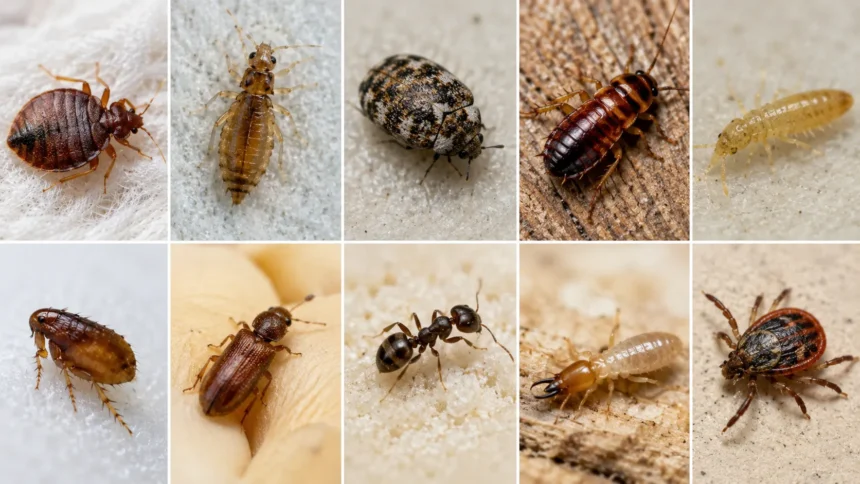
10 Bugs That Look Like Bed Bugs & How to Tell
Finding a tiny brown insect near your bed can immediately make you wonder whether you have bed bugs. The problem is that several common household insects look surprisingly similar to bed bugs, especially when they are small, flattened, reddish brown, or discovered around furniture. Carpet beetles, bat bugs, spider beetles, fleas, booklice, and even young cockroaches can sometimes be mistaken for bed bugs at first glance. Correct identification matters because each pest requires a different approach to control. Treating your home for bed bugs when another insect is responsible can waste time, money, and effort. Learning a few key differences can help you identify what you are actually seeing.
Adult bed bugs are usually small, flat, oval insects that measure roughly the size of an apple seed. Their bodies are typically reddish brown, although recently fed bed bugs can look darker, larger, and more elongated. Unlike fleas, bed bugs cannot jump, and unlike many beetles, they do not have hard wing covers that allow them to fly. They tend to hide in narrow cracks near sleeping areas and emerge primarily to feed on blood. Because several insects share parts of this appearance or behavior, location alone is not enough to confirm an infestation. You need to consider body shape, movement, markings, feeding behavior, and evidence around the room.
Some bed bug lookalikes are harmless household visitors, while others can cause their own pest problems. A carpet beetle may damage fabrics, a flea may bite people and pets, and a cockroach nymph may indicate an entirely different type of infestation. Bat bugs and swallow bugs are even more difficult to distinguish because they are close relatives of bed bugs. Proper identification therefore protects you from using the wrong treatment strategy. This guide covers 10 bugs that look like bed bugs, explains their distinguishing features, and shows what evidence to check before assuming the worst. Knowing exactly what you found is the first step toward solving the problem effectively.
What Do Bed Bugs Actually Look Like?
Adult bed bugs are generally oval, flattened insects with six legs and two visible antennae. Unfed adults usually appear reddish brown and have a broad body that looks somewhat like a small flattened apple seed. Their size is often around a few millimeters long, making them visible to the naked eye if you look carefully. After feeding, their bodies become noticeably fuller, darker, and more elongated because they have taken in blood. Bed bugs do not have functional wings and cannot fly. They also cannot jump, so they move by crawling across mattresses, furniture, floors, walls, luggage, and clothing.
Young bed bugs, called nymphs, are smaller and lighter than adults, which makes identification more difficult. Newly hatched nymphs may appear pale, yellowish, or almost translucent before they have fed. After consuming blood, their abdomen can appear bright red because their pale body allows the blood meal to show through. Nymphs gradually darken as they pass through several developmental stages. Their overall shape still resembles the adult bed bug, although the smallest stages can be extremely difficult to see without close inspection. These pale nymphs are sometimes confused with booklice or other tiny household insects.
Bed bug eggs provide another useful identification clue because they look different from the insects themselves. The eggs are extremely small, white to pearly, and approximately the size of a tiny grain or pinhead. Females often place them in cracks, mattress seams, furniture joints, and other protected hiding areas. Eggs may be difficult to remove because they can adhere to surfaces. Finding one isolated white object does not automatically confirm bed bugs because dust, fibers, and other insect eggs may appear similar. Multiple signs should therefore be considered together before reaching a conclusion.
The locations where bed bugs hide can help distinguish them from many lookalikes. They commonly shelter in mattress seams, box springs, bed frames, headboards, upholstered furniture, baseboards, and nearby cracks. As an infestation grows, they may spread farther into the room and occupy electrical outlets, furniture joints, curtains, or wall gaps. Their flattened bodies allow them to fit into remarkably narrow spaces. They prefer areas close to where people remain still for long periods because feeding opportunities are easier to access. However, discovering an insect on a mattress alone is not enough to prove it is a bed bug.
Behavior also provides important clues when identifying bed bugs. These insects generally hide during periods of inactivity and emerge when they detect cues associated with a potential host. They feed on blood rather than crumbs, fabrics, wood, paper, or household debris. Bed bugs usually crawl relatively steadily instead of jumping or flying away when disturbed. Heavy infestations may produce additional evidence such as dark fecal spotting, shed skins, eggs, and multiple insects in hiding places. Looking at the complete pattern is more reliable than comparing a single insect with a photograph. Accurate identification combines appearance, location, movement, and signs of feeding activity.
Bugs 1–5 That Are Commonly Mistaken for Bed Bugs
1. Bat bugs are among the most convincing bed bug lookalikes because they are closely related and have nearly identical body shapes. They are small, oval, flat, and reddish brown, making casual visual identification extremely difficult. The main physical difference involves tiny hairs around the head and upper body, which are generally longer on bat bugs than on common bed bugs. These hairs may require magnification to evaluate properly. Bat bugs are usually associated with bats living in attics, walls, chimneys, or other parts of a building. If bat activity is present near the room where insects are appearing, professional identification becomes especially valuable.
2. Swallow bugs are another close relative of bed bugs and can appear very similar in size, shape, and color. They are usually associated with swallow nests and other bird nesting areas rather than human sleeping spaces. When birds leave a nest, swallow bugs may move indoors while searching for another source of blood. Their bodies are generally oval and flattened like those of bed bugs, so distinguishing them visually can be difficult without experience. Checking around rooflines, windows, eaves, or old bird nests can provide an important clue. If insects appear seasonally near areas where birds nest, swallow bugs may be more likely than ordinary bed bugs.
3. Carpet beetles are frequently mistaken for bed bugs because adults and larvae are often found inside bedrooms and around fabrics. Adult carpet beetles are usually more rounded or dome-shaped than bed bugs and may have mottled patterns of white, brown, yellow, or black. Their hard outer wing covers also give them a more beetle-like appearance. Carpet beetle larvae look completely different because they are elongated and covered in noticeable hairs or bristles. The larvae feed on natural fibers, hair, feathers, and other organic material rather than human blood. Finding damaged fabrics or hairy larvae around closets and carpet edges points more strongly toward carpet beetles.
4. Spider beetles can be confused with recently fed bed bugs because their bodies are rounded, reddish brown, and sometimes shiny. However, spider beetles usually have a more globular body shape with long legs and antennae that can make them resemble tiny spiders. Their bodies are not as broadly flattened as unfed bed bugs. They are stored-product pests and are more likely to feed on dried foods, grains, spices, pet food, or organic debris than blood. Kitchens, pantries, cupboards, and stored-food areas are therefore more typical locations. Finding several insects around food packaging rather than mattress seams strongly suggests spider beetles instead of bed bugs.
5. Fleas are small blood-feeding insects that can produce itchy bites, which is why they are sometimes confused with bed bugs even though their body shape is different. Fleas are laterally compressed, meaning they look narrow from above rather than broad and oval like bed bugs. Their most distinctive behavior is jumping, which bed bugs cannot do. Fleas are frequently associated with cats, dogs, wildlife, carpets, pet bedding, and upholstered furniture. They may move rapidly and disappear into fabric before you can examine them closely. If a small dark insect suddenly jumps when disturbed, you are almost certainly not looking at a bed bug.
Bugs 6–10 That Can Look Like Bed Bugs
6. Booklice, also called psocids, are extremely small insects that may be mistaken for young bed bug nymphs because both can appear pale and tiny. Booklice are usually whitish, grayish, or light brown and have proportionally larger heads than bed bugs. Their bodies are also more elongated and delicate rather than broadly oval and flattened. They commonly live in humid locations where microscopic mold or organic material is available. Bathrooms, windowsills, bookshelves, stored papers, cardboard boxes, and damp walls are common places to find them. Unlike bed bugs, booklice do not feed on human blood and generally do not bite people.
7. Cockroach nymphs can occasionally resemble bed bugs because young cockroaches may be small, wingless, brown, and active at night. The similarities become especially confusing when a nymph is discovered near furniture or in a bedroom. However, cockroach nymphs usually have a more elongated body, longer antennae, and noticeably faster movement than bed bugs. Many species also display distinctive markings or bands as they develop. Cockroaches are more commonly associated with kitchens, bathrooms, drains, appliances, food debris, and moisture sources. Finding droppings, egg cases, or multiple fast-moving insects near food areas makes cockroaches a more likely explanation.
8. Ticks are sometimes mistaken for engorged bed bugs because both may appear rounded and swollen after feeding on blood. The easiest difference is the number of legs because adult ticks have eight legs, while bed bugs are insects and therefore have six. Ticks also lack the obvious antennae seen on bed bugs. They are usually introduced into homes on pets, clothing, or people after exposure to grassy, wooded, or brush-filled areas. A tick normally remains attached to a host for an extended feeding period rather than repeatedly hiding in mattress seams. Counting the legs is one of the fastest ways to distinguish these two pests.
9. Head lice can be confused with bed bug nymphs because both are small, pale to brownish insects that consume blood. Lice, however, are adapted to live directly on human hair and have narrow bodies with specialized claws for gripping hair shafts. Bed bugs do not live permanently on the human body and usually retreat to cracks or furniture after feeding. Lice eggs, called nits, are attached firmly to individual hairs rather than hidden in mattress seams. Persistent scalp itching is another obvious clue pointing toward head lice. Finding the insect in hair rather than around bedding makes correct identification much easier.
10. Small beetles and pantry beetles may occasionally create confusion when they wander away from stored food and appear in bedrooms. Drugstore beetles, cigarette beetles, and other tiny brown beetles can be similar in size and general color to bed bugs. Their bodies are usually more cylindrical, rounded, or hardened, and adult beetles have wing covers that bed bugs lack. Some may fly toward windows or lights, another behavior bed bugs cannot perform. Inspecting dried foods, spices, pet food, grains, and stored products can reveal the actual source. If the insects fly or concentrate around pantry goods, bed bugs are unlikely to be responsible.
How to Tell Bed Bugs From Lookalike Insects
Body shape is one of the best starting points when trying to identify a suspected bed bug. An unfed adult bed bug has a broad, flattened, oval body rather than a narrow, cylindrical, or strongly rounded shape. Carpet beetles appear more dome-shaped, fleas look compressed from the sides, and spider beetles have noticeably rounder abdomens. Cockroach nymphs tend to look longer and more streamlined. Recently fed bed bugs become more swollen, so body shape can change depending on their last meal. Comparing several characteristics rather than depending only on shape will produce a more reliable identification.
Movement can quickly eliminate several bed bug lookalikes from consideration. Bed bugs crawl and cannot jump or fly. If the insect leaps several inches when disturbed, a flea is far more likely. If it opens wings and flies toward a window or light, it may be a small beetle rather than a bed bug. Cockroach nymphs tend to run much faster than bed bugs when exposed. Observing how the insect moves before killing or collecting it can therefore provide valuable information that photographs sometimes miss.
The number and appearance of legs can also reveal important differences. Bed bugs have six legs, as all true insects do, while adult ticks have eight. Fleas have enlarged hind legs adapted for jumping, creating a very different silhouette when viewed closely. Head lice have specialized claws that allow them to remain attached to hair. Bed bugs have ordinary crawling legs without the exaggerated jumping structures seen on fleas. Using a magnifying glass or taking a close-up photograph with a phone can make these small anatomical features easier to inspect.
Location should always be considered because different pests prefer different environments. Bed bugs tend to concentrate near beds, sofas, and other places where people remain still long enough for feeding. Carpet beetles may gather around carpets, closets, windows, and fabrics, while pantry beetles originate around stored foods. Booklice prefer damp materials and humid environments, and ticks are usually introduced from outdoors or pets. Bat bugs and swallow bugs may be linked to nearby animal nesting areas. An insect’s location does not provide absolute proof, but it can greatly narrow the list of possibilities.
Finally, look for evidence that extends beyond the insect itself. Bed bug infestations often produce multiple signs, including live insects, shed skins, eggs, dark fecal spots, and repeated activity around sleeping areas. Carpet beetles may leave damaged fabrics and hairy larval skins, while cockroaches produce characteristic droppings and egg cases. Flea problems are frequently accompanied by scratching pets or jumping insects around carpets. Booklice often appear in areas affected by excess moisture or mold. The more evidence you collect, the easier it becomes to distinguish a genuine bed bug infestation from an unrelated household pest.
Signs You May Actually Have Bed Bugs
Dark spotting around mattress seams and hiding areas is one of the more useful signs of bed bug activity. These marks can result from digested blood passed by the insects after feeding. They may appear as tiny dark brown or black dots on fabric, wood, walls, or furniture joints. A single dark mark is not enough to confirm bed bugs because stains can have many causes. Multiple spots clustered around cracks or mattress seams are more suspicious. Inspecting with a bright flashlight can make these patterns easier to detect.
Shed skins are another indicator because growing bed bug nymphs must molt several times before reaching adulthood. The empty skins are pale, translucent versions of the insect and may remain inside hiding places after the bug has moved elsewhere. They can accumulate around bed frames, mattress edges, furniture joints, and cracks during an established infestation. Carpet beetle larvae also shed skins, but those skins are usually hairy or bristled rather than flat and bed bug shaped. Using magnification can help reveal the difference. Several bed bug-like skins in one protected hiding spot deserve closer investigation.
Live insects provide the strongest evidence when they are correctly identified. Bed bugs may be discovered while changing bedding, moving furniture, or inspecting cracks with a flashlight. They can hide beneath mattress labels, inside screw holes, behind headboards, under upholstered seams, and along bed-frame joints. Small infestations can be difficult to locate because relatively few insects may be present. Larger infestations are usually easier to detect as bugs spread into additional hiding places. Capturing a specimen in a sealed container can make professional identification much easier.
Bites can raise suspicion but should never be used as the only method of diagnosing a bed bug infestation. Bed bug bites may appear as itchy red bumps, sometimes clustered or arranged in rough lines. However, mosquito bites, flea bites, allergic reactions, skin irritation, and numerous other conditions can produce similar marks. Some people also develop little or no visible reaction after being bitten by bed bugs. Bite appearance therefore varies too much for reliable insect identification. Physical evidence around the room is far more useful than judging the skin alone.
An established infestation may produce activity beyond the mattress itself. Bed bugs can spread to nightstands, sofas, chairs, baseboards, luggage, curtains, wall cracks, and neighboring rooms or apartments. In heavier infestations, a distinctive musty odor may sometimes be noticeable, although smell alone is not a dependable diagnostic tool. Increased numbers of shed skins, eggs, fecal spotting, and visible insects make confirmation easier. If several different signs appear together, the likelihood of bed bugs becomes much stronger. Professional inspection is particularly useful when evidence is present but the insects remain difficult to locate.
What to Do If You Find a Bed Bug Lookalike
The first step after finding a suspicious insect is to preserve it if possible rather than immediately crushing or flushing it away. Place the specimen in a clear sealed container, small plastic bag, or piece of transparent tape. A complete insect is much easier to identify than a damaged body or blurry photograph. If you cannot collect it, take several close-up pictures from different angles with good lighting. Place a familiar object nearby for scale when practical. Accurate identification should come before large-scale pest-control decisions.
Avoid immediately spraying the entire bedroom with general insecticide simply because you found one unidentified bug. The treatment that works for carpet beetles may differ substantially from what is needed for fleas, cockroaches, or bed bugs. Misusing pesticides can expose people and pets unnecessarily while failing to address the actual source. Some sprays may also cause bed bugs to disperse deeper into cracks or neighboring areas rather than eliminating the infestation. Follow product labels whenever any pesticide is used. When the insect remains uncertain, identification is a much better first investment than random treatment.
Inspect the location where the insect was discovered and search for additional clues. If it appeared on a mattress, examine seams, labels, bed-frame joints, headboards, and nearby furniture with a flashlight. If you suspect carpet beetles, inspect wool, feathers, stored clothing, carpets, and fabric edges. For fleas, check pets and areas where they sleep. Pantry beetles require inspection of dried foods and storage cupboards. Matching evidence to the insect’s normal food source and habitat can often reveal the correct diagnosis.
Consider whether animals or environmental conditions could explain the insect’s presence. Bat bugs may appear when bats are nesting inside a building, while swallow bugs can be associated with bird nests. Booklice are commonly linked with high humidity or moisture problems. Ticks may arrive on pets or clothing following outdoor activities. Fleas often originate from pets, wildlife, or previously occupied spaces. Understanding the source is essential because simply killing visible insects will not prevent more from appearing if the underlying problem remains.
Professional pest identification can be extremely valuable when the specimen closely resembles a bed bug. Pest-management professionals, entomology services, or other qualified identification resources may be able to examine physical features that are difficult to see with the naked eye. This is particularly important for bat bugs and similar relatives because small anatomical differences may require magnification. Confirming the pest allows treatment to target the correct hiding areas and life cycle. It can also prevent unnecessary anxiety when the insect turns out to be harmless. An accurate diagnosis almost always produces a better pest-control plan.
How to Prevent Bed Bugs and Similar Household Pests
Travel awareness is one of the most practical ways to reduce the chance of bringing bed bugs home. When staying in hotels or rentals, keep luggage away from beds and upholstered furniture while performing a brief visual inspection. Check mattress seams, headboards, and nearby cracks for insects, spotting, or shed skins when practical. Store clothing inside luggage or designated storage rather than scattering it around the room. After returning home, inspect bags and wash or dry suitable clothing according to fabric-care instructions. These simple habits cannot eliminate every risk but can reduce accidental transportation.
Secondhand furniture deserves careful inspection before it enters the home. Upholstered chairs, mattresses, bed frames, couches, and wooden furniture can provide numerous hiding places for bed bugs. Examine seams, joints, screw holes, cracks, and undersides with good lighting. Avoid picking up discarded upholstered furniture from unknown sources simply because it appears clean externally. Bed bugs can remain hidden in areas that are not immediately visible. When purchasing used items, learning their history and inspecting them thoroughly lowers the likelihood of introducing an infestation.
Reducing household clutter can make pest detection and control easier. Stacks of boxes, clothing, papers, and objects near beds create additional cracks and sheltered spaces where insects can remain unnoticed. Clutter does not cause bed bugs, but it provides more hiding areas and makes inspections more difficult. Store belongings in organized containers and keep the area under beds reasonably accessible. Vacuuming around baseboards, furniture edges, and carpet boundaries can also remove debris and some household pests. A tidy environment makes unusual insect activity easier to notice early.
Different lookalike pests require different preventive measures. Carpet beetles are discouraged by cleaning fabrics, removing accumulated hair and lint, and storing susceptible natural-fiber items properly. Pantry beetles require sealed food storage and removal of contaminated products. Flea prevention often involves appropriate pet care and cleaning areas where animals spend time. Booklice problems may improve when excess indoor humidity is corrected. Preventing every small insect from entering a building is unrealistic, but removing the food, moisture, or habitat they depend on can greatly reduce populations.
Early identification remains one of the most important parts of household pest prevention. A small bed bug infestation is generally easier to address than one that has had months to spread through furniture and adjoining rooms. The same principle applies to fleas, carpet beetles, cockroaches, and pantry pests. Pay attention to repeated sightings rather than ignoring insects that consistently appear in the same area. Keep specimens or clear photographs whenever identification is uncertain. Recognizing exactly which pest is present allows you to respond appropriately before the problem becomes more extensive.
FAQs About Bugs That Look Like Bed Bugs
What bug is most commonly mistaken for a bed bug?
Carpet beetles are frequently mistaken for bed bugs because they are small and commonly appear in bedrooms. Bat bugs are even more similar physically, but they are usually associated with buildings where bats are present.
How can I tell if a bug is a bed bug?
Bed bugs are small, flat, oval, reddish-brown insects with six legs and no functional wings. They crawl rather than jump or fly and are commonly found near mattresses, bed frames, upholstered furniture, and other sleeping areas.
What tiny bugs look like baby bed bugs?
Booklice can resemble very young bed bug nymphs because they are tiny and pale. Baby bed bugs have a more oval body and feed on blood, while booklice usually have larger-looking heads and prefer damp environments containing mold or organic material.
Can carpet beetles bite like bed bugs?
Carpet beetles do not feed on human blood, but the hairs on their larvae can sometimes irritate sensitive skin. This irritation may be mistaken for insect bites even though the carpet beetle itself is not biting the person.
What should I do if I cannot tell whether an insect is a bed bug?
Capture the insect intact or take clear close-up photographs and avoid treating the entire room until identification is confirmed. A qualified pest-management professional or insect identification service can help determine whether you have bed bugs or another household insect.