

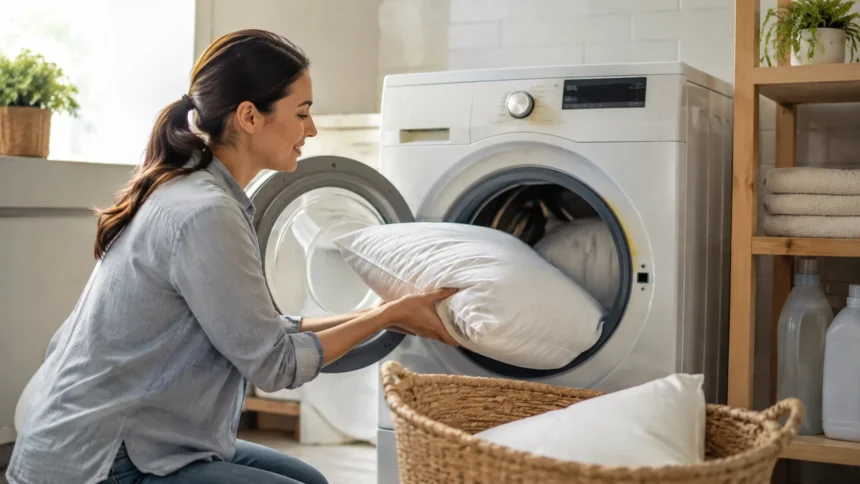
How to Wash Pillows Without Ruining Their Shape
Knowing how to wash pillows without ruining their shape can help keep bedding fresher, reduce odors, and extend the useful life of your pillows. Over time, pillows absorb body oils, sweat, skincare products, dust, hair, and moisture even when they are covered with pillowcases. Washing can remove much of this buildup, but the wrong method may leave the filling lumpy, flattened, torn, or slow to dry. The safest approach depends mainly on what the pillow contains. Polyester, down, memory foam, latex, and specialty fillings all react differently to water, agitation, detergent, and heat. Checking the care label before washing is therefore the most important first step.
Many common bed pillows can be washed successfully at home when handled gently. Machine-washable synthetic and down pillows often respond well to a delicate cycle, a small amount of mild detergent, thorough rinsing, and careful drying. Foam pillows usually require a different method because a washing machine can damage their internal structure. Drying is equally important because moisture trapped inside thick filling can encourage unpleasant odors and mildew. The goal is not simply to get a pillow wet and clean. You also need to preserve its loft, distribute the filling evenly, and make sure the center is completely dry before returning it to the bed.
This guide explains how to wash pillows in a washing machine, how to hand wash delicate pillows, how to clean different filling types, and how to dry pillows without clumping. It also covers stain removal, deodorizing, washing frequency, common mistakes, and ways to keep pillows cleaner between washes. Related terms such as down pillows, polyester pillows, memory foam, latex, pillow protectors, low-heat drying, gentle detergent, and pillow fluffing are included naturally throughout the article. Whether your pillow has become yellow, flat, musty, or simply overdue for cleaning, the following steps can help you refresh it without sacrificing its original shape and support.
How Often Should You Wash Your Pillows?
Most washable bed pillows benefit from periodic cleaning rather than being washed as often as sheets. A practical schedule for many households is washing the pillow itself every few months while cleaning pillowcases much more frequently. People who sweat heavily, sleep with pets, use oily hair products, or experience frequent spills may need to wash pillows more often. The correct schedule also depends on the pillow material because repeated washing can shorten the life of some fillings. Memory foam and latex, for example, are usually cleaned less aggressively than polyester pillows. Always prioritize the manufacturer’s care instructions when they differ from general household recommendations.
Pillowcases provide the first layer of protection against oils, sweat, and everyday dirt. They should normally be washed with other bedding on a regular schedule because they are in direct contact with the face and hair. A zippered pillow protector adds another useful barrier underneath the pillowcase and can reduce how quickly the filling becomes dirty. Protectors are especially helpful for expensive down, latex, or foam pillows that are harder to wash. Washing the protector more frequently than the pillow itself can extend the time between deep cleanings. This simple habit also makes it easier to deal with spills before moisture and staining reach the inner filling.
Visible discoloration can be a sign that a pillow needs cleaning, but appearance is not the only indicator. Sweat and oils may accumulate inside the fabric before strong yellowing becomes obvious. A pillow that smells stale, feels greasy, or has developed a slightly musty odor may also be ready for washing or deeper care. Persistent odor after cleaning can indicate that the pillow did not dry completely or that the filling is deteriorating. If the pillow remains uncomfortable or smells unpleasant despite correct cleaning, replacement may be more practical than repeated washing. Cleanliness matters, but structural condition matters equally when deciding whether a pillow should remain in use.
Allergy concerns can also influence pillow maintenance. Dust, skin particles, pollen, and pet dander can collect in bedding over time, especially when pillow protectors are not used. Regularly washing cases and protectors helps reduce this buildup without exposing the pillow filling to unnecessary cleaning cycles. If a pillow is specifically marketed for allergy-sensitive use, follow its care instructions carefully because materials and recommended wash temperatures vary. Washing alone does not solve every indoor allergy problem, so regular vacuuming, mattress cleaning, and room dust control may also be useful. The pillow should be treated as one part of the overall sleep environment rather than the only source of irritation.
Frequency should ultimately be based on condition rather than a rigid calendar. A guest-room pillow used only occasionally may need washing much less often than a pillow used every night. Humid climates can also make moisture and odor more noticeable, while dry environments may allow pillows to air out more quickly. Inspect your pillows when changing bedding and look for stains, odor, damaged seams, flattened areas, or clumped filling. Small issues are easier to correct early. Regular observation helps you clean when necessary without overwashing and wearing out the material faster than needed.
What to Check Before Washing a Pillow
Start with the care label because it provides the most reliable instructions for your specific pillow. Look for information about machine washing, hand washing, water temperature, bleach, drying, and whether professional cleaning is recommended. A label stating “spot clean only” should not be ignored simply because a similar-looking pillow can be machine washed. Different products may contain adhesives, internal layers, foam pieces, coatings, or decorative details that react differently to water. If the label has been removed, identify the filling as accurately as possible before choosing a method. When uncertain, use the least aggressive cleaning approach rather than risking damage to the entire pillow.
Inspect the outer fabric and seams before introducing the pillow to water. A small tear can become much larger in a washing machine, allowing feathers, fibers, or shredded filling to escape. Repair loose stitching before washing or place a washable pillow inside an appropriate laundry bag if the manufacturer allows it. Check zippers as well and make sure removable covers are handled according to their own instructions. If the pillow has decorative buttons, embroidery, glued embellishments, or delicate trim, machine agitation may not be suitable. Washing is safest when the outer shell is structurally sound enough to contain the filling through the entire cycle.
Determine whether the filling is removable. Some buckwheat, shredded foam, and adjustable pillows have zippered cases designed so the filling can be taken out before the cover is washed. Buckwheat hulls, for example, should generally not be soaked because they can retain moisture and become difficult to dry properly. Adjustable shredded-foam pillows may also have different instructions for the cover and the filling itself. Removing washable covers and cleaning them separately may be all that is required. Never assume that every part of a pillow can be cleaned in the same way simply because it came assembled as one product.
Check the washer itself before machine washing bulky pillows. A front-loading machine or top loader without a central agitator is generally gentler on large bedding items because the pillow can move more evenly. If you use a traditional top-loading washer with an agitator, washing two similar pillows together can help balance the load. Position them evenly rather than wrapping one tightly around the central mechanism. An unbalanced load can cause violent movement during the spin cycle and may damage both the pillow and washer. If the pillow is too large to move freely, a larger-capacity machine may be a safer option.
Finally, remove the pillowcase and protector and treat obvious stains before washing the entire pillow. A heavily stained area may remain visible after a normal cycle if it is not addressed first. Use a mild stain treatment compatible with the fabric and test it on a hidden area if you are unsure about colorfastness. Avoid soaking the entire pillow in strong chemicals unless the label specifically allows them. Allow the stain treatment to work according to its instructions before washing. Pre-treating targeted areas reduces the temptation to use excessive detergent or aggressive washing later, which helps preserve the pillow’s shape and filling.
How to Wash Pillows in a Washing Machine
For machine-washable pillows, begin by loading two similar pillows together when possible. This helps balance the washer and reduces the chance that one pillow will repeatedly hit the side of the drum during spinning. If you have only one pillow, balance the load with suitable washable bedding rather than forcing the machine to handle a bulky item alone. Do not pack the drum tightly because water and detergent need to circulate through the filling. Large pillows may require a commercial or high-capacity washer. The pillow should move freely enough that water can reach both the outer shell and interior filling.
Use a gentle or delicate cycle with a water temperature recommended on the care label. Warm water works well for many synthetic pillows, while some down products may require cooler temperatures to protect natural filling and fabric. Add only a small amount of mild liquid detergent because thick pillows can be difficult to rinse completely. Powder detergent may sometimes become trapped in dense filling if it does not dissolve thoroughly. Excess detergent can leave pillows stiff, heavy, or prone to collecting residue. The goal is enough soap to remove oils and dirt without filling the pillow with suds that require repeated rinsing.
Select an extra rinse cycle when the washing machine provides that option. Pillows contain much more filling than ordinary clothing, so detergent can remain inside long after the outer fabric appears clean. Residual soap may affect softness and can make the pillow feel heavy or slightly sticky after drying. If the pillow still feels slippery or produces suds when pressed after the first rinse, another rinse may be useful. Avoid adding fabric softener unless the pillow manufacturer specifically recommends it. Softeners can coat fibers or down clusters and may reduce their ability to loft properly once dry.
Keep spin speed moderate if your machine allows manual adjustment. A very aggressive spin can compress certain fillings or place unnecessary stress on seams. At the same time, removing excess water is useful because a soaking-wet pillow takes much longer to dry. The ideal balance is enough extraction to remove water without twisting the pillow severely. When the cycle ends, lift the pillow with both hands rather than pulling it by one corner. Wet filling can be surprisingly heavy, and supporting the entire pillow reduces stress on the fabric shell and stitching.
After washing, gently press and redistribute the filling with your hands. Do not wring the pillow like a towel because twisting can create permanent lumps or damage internal structures. If one side feels more compressed, lightly massage the filling back into a more even shape before drying. Inspect the seams again and make sure no filling has escaped. Machine washing is only half the process. Proper drying determines whether the pillow returns to a soft, even shape or becomes damp, clumpy, and uncomfortable.
How to Wash Different Types of Pillows
Polyester and fiberfill pillows are among the easiest types to wash at home. Many can go through a washing machine on a gentle cycle using a small amount of mild detergent. Wash two at once when possible to keep the machine balanced and select an extra rinse to remove trapped soap. Synthetic filling can clump temporarily after becoming wet, but careful drying and regular fluffing usually restore much of its shape. Avoid very high dryer temperatures because excessive heat can damage synthetic fibers. If an older polyester pillow remains flat or lumpy after cleaning, the filling may simply have reached the end of its useful life.
Down and feather pillows are often machine washable, but the care label should always be checked before proceeding. Use a gentle cycle and a small amount of mild detergent designed to rinse clean without leaving heavy residue. Down clusters can stick together dramatically when wet, so the pillow may look ruined immediately after washing even when it is perfectly recoverable. The key is slow, thorough drying with repeated fluffing. Low dryer heat and clean wool dryer balls can help break apart clumps as the pillow dries. Never return a slightly damp down pillow to the bed because trapped moisture can create odor and damage the filling.
Memory foam pillows generally should not be placed in a washing machine unless the manufacturer specifically states otherwise. Agitation and saturation can damage the foam structure, causing it to tear, crumble, or lose support. Instead, remove and wash the outer cover separately if it is machine washable. Spot clean the foam using a small amount of mild detergent and a damp cloth, then remove excess moisture carefully. If deeper cleaning is allowed, follow the manufacturer’s specific hand-washing procedure rather than soaking the foam automatically. Memory foam can retain water for a long time, so drying requires patience and strong airflow rather than high heat.
Latex pillows also need gentler handling. Natural or synthetic latex can be damaged by harsh agitation, strong chemicals, or excessive heat. Most latex pillows are best cleaned by washing the removable cover and spot cleaning the inner core according to its care instructions. Do not wring, twist, or place latex into a hot dryer unless the manufacturer explicitly allows it. Allow the pillow to dry flat in a shaded, well-ventilated area. Direct heat or intense sunlight can degrade some latex materials. Because latex is naturally resilient, preserving its internal structure is more important than trying to wash it like ordinary fiberfill bedding.
Specialty pillows require individual care. Buckwheat pillows usually have removable hulls, and those hulls should stay dry while the outer casing is washed separately. Gel pillows may contain memory foam, cooling layers, or laminated materials that are unsuitable for machine washing. Decorative pillows can contain foam, feathers, polyester, or mixed materials hidden behind delicate fabrics. Cervical and orthopedic pillows may also have shaped foam cores that can deform in a washer. The safest rule is to identify the actual filling and construction before applying water. “Pillow” describes the function, not one universal material that can be cleaned the same way.
How to Dry Pillows Without Losing Their Shape
Drying is the most important step when trying to keep a pillow fluffy and evenly shaped. If the care label allows machine drying, choose a low or moderate heat setting rather than maximum heat. High temperatures can shrink fabric, damage synthetic fibers, degrade foam, or weaken delicate fillings. Add two or three clean wool dryer balls to help separate clumps and encourage loft while the pillow tumbles. Pause the dryer periodically and remove the pillow so you can fluff it manually. Redistribution throughout the drying process prevents one damp mass from remaining trapped in the center.
Down and feather pillows often require significantly more drying time than people expect. The outer fabric can feel dry while the inner clusters remain damp. Run repeated low-heat or air-dry cycles and break apart clumps with your hands between cycles. Hold the pillow close and check for cool or heavy areas, which can indicate moisture remains inside. A fully dry down pillow should feel light and evenly fluffy rather than dense in one section. Rushing this stage can lead to musty odor or mildew. Spending extra time drying is much easier than washing the pillow again because damp filling developed an unpleasant smell.
Synthetic pillows usually dry faster, but they still benefit from frequent fluffing. When fiberfill is wet, it can settle into corners or form several large lumps. Gently massage those areas and pull the filling back toward the center before returning the pillow to the dryer. If the care label allows it, low heat can speed evaporation without damaging the fibers. Air-only cycles are useful at the end because they continue tumbling and fluffing without adding more heat. Do not use the pillow until the interior feels completely dry. Even synthetic filling can trap moisture if the pillow is thick.
Foam and latex pillows should usually be air dried rather than tumble dried unless their manufacturer clearly approves machine drying. Place the pillow on a clean, dry surface in a well-ventilated room and turn it periodically so air reaches both sides. A fan can improve airflow and reduce drying time. Avoid putting dense foam directly on a radiator or using a hair dryer on high heat because concentrated heat can distort the material. Do not place a damp foam pillow back inside a waterproof cover, which can trap moisture. Depending on thickness and humidity, complete air drying can take many hours or even more than a day.
Before putting any pillow back on the bed, perform a final dryness and shape check. Press the center firmly and feel whether it is cool, heavy, or unusually dense compared with the edges. Smell the pillow as well, because lingering dampness may create a slightly sour or musty odor. Fluff the corners and gently reshape the sides so the filling is evenly distributed. Replace the clean protector only after you are confident the pillow is dry throughout. A properly dried pillow should feel lighter, fresher, and closer to its original loft rather than compressed or lumpy.
How to Remove Yellow Stains and Odors From Pillows
Yellow pillow stains usually develop from sweat, body oils, saliva, skincare products, and moisture that move through the pillowcase over time. Begin by checking whether the pillow itself is washable. If it is, treat stained areas with a mild laundry stain remover compatible with the fabric before starting the regular cycle. Work the product gently into the outer surface rather than scrubbing aggressively. Allow it to sit only for the recommended time. Avoid automatically using chlorine bleach because it can damage some fabrics and fillings, and it may react poorly with proteins or other residues depending on the material.
For washable white synthetic pillows, oxygen-based laundry products may sometimes help with discoloration when the care label allows them. These products are generally gentler than chlorine bleach but should still be used according to the instructions. Do not assume that a stronger concentration will produce a whiter pillow. Thick filling can trap cleaning agents, making thorough rinsing especially important. Colored or patterned pillows should be tested for colorfastness before stain treatment. If discoloration remains after safe cleaning, it may be permanent staining rather than active dirt and does not always mean the pillow is unhygienic.
Odor often improves with thorough washing and complete drying. A pillow that smells sour or musty immediately after cleaning may still contain moisture, so focus on drying before adding fragrance or deodorizing products. If a washable pillow smells stale before washing, mild detergent and an extra rinse may be enough to refresh it. Avoid saturating foam pillows with scented sprays because the liquid can soak deep inside and become difficult to remove. Ventilation is usually safer. Airing a pillow in a dry, shaded area can help reduce mild odors between washes without exposing the filling to another complete cleaning cycle.
Baking soda can be useful for surface deodorizing on some non-washable pillows. Lightly sprinkle a small amount over the dry outer surface, allow it to sit, and vacuum it away carefully using an upholstery attachment. Do not pack powder deeply into foam or other porous materials. Always check the pillow instructions before using household products because specialty fabrics may react differently. Baking soda does not replace washing when the pillow is genuinely dirty, and it will not correct mildew caused by trapped moisture. Treat odor as a clue that the pillow needs appropriate cleaning, drying, or possibly replacement.
Some odors and stains indicate that a pillow should no longer be saved. If mildew remains visible after appropriate cleaning, the filling smells persistently moldy, or contamination has penetrated deeply into a non-washable foam core, replacement may be the safer and more practical choice. The same applies to pillows contaminated by substances that cannot be cleaned according to the manufacturer’s instructions. Repeatedly soaking or chemically treating a damaged pillow can make the material break down further. Cleaning should extend the useful life of a pillow, but it cannot restore every product indefinitely. Knowing when replacement is appropriate is part of good bedding care.
Common Pillow-Washing Mistakes to Avoid
One of the biggest mistakes is washing every pillow the same way. Polyester, down, memory foam, latex, buckwheat, and specialty orthopedic pillows have very different structures. A washing machine that refreshes a synthetic pillow may permanently damage a solid foam pillow. Ignoring the care label can lead to torn filling, misshapen foam, fabric shrinkage, or adhesive failure. Before cleaning, identify the material and determine whether the cover and filling require separate methods. Taking one minute to check the instructions can prevent the most expensive and frustrating pillow-washing mistakes.
Using too much detergent is another common problem. People often add extra soap because pillows seem dirtier or larger than normal laundry, but thick filling is difficult to rinse thoroughly. Excess detergent can remain trapped inside and leave the pillow stiff, sticky, or slow to dry. Use a small quantity of mild liquid detergent and add an extra rinse if possible. Fabric softener can create similar issues by coating fibers and reducing loft. More product does not necessarily mean more cleanliness. Clean water movement and complete rinsing are often more important than using a large amount of soap.
Overloading the washer can also ruin pillow shape. A tightly packed drum prevents water and detergent from circulating evenly, while an unbalanced load can create strong mechanical stress during spinning. Two pillows of similar size often work well because they balance one another without overcrowding the machine. Very large pillows may require a commercial-capacity washer. Traditional top loaders with agitators can also bend or compress bulky pillows more aggressively than front-loading machines. If the pillow cannot move freely, do not force it into the washer simply to avoid another cleaning method.
High heat during drying can cause just as much damage as aggressive washing. Synthetic fibers can flatten or melt, latex can deteriorate, and foam can distort under excessive temperature. Down and feather pillows need thorough drying, but low heat and patience are generally safer than trying to accelerate the process with maximum heat. Follow the label and check the pillow repeatedly. Drying too quickly at high temperature may make the outside feel finished while the interior remains damp. Controlled heat, airflow, dryer balls, and manual fluffing provide a better balance between speed and shape preservation.
The final major mistake is using a pillow before it is fully dry. Thick bedding can hold moisture deep inside long after the surface stops feeling wet. Putting a damp pillow inside a protector and pillowcase traps that moisture and can lead to musty odor or mildew. Press several sections and check for cool, heavy areas before declaring it dry. When in doubt, continue drying or airing for longer. Proper drying is what completes the washing process. A pillow that has been cleaned carefully but stored damp can end up in worse condition than before it was washed.
How to Keep Pillows Cleaner Between Washes
Use a washable pillow protector underneath the regular pillowcase. This extra layer catches much of the sweat, oil, saliva, and skincare residue that would otherwise reach the pillow shell and filling. Protectors are easier to wash frequently than most pillows and can significantly reduce deep staining. Choose breathable materials so the pillow remains comfortable and does not trap excessive heat. Waterproof protectors can be useful in certain situations, but they may alter airflow depending on their construction. Follow the protector’s own care instructions and wash it regularly with bedding.
Wash pillowcases frequently because they receive the most direct contact with skin and hair. Clean cases prevent oils from repeatedly transferring back onto the pillow night after night. If you use heavy hair products or sleep with damp hair, changing cases more often may help reduce staining. Allow hair to dry before bed when possible because excess moisture can move into the pillow and slow evaporation. Keeping the outer layers clean is one of the easiest ways to preserve both the appearance and freshness of the pillow itself.
Fluff pillows daily or several times a week to redistribute filling and improve airflow. Hold opposite sides and gently compress inward, then rotate and repeat from another direction. Down and fiberfill pillows benefit particularly from this routine because the filling gradually compresses under body weight. Airing the bed for a short period in the morning before covering everything with heavy blankets can also allow moisture to escape. Avoid placing pillows against damp walls or storing them in tightly closed spaces immediately after use. Small amounts of ventilation support freshness between deep cleanings.
Vacuum non-washable pillows periodically using a clean upholstery attachment when the fabric allows it. This can remove surface dust, hair, and debris without wetting sensitive foam or specialty fillings. Vacuum both sides and pay attention to seams where particles collect. For washable pillows, occasional airing may be enough between full cleaning cycles. Keep pets off pillows if their hair or outdoor debris creates frequent soiling. Maintenance should be gentle and consistent rather than waiting for the pillow to become heavily stained before taking action.
Finally, replace pillows when they no longer provide adequate support or recover their shape after fluffing. Washing can remove dirt, but it cannot permanently restore broken-down foam or fibers that have lost resilience. A pillow that folds in half and stays compressed, develops permanent lumps, or no longer supports your preferred sleep position may have reached the end of its useful life. Replacement intervals vary dramatically by material and quality, so condition is more useful than a fixed number of years. Keeping pillows clean can extend their lifespan, but comfort and structural integrity should remain the deciding factors.
Conclusion
Learning how to wash pillows without ruining their shape begins with identifying the filling and following the care label. Synthetic and many down pillows can often be machine washed, while memory foam, latex, buckwheat, and specialty pillows usually require gentler or more targeted methods. Washing two suitable pillows together can help balance the machine, and a delicate cycle reduces unnecessary mechanical stress. Use only a small amount of mild detergent and rinse thoroughly so soap does not remain trapped inside the filling. A careful wash preserves both cleanliness and structure instead of trading one for the other.
Drying deserves just as much attention as washing. Low heat, good airflow, dryer balls, and repeated fluffing help down and synthetic pillows recover their loft. Foam and latex generally need air drying away from strong heat. Whatever the material, the pillow must be completely dry through the center before it returns to the bed. Moisture trapped inside thick filling can cause odor and mildew even when the outer fabric feels dry. Taking extra time at this stage protects the work you already did during washing and reduces the chance of having to clean the pillow again.
Stain and odor removal should remain gentle. Pre-treat yellow areas with a compatible laundry product, avoid unnecessary chlorine bleach, and focus on complete rinsing. Musty odors often indicate residual moisture rather than a need for stronger fragrance. Non-washable pillows may benefit from light surface cleaning, vacuuming, and ventilation instead of full soaking. If mold, severe contamination, or persistent odor remains after appropriate care, replacing the pillow may be safer than repeatedly exposing the filling to water and chemicals. Not every old pillow can be restored successfully.
Preventive care makes deep washing easier and less frequent. A washable pillow protector catches much of the sweat and oil that would otherwise penetrate into the filling. Clean pillowcases, dry hair, regular fluffing, and occasional airing also help maintain freshness. These habits are especially valuable for expensive down, latex, or specialty pillows that require more careful cleaning. They protect the internal material while keeping the surface comfortable. Small maintenance steps performed regularly usually preserve pillow shape more effectively than aggressive cleaning after years of buildup.
The safest overall method is simple: check the material, wash gently, rinse completely, and dry thoroughly. Avoid overloading the washer, using too much detergent, wringing wet pillows, or applying high heat simply to save time. Pillows are bulky and need patience to clean correctly. When the care method matches the filling, most washable pillows can be refreshed without becoming flat or lumpy. With proper cleaning and routine protection, your pillows can stay fresher, more comfortable, and supportive for much longer.
Frequently Asked Questions
Can you wash pillows in a washing machine?
Many polyester, fiberfill, down, and feather pillows can be machine washed, but you should always check the care label first. Solid memory foam, latex, and many specialty pillows usually require different cleaning methods.
How do you wash pillows without making them lumpy?
Use a gentle cycle, a small amount of mild detergent, and an extra rinse. During drying, use low heat when permitted, add clean dryer balls, and pause several times to fluff and redistribute the filling.
Can memory foam pillows go in the washing machine?
Most solid memory foam pillows should not be machine washed because agitation and saturation can damage the foam structure. Wash the removable cover separately and spot clean the foam according to the manufacturer’s instructions.
How long do pillows take to dry after washing?
Drying time depends on the filling, pillow thickness, dryer setting, and room humidity. Thick down pillows can require several low-heat cycles, while foam pillows may need many hours or more than a day to air dry completely.
How do you know when a pillow is completely dry?
Press the center and several corners and check for cool, heavy, or dense areas that may still contain moisture. A fully dry pillow should feel evenly light, fluffy, and free from damp or musty odor.
