

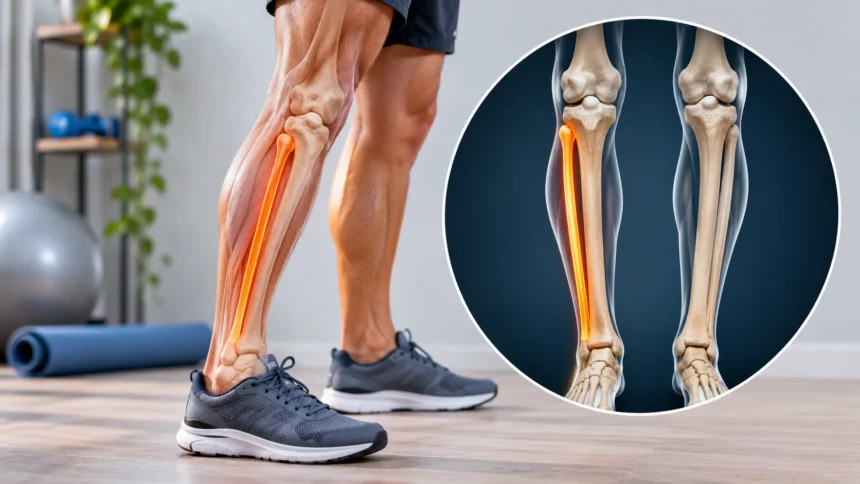
The human lower leg contains two important bones that work together to support movement, balance, and stability. Most people are familiar with the shinbone, but the smaller bone beside it is equally important for normal ankle function. This bone is called the fibula, and it provides attachment points for muscles while helping stabilize the lower leg. Understanding its location and purpose can make common leg injuries and symptoms easier to recognize.
Where is your fibula? The fibula is the long, thin bone located on the outer side of your lower leg, running parallel to the tibia from just below the knee to the ankle. Although it carries much less body weight than the tibia, it plays an essential role in ankle stability and lower-leg movement. This guide explains fibula anatomy, functions, common injuries, symptoms, treatment options, and important facts about this bone.
Where Is Your Fibula Located?
The fibula is located along the outside of the lower leg, between the knee and ankle. It runs beside the larger tibia, commonly called the shinbone. When standing upright, the fibula is positioned farther from the body’s midline than the tibia. This outer position is described anatomically as the lateral side of the leg.
The upper end of the fibula sits just below the outer part of the knee. Its lower end extends downward to form the prominent bony bump on the outside of the ankle. This bump is called the lateral malleolus. You can usually identify it by looking at the outer side of your ankle.
Although the fibula is relatively slender, it extends along most of the lower leg. Its position allows it to support several muscles and contribute to ankle stability. The fibula does not form the main weight-bearing surface of the knee joint. Instead, it works alongside the tibia and surrounding soft tissues to support normal lower-limb function.
What Is the Fibula Bone?
The fibula is one of the two long bones found in each human lower leg. It has a narrow shaft with wider structures at its upper and lower ends. The bone is smaller than the tibia but provides important attachment points for muscles and ligaments. Its shape helps it perform several supporting functions.
The name fibula comes from a Latin word associated with a clasp or fastening device. Its long, slender appearance resembles certain ancient fastening pins. In human anatomy, the fibula is classified as a long bone because of its overall structure. Like other bones, it contains living tissue that responds to normal physical demands.
The fibula consists of a hard outer layer of compact bone and internal structures that provide strength without unnecessary weight. Blood vessels supply nutrients needed for maintenance and repair. Bone cells continuously participate in remodeling processes throughout life. These features allow the fibula to adapt to mechanical demands and recover from many injuries.
Fibula Anatomy: Main Parts Explained
The fibula has three main regions: the proximal end, shaft, and distal end. The proximal end is located near the knee and includes the fibular head and neck. The shaft forms the long central portion of the bone. The distal end extends toward the ankle and contributes to its outer structure.
The fibular head connects with the tibia at the proximal tibiofibular joint. This small joint allows limited movement and helps coordinate the relationship between the two lower-leg bones. The fibular neck lies immediately below the head. An important nerve travels around this region, making it clinically significant.
The distal fibula forms the lateral malleolus, which helps stabilize the ankle. Ligaments connect this area to surrounding bones and support joint alignment. The fibula also connects to the tibia through connective tissues along its length. These anatomical relationships allow the lower leg to function as a coordinated structure.
What Does the Fibula Do?
The fibula helps stabilize the ankle and supports the muscles responsible for moving the foot and lower leg. Although it is not the primary weight-bearing bone, it contributes to normal lower-limb function. The surrounding muscles and ligaments depend on its anatomical position. This makes the fibula important during walking and other everyday movements.
One major function is providing attachment sites for muscles involved in ankle and foot movement. Several muscles originate from or connect to structures associated with the fibula. These muscles help control foot positioning and movement. Their coordinated action supports activities such as walking, climbing stairs, and maintaining balance.
The fibula also contributes to the stability of the ankle joint through its lower end. The lateral malleolus helps form the outer boundary of the ankle mortise. Ligaments connected to this region assist in controlling excessive movement. These features make the fibula important even though it carries relatively little body weight.
Fibula vs Tibia: What’s the Difference?
The tibia and fibula are the two bones of the lower leg, but they have different functions. The tibia is larger and located toward the inner side of the leg. It supports most of the weight transferred between the knee and ankle. The fibula is thinner and positioned along the outer side.
Another difference involves how the bones connect with the knee. The tibia forms a major part of the knee joint and directly supports the femur. The fibula does not directly articulate with the femur in the main knee joint. Instead, its upper end connects with the tibia at a separate joint.
Both bones contribute to ankle structure, although their roles differ. The tibia forms the inner ankle prominence, while the fibula forms the outer prominence. Together, they help create a stable arrangement around the talus bone of the foot. Understanding their differences explains why injuries to either bone can affect movement.
How the Fibula Supports Ankle Stability
The lower end of the fibula plays a central role in stabilizing the ankle. It forms the lateral malleolus, which is the visible bony prominence on the outside of the ankle. This structure helps guide and support normal ankle movement. It also provides attachment points for important stabilizing ligaments.
The fibula connects with the tibia near the ankle through the distal tibiofibular syndesmosis. This connection contains strong ligaments that help maintain the correct spacing between the bones. Proper alignment is essential for normal ankle mechanics. Injuries affecting this relationship can cause instability even without an obvious bone fracture.
The fibula works with surrounding muscles, ligaments, and joint structures during walking and running. These tissues help control movement and distribute forces through the ankle. Stability depends on the complete system rather than one bone alone. Damage to the fibula or its supporting structures can therefore interfere with normal movement.
Muscles and Ligaments Connected to the Fibula
Several lower-leg muscles attach to the fibula or originate from its surfaces. These include muscles involved in moving the foot outward, bending the ankle, and controlling the toes. The fibularis longus and fibularis brevis muscles are especially associated with the outer lower leg. Their tendons help support foot and ankle movement.
Other muscles connected with the fibula contribute to different movements of the foot and toes. These include parts of the muscles responsible for lifting and pointing the foot. Their coordinated activity helps maintain control during walking. The exact attachments vary according to the muscle and anatomical region.
Ligaments also connect the fibula with neighboring bones. Near the ankle, several ligaments help stabilize the joint against excessive movement. Along the lower leg, the interosseous membrane connects the tibia and fibula. These structures help maintain alignment and contribute to the mechanical stability of the lower limb.
Can You Feel Your Fibula Through Your Skin?
Certain parts of the fibula can be felt beneath the skin because they are relatively close to the surface. The most noticeable area is the lateral malleolus on the outer side of the ankle. This bony bump is easy to identify in many people. It forms part of the normal ankle structure.
The fibular head can also sometimes be felt just below the outer side of the knee. It appears as a small, firm bony prominence. However, identifying anatomical landmarks can be difficult without training. Avoid pressing forcefully around the fibular neck because an important nerve passes nearby.
Most of the fibular shaft is covered by surrounding muscles and other soft tissues. This makes the central portion less noticeable than the ends. Body structure and individual anatomical differences influence how easily certain landmarks can be felt. If a particular area is painful, swollen, or unusually tender, avoid repeated pressure and consider medical evaluation.
Common Fibula Injuries and Their Causes
Fibula injuries can occur during sports, falls, accidents, or repetitive physical activity. A fracture happens when the bone breaks because of excessive force or accumulated stress. The location and severity of the injury can vary considerably. Some fractures affect the ankle, while others occur higher along the shaft.
Ankle twisting injuries are a common cause of fractures near the lower fibula. These injuries may involve ligaments as well as the bone itself. Direct impacts can also damage the fibula during falls or collisions. The surrounding tissues may become painful and swollen after an injury.
Repetitive loading can sometimes contribute to fibular stress fractures. These injuries may develop gradually rather than following one sudden event. Symptoms can increase during activity and improve with rest in the earlier stages. Persistent focal bone pain should be assessed because continuing aggravating activities may worsen the injury.
What Is a Fibula Fracture?
A fibula fracture is a break in the fibula bone. It can occur near the knee, along the shaft, or around the ankle. Some fractures are relatively stable, while others affect joint alignment or surrounding ligaments. The treatment approach depends on the specific injury and associated damage.
Distal fibula fractures are commonly associated with ankle injuries. The broken bone may remain aligned or become displaced from its normal position. In certain cases, the ankle joint can become unstable. Healthcare professionals use physical examinations and imaging to determine the fracture pattern.
A fracture involving the fibula does not always mean the tibia is also broken. However, both bones can be injured during high-force accidents. Some ankle injuries also involve damage higher along the fibula. Medical evaluation is important because the location of pain alone may not reveal the full extent of an injury.
Fibula Fracture Symptoms to Recognize
Common symptoms of a fibula fracture include pain, tenderness, swelling, and difficulty walking. Bruising may also develop around the injured area. The discomfort can be concentrated near the outer ankle or along the lower leg. Symptoms vary according to the fracture location and severity.
Some people can still place weight on the leg despite having a fracture. Therefore, the ability to walk does not reliably rule out a broken fibula. Severe tenderness over the bone, noticeable swelling, or pain following a significant injury deserves assessment. Imaging may be necessary to confirm the diagnosis.
More serious injuries may cause obvious deformity, severe pain, or reduced function. Changes in foot sensation or circulation are particularly concerning. An injury with an open wound or significant deformity requires emergency care. Until assessed, avoid unnecessarily loading the injured leg or attempting to correct its position yourself.
How Doctors Diagnose Fibula Problems
Diagnosing a fibula injury usually begins with a review of symptoms and medical history. A healthcare professional may ask how the injury occurred and where the pain is located. The examination can include checking swelling, tenderness, joint movement, and circulation. Nearby structures may also need evaluation.
X-rays are commonly used when a fracture is suspected. These images help identify breaks, displacement, and certain alignment problems. Additional views may be required when an injury involves the ankle or knee. However, some early stress fractures may not appear clearly on ordinary X-rays.
MRI or CT scanning may be recommended in selected situations. MRI can help identify stress injuries and soft-tissue damage, while CT can provide detailed information about complex fractures. Not every patient requires advanced imaging. The choice depends on symptoms, examination findings, and the suspected condition.
How Is a Broken Fibula Treated?
Treatment for a broken fibula depends on its location, stability, and associated injuries. Some stable fractures can heal with immobilization and a carefully planned return to activity. Doctors may recommend a walking boot, cast, or other supportive device. Weight-bearing instructions vary according to the fracture and should be followed closely.
Unstable fractures or injuries affecting ankle alignment may require surgery. Surgical treatment can involve plates, screws, or other devices to maintain the correct bone position. The decision depends on the overall injury pattern and patient needs. Not every broken fibula requires an operation.
Recovery may also include rehabilitation to restore movement, strength, and balance. A physical therapist can recommend exercises when the bone and surrounding tissues are ready. Returning to strenuous activities too early can interfere with healing. Individualized medical guidance is essential throughout the recovery process.
How Long Does a Fibula Fracture Take to Heal?
Many uncomplicated fibula fractures require approximately six to eight weeks for initial bone healing. However, recovery can take longer depending on fracture severity, age, overall health, and associated injuries. Returning to sports or demanding activities may require additional time. Healing should not be judged only by the calendar.
Doctors may use follow-up examinations and imaging to assess recovery. Pain levels, swelling, and the ability to move the ankle also provide useful information. However, reduced pain does not always mean the bone has completely healed. Following prescribed activity restrictions helps reduce the risk of further injury.
Some patients recover more slowly because of complex fractures or additional ligament damage. Rehabilitation may be needed to rebuild strength and confidence in movement. Smoking and certain medical conditions can also interfere with bone healing. A healthcare professional can provide a more reliable recovery estimate based on the individual injury.
Fibula Pain Without an Injury: Possible Causes
Pain near the fibula does not always result from a broken bone. Muscle strain, tendon irritation, or nerve-related conditions can cause discomfort along the outer lower leg. Pain may develop after unfamiliar activity or repetitive movements. The location and pattern of symptoms can help guide evaluation.
The fibularis muscles and their tendons are common structures involved in outer ankle and lower-leg discomfort. Repeated movement or increased physical demands may irritate these tissues. Symptoms can sometimes become more noticeable during walking or exercise. However, localized bone pain should not automatically be assumed to be a tendon problem.
Nerve irritation can also cause pain, tingling, or changes in sensation around the outer leg and foot. Certain conditions may affect the common fibular nerve near the fibular head. Persistent symptoms deserve evaluation to identify their cause. Treatment depends on the affected structure rather than the general location of discomfort.
What Is the Common Fibular Nerve?
The common fibular nerve, also called the common peroneal nerve, travels around the outside of the knee near the fibular neck. It is involved in controlling several lower-leg muscles and providing sensation to parts of the leg and foot. Its location makes it vulnerable to certain injuries. Understanding this relationship helps explain some nerve symptoms.
Pressure, trauma, or other conditions can affect the nerve’s function. Symptoms may include tingling, numbness, weakness, or difficulty lifting the front of the foot. Significant weakness can cause a condition called foot drop. These symptoms require medical assessment because several underlying problems are possible.
Healthcare professionals may evaluate nerve function through physical examination and selected diagnostic tests. Treatment depends on the cause and severity of the nerve problem. Some cases improve after the source of pressure is addressed, while others require additional care. New or worsening muscle weakness should never be ignored.
How to Keep Your Fibula and Lower Legs Healthy
Maintaining lower-leg health involves supporting the muscles, joints, and bones that work together during movement. Regular physical activity can help maintain strength and mobility. Walking and appropriate resistance exercises are common options. The ideal activities depend on individual fitness levels, medical conditions, and physical capabilities.
Balance and coordination exercises may also help support normal ankle function. These activities train the muscles and nervous system to control movement. However, exercises should match your ability and should not cause significant pain. People recovering from injuries may need professionally guided rehabilitation.
Proper footwear and gradual changes in physical activity can also be helpful. Sudden increases in repetitive exercise may place excessive stress on bones and surrounding tissues. Adequate nutrition supports general bone health, including sufficient calcium and vitamin D. Maintaining healthy movement habits is more useful than focusing on the fibula in isolation.
When Should You Worry About Fibula Pain?
Mild discomfort after unfamiliar activity may improve with appropriate rest and reduced aggravating movements. However, pain that persists, worsens, or repeatedly returns should be evaluated. Localized tenderness directly over the bone can be especially important after an injury. Continuing strenuous activity without understanding the cause may increase the problem.
Seek prompt medical attention if pain follows a significant fall, twist, or direct impact. Difficulty bearing weight, marked swelling, or unusual bruising can indicate a fracture or other substantial injury. New tingling or numbness also deserves assessment. A healthcare professional can determine whether imaging or additional examination is necessary.
Emergency care is needed for obvious deformity, an open injury, or signs of impaired circulation such as a cold or unusually pale foot. Severe pain with rapidly increasing swelling also requires urgent assessment. These symptoms may indicate serious complications. Avoid attempting to manage potentially severe injuries through home exercises alone.
Conclusion
The fibula is the thin bone located along the outer side of the lower leg, running beside the larger tibia. It extends from just below the knee to the outside of the ankle. Although it supports much less body weight than the tibia, it contributes to ankle stability and muscle attachment. Its structure makes it an important part of normal lower-limb movement.
Understanding fibula anatomy helps explain why injuries near the outer ankle or lower leg can affect walking and balance. Common problems include fractures, stress injuries, tendon irritation, and nerve-related symptoms. Treatment depends on the location and severity of the condition. Medical evaluation is important when symptoms suggest a significant injury.
The fibula works with the tibia, muscles, ligaments, and nerves to support everyday activities. Regular movement, appropriate strengthening, and suitable activity habits can help maintain lower-leg function. However, persistent pain or unusual symptoms should not be ignored. Knowing where your fibula is and what it does can help you recognize problems and seek appropriate care.
Frequently Asked Questions (FAQs)
Where Is Your Fibula Located in Your Leg?
The fibula is located on the outer side of your lower leg, running parallel to the tibia. It extends from just below the knee to the outer ankle, where it forms the lateral malleolus.
What Is the Main Function of the Fibula?
The fibula helps stabilize the ankle and provides attachment points for several muscles and ligaments. It supports lower-leg function but carries much less body weight than the larger tibia.
Can You Walk With a Broken Fibula?
Some people can walk with certain fibula fractures, but walking does not rule out a serious injury. Weight-bearing should follow medical guidance because unstable fractures or associated ligament injuries may require protection.
What Does Fibula Pain Feel Like?
Fibula pain may involve tenderness, aching, swelling, or sharp discomfort along the outer lower leg or ankle. Symptoms vary depending on whether the cause involves bone, muscles, tendons, or nerves.
How Long Does a Broken Fibula Take to Heal?
Many uncomplicated fibula fractures begin healing over approximately six to eight weeks. However, complete recovery and return to demanding activities may take longer depending on injury severity and individual healing.
