

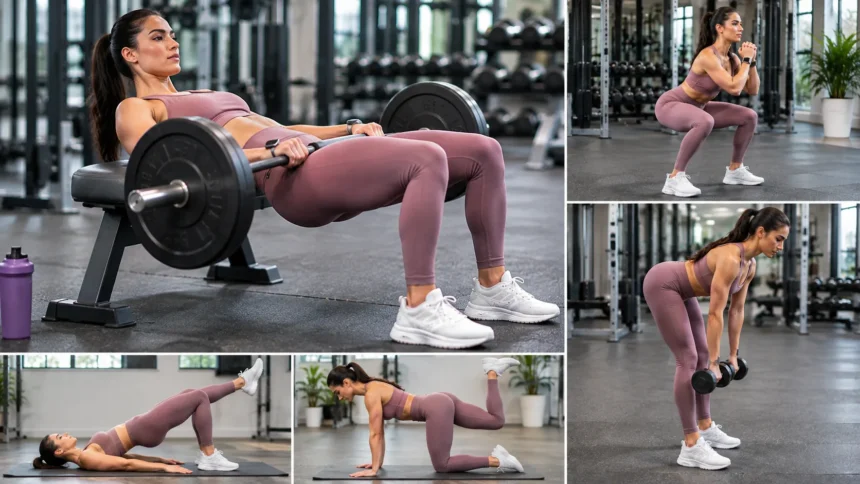
The best glute workouts help strengthen the muscles around your hips and support everyday movements such as walking, climbing stairs, and standing up from a chair. Your glutes are among the largest and most powerful muscle groups in the body. Strengthening them can improve lower-body stability, movement control, and overall physical performance.
Glute training is not limited to professional athletes or experienced gym members. Beginners can perform effective exercises at home using their body weight, while more experienced individuals may use resistance bands, dumbbells, or gym equipment. The right exercises depend on your strength, mobility, experience, and personal fitness goals.
However, choosing effective glute exercises is only part of building a successful workout routine. Proper technique, gradual progression, balanced training, and sufficient recovery are equally important. This guide explains the benefits of glute exercises, how to perform popular movements correctly, and practical ways to develop a safe and effective glute workout.
What Are Glute Workouts?
Glute workouts are exercise routines designed to strengthen the muscles surrounding the buttocks and hips. These exercises commonly involve hip extension, hip abduction, and movements that require pelvic stability. They can include bodyweight exercises, resistance training, and controlled movements that challenge the muscles in different ways.
The glutes contribute to many activities that people perform throughout the day. Walking, running, climbing stairs, and lifting objects all involve the hip muscles working with other muscle groups. Glute exercises help prepare these muscles to manage everyday physical demands with greater strength and control.
An effective glute workout usually includes more than one movement pattern. Squats, bridges, lunges, and hip abduction exercises challenge the muscles differently. Combining suitable exercises allows you to develop balanced lower-body strength while maintaining comfortable movement and proper exercise technique.
Understanding the Main Glute Muscles
The gluteal muscle group includes three primary muscles: the gluteus maximus, gluteus medius, and gluteus minimus. Each contributes to hip movement and stability in different ways. Understanding their functions helps explain why a balanced workout should include several types of exercises.
The gluteus maximus is the largest muscle in this group and plays an important role in hip extension. It helps move the thigh backward and supports powerful movements such as rising from a squat or climbing stairs. Exercises involving controlled hip extension place significant demands on this muscle.
The gluteus medius and minimus are located along the outer hip and contribute to hip abduction and pelvic control. They help stabilize the pelvis during activities such as walking and standing on one leg. Side-lying leg raises and banded lateral movements can help strengthen these important supporting muscles.
Benefits of Glute Workouts for Overall Strength
One of the main benefits of glute workouts is improving strength around the hips and pelvis. Strong hip muscles support many lower-body movements and work alongside the thighs, core, and lower back. Developing these muscles can make everyday physical tasks feel more manageable.
Glute exercises also contribute to balance and movement coordination. Activities such as stepping, changing direction, and standing on one leg require coordinated muscle activity around the hips. Training the glutes can support these functions when exercises are performed consistently and with appropriate technique.
Another benefit is improving the body’s ability to handle different physical demands. Glute strengthening can complement walking, recreational sports, and other forms of exercise. However, results depend on overall training habits, recovery, and individual needs rather than performing one particular movement repeatedly.
How to Warm Up Before Glute Exercises
A suitable warm-up helps prepare your muscles and joints for a glute training session. Gentle walking, comfortable cycling, or other light movements can gradually increase activity levels. The goal is to become ready for exercise without creating unnecessary fatigue before the main workout.
After general movement, try controlled hip circles, bodyweight squats, or gentle glute bridges. These movements allow you to practice joint motion and become familiar with the exercise patterns ahead. Choose comfortable ranges of motion rather than forcing stretches or performing movements that cause discomfort.
A warm-up does not need to be complicated to be useful. It should match the exercises you plan to perform and your current physical ability. Starting your workout with manageable movements also provides an opportunity to notice stiffness, discomfort, or balance difficulties before increasing the challenge.
Glute Bridges for Beginners
Glute bridges are among the most accessible exercises for developing hip extension strength. Begin by lying on your back with your knees bent and feet flat on the floor. Keep your arms relaxed beside your body and position your feet at a comfortable distance from your hips.
Gently engage your abdominal muscles and press through your feet to lift your hips. Raise your pelvis until your body forms a comfortable line from your shoulders toward your knees. Avoid excessively arching your lower back, and focus on allowing the hips to perform the lifting movement.
Pause briefly before lowering your hips in a slow, controlled manner. Repeat the movement while maintaining steady breathing and comfortable foot placement. Glute bridges can be adjusted by changing the range of motion or gradually introducing appropriate resistance as strength improves.
Hip Thrusts for Glute Strength
Hip thrusts are popular glute strengthening exercises that involve extending the hips against resistance. They are commonly performed with the upper back supported on a stable exercise bench. This position allows the hips to move through a controlled range while challenging the gluteus maximus.
To perform a basic hip thrust, position your upper back securely against a suitable bench and keep your feet planted. Lift your hips by pushing through your feet until your torso and thighs form a comfortable alignment. Keep your head and neck relaxed and avoid forcing the lower back into excessive extension.
Lower your hips slowly while maintaining control throughout the movement. Beginners may find floor-based glute bridges easier before progressing to bench-supported exercises. Additional resistance should only be introduced when the setup feels stable and the movement can be completed with consistent technique.
Squats for Glute and Leg Strength
Squats are compound lower-body exercises that work the glutes, quadriceps, and several supporting muscles. They involve bending at the hips, knees, and ankles while maintaining control over the body’s position. Squats can be performed using body weight or appropriate resistance depending on experience.
Begin with your feet comfortably apart and your toes pointing in a natural direction. Bend your hips and knees as though sitting into a chair, keeping your feet supported on the floor. Lower yourself only as far as you can comfortably maintain balance and controlled alignment.
Push through your feet to return to standing without rushing the movement. Keep your torso stable and allow your knees to move naturally in line with your feet. Bodyweight squats provide a useful starting point, while resistance can be added gradually as your strength and confidence develop.
Lunges for Glute Activation and Balance
Lunges strengthen the glutes, thighs, and other muscles involved in controlling lower-body movement. They also challenge balance because the legs work in a staggered position. Different lunge variations can be selected depending on your coordination, mobility, and training experience.
For a reverse lunge, begin standing upright with your feet approximately hip-width apart. Step one foot backward and bend both knees while keeping your torso comfortably controlled. Lower only as far as your balance and mobility allow without forcing the movement.
Press through your front foot to return to the starting position, then repeat on the other side. Reverse lunges may feel more manageable than forward lunges for some beginners. A sturdy support can also help you practice the exercise safely while developing coordination and confidence.
Romanian Deadlifts for Hip Strength
Romanian deadlifts are hip-hinge exercises that challenge the glutes and hamstrings. Unlike a squat, this movement places greater emphasis on bending at the hips while maintaining relatively small changes in knee position. It helps develop strength for lifting and other activities requiring controlled hip movement.
Begin standing with your feet comfortably apart and your knees slightly bent. Move your hips backward while allowing your torso to lean forward, keeping your spine in a comfortable, stable position. Lower your hands or suitable weights only as far as your mobility allows without losing control.
Return to standing by driving your hips forward and engaging the muscles around your hips and thighs. Avoid rounding your back or using momentum to lift. Beginners can practice the movement without weights before introducing light resistance and progressing according to their abilities.
Step-Ups for Functional Glute Strength
Step-ups are practical exercises that strengthen the glutes and legs while challenging balance. They resemble everyday movements such as climbing stairs or stepping onto a raised surface. The exercise can be adapted using different step heights and levels of support.
Begin in front of a stable, low platform and place one foot securely on top. Press through the supported foot to lift your body onto the platform, using the other leg for balance. Move slowly and avoid pushing excessively from the foot that remains on the floor.
Step back down carefully and repeat on the opposite side. A lower platform is generally easier to control and may be more suitable for beginners. As your strength improves, you can adjust the challenge while maintaining stable knee alignment and comfortable movement.
Donkey Kicks for Glute Activation
Donkey kicks are bodyweight exercises that focus on hip extension while the body is supported on hands and knees. They can help you practice controlled movement of one leg without requiring specialized equipment. This makes them convenient for home workouts and beginner strengthening routines.
Start on a comfortable exercise mat with your hands beneath your shoulders and knees beneath your hips. Keeping one knee bent, slowly move that leg backward and upward through a comfortable range. Maintain a steady torso and avoid twisting your pelvis or excessively arching your back.
Lower the working knee toward the starting position without dropping suddenly. Repeat with controlled movements before changing sides. The exercise should create a manageable challenge around the hips rather than discomfort in the lower back or supporting joints.
Fire Hydrants for Outer Hip Strength
Fire hydrants help strengthen muscles involved in moving the thigh away from the body’s center. They particularly challenge the hip abductors, including the gluteus medius and minimus. These muscles contribute to pelvic stability during walking, stepping, and single-leg activities.
Begin on your hands and knees with your spine in a comfortable neutral position. Keeping your knee bent, slowly lift one leg outward to the side without rotating your entire torso. Move only as far as you can maintain stable control through your hips and abdomen.
Return the knee to the starting position and repeat on the opposite side. Avoid lifting the leg higher by twisting your back or shifting excessive weight into one arm. Controlled repetitions help train the intended muscles while keeping the movement manageable for beginners.
Side-Lying Leg Raises for Hip Stability
Side-lying leg raises are simple exercises that target the muscles along the outer hips. They can be useful for strengthening the gluteus medius and other muscles involved in hip abduction. The supported position makes them accessible to people who prefer exercises that do not require standing balance.
Lie on one side with your legs comfortably positioned and your head supported. Keep your upper leg relatively straight and slowly lift it without rolling your pelvis backward. Maintain a controlled range of motion and avoid using momentum to raise the leg.
Lower your leg gradually before beginning another repetition. Switch sides to strengthen both hips and maintain balanced practice. You can adjust the movement by changing the range or adding appropriate resistance when the basic version becomes comfortable.
Resistance Band Glute Exercises
Resistance bands offer a convenient way to increase the challenge of certain glute exercises. They are commonly used for lateral walks, standing hip abduction, and some bridge variations. Bands provide changing resistance throughout movement and can complement bodyweight or traditional strength exercises.
For a lateral band walk, place a suitable exercise band around your legs according to its intended use. Stand with your knees comfortably bent and take small, controlled steps sideways. Maintain steady tension without allowing your knees to collapse inward or your torso to sway excessively.
Resistance bands are available in different strengths, so choosing an appropriate level is important. A band that creates too much resistance may make it difficult to maintain good technique. Beginners should focus on smooth movements and reliable control before progressing to stronger bands.
Best Glute Workouts at Home Without Equipment
Home glute workouts can be effective without expensive machines or specialized equipment. Bodyweight bridges, squats, reverse lunges, and side-lying leg raises challenge different hip muscles. Combining these movements offers a practical starting point for developing lower-body strength in a familiar environment.
A beginner home session might start with glute bridges and comfortable bodyweight squats. Side-lying leg raises can then provide additional work for the outer hip muscles. Reverse lunges or supported step-ups may be included when balance and strength allow.
The number of exercises should reflect your ability rather than a fixed routine designed for everyone. Start with a manageable amount of work and concentrate on proper form. As exercises become easier, increase the challenge gradually through controlled repetitions, additional sets, or suitable resistance.
How Often Should You Train Your Glutes?
Glute training frequency depends on exercise intensity, experience, recovery, and overall activity levels. Challenging resistance sessions place demands on muscles that need time to recover and adapt. Beginners often benefit from spreading strengthening sessions across the week rather than training intensely every day.
A balanced schedule can include glute exercises alongside other lower-body and full-body movements. You do not need to isolate the glutes during every workout to strengthen them. Squats, lunges, and other compound exercises may already provide meaningful training for the hip muscles.
Pay attention to how you feel between sessions and whether your movement quality remains consistent. Persistent discomfort, unusual fatigue, or declining performance can indicate a need to adjust training demands. Gradual progression and adequate recovery are more important than following an unnecessarily demanding schedule.
Common Glute Workout Mistakes to Avoid
One common mistake is performing glute exercises too quickly without controlling the movement. Rushing can increase reliance on momentum and make it harder to maintain proper alignment. Slower repetitions allow you to focus on the intended movement and manage the effort more consistently.
Another mistake is increasing resistance before developing comfortable technique. Heavy weights can encourage compensating movements, excessive lower-back extension, or shortened exercise ranges. Choosing a manageable challenge helps you practice proper form while gradually strengthening the relevant muscles.
Ignoring other lower-body muscles can also create an unnecessarily limited training routine. The glutes work with the quadriceps, hamstrings, core, and other supporting muscles during many activities. Including a variety of appropriate exercises encourages balanced strength and more useful movement skills.
Best Practices for Safe and Effective Glute Training
Effective glute training begins with selecting exercises that match your current abilities. Choose movements you can perform comfortably with good control before attempting advanced variations. A simple, consistent routine is often more useful than frequently changing exercises or adding unnecessary complexity.
Progressive overload helps muscles adapt by gradually increasing training demands. This may involve adjusting resistance, repetitions, exercise difficulty, or total training volume. Changes should be manageable so you can maintain technique and notice how your body responds between sessions.
Recovery, hydration, sufficient nourishment, and sleep also support regular physical activity. Avoid pushing through sharp pain or continuing exercises that repeatedly cause discomfort. If you have an existing injury or significant movement limitation, qualified professional guidance can help you choose suitable modifications.
Conclusion
The best glute workouts strengthen the muscles around the hips and contribute to improved lower-body function. Exercises such as glute bridges, squats, lunges, hip thrusts, and leg raises challenge different movement patterns. Choosing suitable combinations helps develop strength, stability, and coordination for everyday activities.
Proper form matters more than using heavy resistance or completing large numbers of repetitions. Controlled movements, gradual progression, and appropriate recovery help make glute training effective and manageable. Beginners can start with simple bodyweight exercises, while experienced individuals may introduce additional resistance as their abilities improve.
A successful glute workout routine should fit your lifestyle, physical abilities, and personal goals. Consistency and balanced training provide a stronger foundation than relying on one exercise or expecting immediate changes. With a practical approach, glute strengthening can become a valuable part of maintaining long-term physical fitness.
Frequently Asked Questions
What are the best glute workouts for beginners?
Glute bridges, bodyweight squats, side-lying leg raises, and supported reverse lunges are useful beginner exercises. They strengthen different hip muscles and can be adjusted to match individual strength, mobility, and balance.
Can you build stronger glutes without going to the gym?
Yes, bodyweight exercises such as bridges, squats, step-ups, and lunges can strengthen the glutes at home. Gradually increasing exercise difficulty or adding suitable resistance can help maintain progress.
How many times a week should you train your glutes?
Training frequency depends on exercise intensity, fitness experience, and recovery needs. Many people can include glute strengthening several times weekly while allowing sufficient recovery between challenging sessions.
Are squats or hip thrusts better for glute strength?
Both exercises can strengthen the glutes effectively. Squats train several lower-body muscles through a compound movement, while hip thrusts emphasize hip extension and place substantial demands on the gluteus maximus.
How long does it take to notice results from glute workouts?
Improvements in exercise control and strength may develop over several weeks of consistent training. Progress varies according to exercise difficulty, recovery, previous experience, and individual responses to physical activity.
