

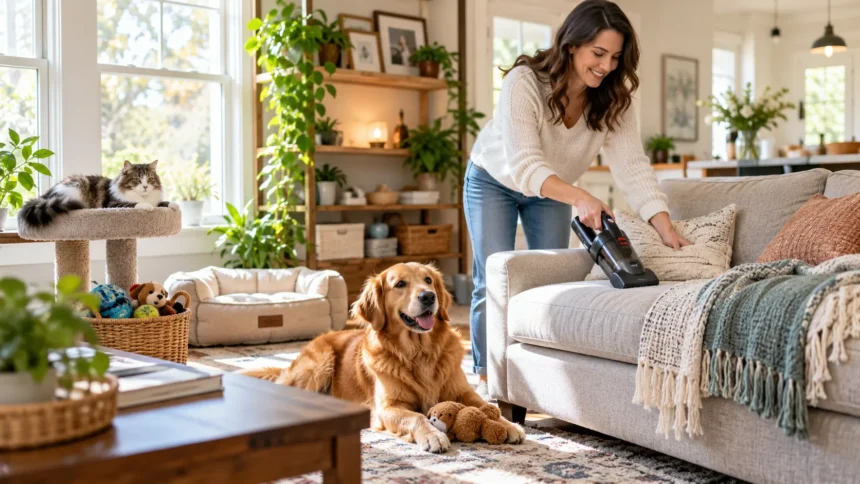
Living with pets brings happiness, companionship, and countless memorable moments into your home. However, keeping your living space clean can become challenging when you have furry friends running around. Pet hair, muddy paws, unpleasant odors, and occasional accidents can quickly make your house feel messy. Fortunately, maintaining a clean home with pets does not have to be difficult.
Understanding the simple ways to keep a clean home with pets can help you create a comfortable environment for everyone. With regular grooming, effective cleaning habits, and practical home organization, you can manage everyday messes without spending hours cleaning. Small adjustments to your daily routine can make a noticeable difference in how your home looks and feels.
Whether you have playful dogs, curious cats, or several pets living together, maintaining cleanliness requires consistency and planning. This guide explores practical pet-friendly cleaning tips, useful household habits, and simple solutions for keeping floors, furniture, and living spaces fresh while protecting your pets’ comfort and well-being.
Why Keeping a Clean Home With Pets Is Important
Maintaining a clean home with pets supports a healthier and more comfortable living environment. Pet hair, dander, dirt, and food crumbs can accumulate on floors, furniture, and other household surfaces. Regular cleaning helps reduce these materials and prevents everyday messes from becoming more difficult to manage over time.
A clean environment also supports pet hygiene and comfort. Dirty bedding, neglected feeding areas, and poorly maintained litter boxes can create unpleasant odors and encourage unwanted pests. Keeping these spaces clean helps pets enjoy their surroundings while making shared living areas more pleasant for household members.
Cleanliness does not mean removing every trace of your pet from the house. A realistic cleaning routine focuses on managing dirt, maintaining hygiene, and preventing avoidable problems. With the right habits, you can enjoy life with your pets without feeling that household cleaning is a never-ending responsibility.
Create a Daily Pet-Friendly Cleaning Routine
One of the easiest ways to maintain a clean house with pets is to establish a simple daily cleaning routine. Small tasks completed regularly prevent hair, dirt, and clutter from accumulating. Instead of spending an entire weekend cleaning, focus on manageable activities that fit naturally into your schedule.
Begin by identifying areas where your pets spend the most time. These spaces may include the living room, kitchen, sleeping areas, and entrances. Sweeping visible dirt, wiping feeding surfaces, and removing loose pet hair can help maintain cleanliness without requiring a complete house cleaning every day.
Consistency matters more than completing every possible cleaning task. Some homes require daily vacuuming, while others may need it only several times a week. Adjust your routine according to the number of pets, their shedding patterns, and the types of flooring throughout your home.
Brush Your Pets Regularly to Control Shedding
Regular grooming is one of the most effective ways to manage pet hair around your home. Dogs and cats naturally shed fur, although the amount varies by breed, coat type, and season. Brushing helps remove loose hair before it reaches carpets, furniture, and clothing.
Choose grooming tools that match your pet’s coat and individual needs. Short-haired animals may require different brushes than pets with thick or long coats. Gentle grooming also provides an opportunity to notice tangles, skin irritation, or unusual changes that may need professional attention.
Establish a grooming schedule that keeps your pet comfortable rather than brushing excessively. Some pets benefit from frequent sessions, while others require less maintenance. If your pet experiences sudden hair loss, bald patches, or persistent itching, consult a veterinarian instead of assuming the problem is normal shedding.
Vacuum Floors and Furniture to Remove Pet Hair
Vacuuming is an important part of keeping a clean home with dogs and cats. Pet hair can collect on carpets, rugs, sofas, and flooring, particularly in areas where animals regularly rest. Removing this buildup helps maintain a tidy appearance and reduces the amount of loose fur circulating around living spaces.
A vacuum cleaner designed for pet hair may provide useful features such as effective brush attachments and strong filtration. Upholstery tools can help clean sofas and chairs, while suitable floor attachments make it easier to remove debris from different surfaces. Choose equipment that matches your home’s flooring materials.
Pay extra attention to corners, underneath furniture, and areas near pet beds. These locations often collect hair that is easy to overlook during quick cleaning sessions. Regular vacuum maintenance, including emptying containers and cleaning filters according to manufacturer instructions, helps preserve cleaning performance.
Keep Pet Paws Clean Before Entering the House
Muddy paws can quickly spread dirt across floors, carpets, and furniture. Dogs that spend time outdoors may bring soil, grass, sand, and moisture into the home. Creating a simple paw-cleaning routine near the entrance can significantly reduce the amount of mess carried inside.
Place an absorbent mat near the doorway and keep a soft towel available for wiping paws. When necessary, use plain water or pet-safe cleaning products recommended for your animal. Dry paws gently, paying attention to the spaces between the toes where dirt and moisture may collect.
Avoid using harsh household cleaners or strongly scented products directly on your pet’s skin. These substances can cause irritation or become harmful if licked. During rainy weather, keeping a dedicated towel near the entrance makes paw cleaning easier and helps protect floors from unnecessary dirt.
Choose Pet-Friendly Flooring That Is Easy to Clean
Flooring materials influence how easily you can maintain a clean home with pets. Some surfaces collect hair, absorb moisture, or show scratches more readily than others. Choosing durable, easy-to-maintain flooring can reduce cleaning difficulties while making everyday life more comfortable for your animals.
Luxury vinyl, properly sealed tile, and other moisture-resistant surfaces are common options for pet-friendly homes. These materials can be easier to wipe clean after minor spills or muddy footprints. However, slippery flooring may be uncomfortable for certain pets, particularly older animals or those with mobility difficulties.
Washable rugs and non-slip mats can improve comfort while protecting frequently used areas. Choose materials that are suitable for regular cleaning and avoid rugs that trap excessive amounts of hair. When replacing flooring, consider durability, traction, moisture resistance, and the cleaning requirements of each material.
Wash Pet Bedding and Blankets Frequently
Pet beds and blankets can collect hair, dirt, body oils, and everyday odors. Because animals spend considerable time resting in these areas, regular cleaning helps maintain a more comfortable sleeping environment. Washable bedding also makes it easier to manage accidents and seasonal shedding.
Check the manufacturer’s cleaning instructions before washing pet beds or removable covers. Some materials can be machine-washed, while others require gentle hand cleaning. Use an appropriate detergent, rinse thoroughly, and allow bedding to dry completely before returning it to your pet.
The ideal washing frequency depends on your pet’s habits, health, and sleeping environment. Bedding may need more frequent cleaning when pets spend time outdoors or experience accidents. Keeping a spare washable cover can simplify maintenance while ensuring your pet always has a comfortable place to rest.
Remove Pet Odors Without Harsh Chemicals
Pet odors can develop when hair, moisture, accidents, or dirty bedding remain unattended. Rather than covering unpleasant smells with strong fragrances, identify and clean the source. This approach usually produces better results and helps prevent the same odor from returning repeatedly.
For washable surfaces, use cleaning methods appropriate for the material and type of mess. Enzymatic cleaners formulated for pet accidents can help break down odor-causing organic residue. Always follow product instructions and keep pets away from treated areas until the surfaces are safe and fully dry.
Avoid using essential oils, strong disinfectants, or heavily fragranced products without confirming their safety around pets. Some substances can be particularly harmful to cats, birds, and other sensitive animals. Good ventilation, regular washing, and prompt cleanup are often more effective than relying on air fresheners.
Clean Pet Food and Water Areas Daily
Feeding areas are common places for spills, crumbs, and moisture buildup. Dogs and cats may scatter food while eating or splash water around their bowls. Without regular cleaning, leftover food and damp surfaces can attract insects or create unpleasant odors.
Wash food bowls after meals when practical and refresh drinking water regularly. Water bowls should also be cleaned frequently to prevent slippery buildup and maintain hygiene. Use washing methods and products suitable for pet feeding equipment, rinsing thoroughly before returning the bowls.
Placing a washable mat underneath food and water dishes can make cleanup easier. Choose a mat that stays securely in place and does not create a slipping hazard. Keeping food storage containers properly closed also helps protect pet food from moisture, contamination, and household pests.
Maintain a Clean and Fresh Cat Litter Box
A clean litter box is essential for households with cats. Regular maintenance reduces unpleasant smells and provides a more comfortable bathroom area for your pet. Cats may avoid litter boxes that become excessively dirty, potentially creating additional cleaning problems around the house.
Scoop waste at least daily, or more frequently when needed, and replace litter according to the product’s instructions. Wash the litter box periodically using suitable cleaning methods before adding fresh litter. Avoid strong fragrances that may irritate your cat or discourage normal litter box use.
Place litter boxes in quiet, accessible areas where cats feel comfortable. Providing enough boxes is particularly important in homes with multiple cats. If your cat suddenly stops using the litter box, seek veterinary guidance because medical conditions and stress can contribute to changes in bathroom habits.
Protect Sofas and Furniture From Pet Hair
Furniture often becomes a favorite resting place for pets, especially when sofas and chairs provide soft, comfortable surfaces. Unfortunately, upholstery can collect fur, paw marks, and everyday dirt. Using practical protective accessories can make furniture cleaning easier without preventing pets from enjoying shared living spaces.
Washable furniture covers and throws are useful for protecting frequently used seating areas. Choose fabrics that resist excessive hair buildup and can withstand regular washing. Keeping a designated blanket on your pet’s favorite spot can reduce direct contact between loose fur and upholstery.
Lint rollers, upholstery attachments, and suitable pet-hair removal tools can help clean remaining fur. Always test cleaning products and tools on an inconspicuous section before using them broadly. Regular maintenance usually requires less effort than removing large amounts of embedded hair after several weeks.
Manage Pet Accidents and Stains Quickly
Occasional accidents can happen even in homes with well-trained pets. Young animals, older pets, and those experiencing medical or behavioral changes may sometimes soil indoor surfaces. Responding promptly helps reduce staining, lingering odors, and damage to flooring or upholstery.
Begin by gently removing excess moisture or waste without spreading the mess across a larger area. Use a cleaner designed for the affected surface and appropriate for pet accidents. Enzymatic cleaning products may be useful for removing organic residue, but they should be applied according to label directions.
Avoid punishing pets for accidents because this can increase fear without addressing the underlying cause. Instead, review bathroom routines and consider whether additional training or veterinary guidance is needed. Repeated accidents, especially when they begin suddenly, may indicate a health concern that deserves professional evaluation.
Improve Indoor Air Quality in a Home With Pets
Indoor air quality can be affected by pet dander, dust, cleaning products, and other household particles. Although regular cleaning cannot remove every airborne allergen, it may help reduce buildup on surfaces. Maintaining a well-ventilated living environment can also improve everyday comfort for household members.
Vacuum cleaners with effective filtration and appropriately maintained air purifiers may help capture some airborne particles. Choose equipment suitable for the room and follow filter replacement recommendations. However, air purifiers are not substitutes for regular surface cleaning, grooming, or medical advice when someone experiences allergies.
Avoid unnecessary use of strongly scented sprays, candles, and chemical air fresheners around sensitive animals. Birds and some other pets may be particularly vulnerable to airborne irritants. When possible, use gentle cleaning products, maintain ventilation, and address odor sources directly instead of masking them.
Organize Pet Toys and Accessories
Pet toys, leashes, grooming supplies, and feeding accessories can quickly create clutter when they do not have designated storage spaces. Organizing these items makes daily routines easier and reduces the time spent searching for essentials. It also helps keep frequently used household areas tidy.
Use baskets, shelves, or storage containers to separate toys from grooming and cleaning supplies. Keep everyday items in convenient locations while storing less frequently used equipment elsewhere. Make sure small objects and potentially hazardous products remain out of your pet’s reach.
Inspect toys regularly for damage, loose pieces, or signs of excessive wear. Wash appropriate toys according to their materials and replace items that may create safety concerns. An organized pet area supports household cleanliness while making it easier to maintain safe and comfortable play spaces.
Create a Dedicated Space for Your Pets
Giving pets a comfortable designated area can help manage hair, dirt, and everyday clutter. This space might include a washable bed, feeding station, toy basket, and appropriate resting area. It should feel welcoming rather than functioning as a place where your pet is isolated from normal household activities.
Choose a location that provides comfortable temperatures, suitable ventilation, and enough room for your pet to rest naturally. Avoid placing sleeping areas near cleaning chemicals, unsafe electrical cords, or excessive household noise. Washable accessories can make the space easier to maintain while supporting your pet’s daily comfort.
A designated pet area can also help establish consistent routines for feeding, resting, and storing supplies. However, pets should still have appropriate opportunities for movement, interaction, and enrichment. The goal is to create an organized environment that supports both household cleanliness and animal well-being.
Keep Your Home Clean During Shedding Season
Seasonal shedding can make household cleaning more challenging, especially for dogs and cats with thick coats. Some animals shed more heavily during changes in daylight and temperature. During these periods, loose fur may accumulate faster on clothing, carpets, and furniture.
Increasing grooming frequency when appropriate can help manage additional loose hair. Regular brushing, suitable grooming tools, and occasional professional grooming may be useful depending on coat type. Avoid shaving pets unnecessarily because their coats can provide important protection and temperature regulation.
You may also need to vacuum high-traffic areas more often during heavy shedding periods. Washable furniture covers and easily maintained flooring can reduce the extra workload. If shedding appears excessive or occurs alongside skin irritation, consult a veterinarian to rule out an underlying health problem.
Use Pet-Safe Cleaning Products Throughout Your Home
Choosing appropriate cleaning products is an important part of maintaining a pet-friendly household. Animals may come into contact with cleaned floors, furniture, and other surfaces through their paws or fur. Some cleaning chemicals can cause irritation or poisoning if pets inhale concentrated fumes or lick residues.
Always read product labels and follow instructions for dilution, application, ventilation, and drying. Keep pets away from cleaning areas until products have been used safely and surfaces are ready for contact. Store cleaning supplies securely so curious animals cannot reach containers or accidentally spill their contents.
Never mix household cleaning chemicals because certain combinations can release dangerous gases. Avoid assuming that natural products are automatically safe for animals, since some plant-based ingredients can also be harmful. When uncertain about a cleaning product, consult a veterinarian or appropriate product safety guidance before using it near pets.
Conclusion
Learning the simple ways to keep a clean home with pets can make everyday household maintenance easier and more manageable. Regular grooming, consistent vacuuming, and prompt cleanup help reduce pet hair, dirt, and unwanted odors. Small cleaning habits can prevent messes from accumulating while keeping your living environment comfortable.
A pet-friendly cleaning routine should focus on both household hygiene and animal safety. Washing bedding, maintaining feeding areas, organizing accessories, and choosing suitable cleaning products are all important practices. Using durable materials and washable furniture covers can also reduce maintenance difficulties without sacrificing comfort or style.
Keeping a clean home with pets does not require perfection or constant cleaning. The most effective approach is to develop realistic routines that suit your home, schedule, and pets’ individual needs. With patience and consistency, you can enjoy a tidy, welcoming space while continuing to share your home with your favorite companions.
Frequently Asked Questions (FAQs)
How do you keep your house clean when you have pets?
Maintain a regular cleaning routine that includes vacuuming, grooming, washing pet bedding, and cleaning feeding areas. Using washable furniture covers and wiping muddy paws can also prevent dirt from spreading throughout the house.
How often should you vacuum a house with pets?
Vacuuming frequency depends on shedding, flooring, and the number of pets. High-traffic areas may need daily attention, while other spaces can often be cleaned several times a week.
What is the best way to remove pet odors from a home?
Identify the source of the odor and clean it using appropriate pet-safe methods. Regularly wash bedding, maintain litter boxes, improve ventilation, and use suitable enzymatic cleaners for pet accidents.
How can I keep my furniture free from pet hair?
Use washable furniture covers, groom your pets regularly, and remove loose hair with suitable upholstery tools or lint rollers. Cleaning frequently helps prevent fur from becoming deeply embedded in furniture fabrics.
Are regular household cleaning products safe for pets?
Not all household cleaning products are safe around animals. Some ingredients can cause irritation or poisoning, so follow product instructions, provide ventilation, and keep pets away from treated surfaces until safe.
