

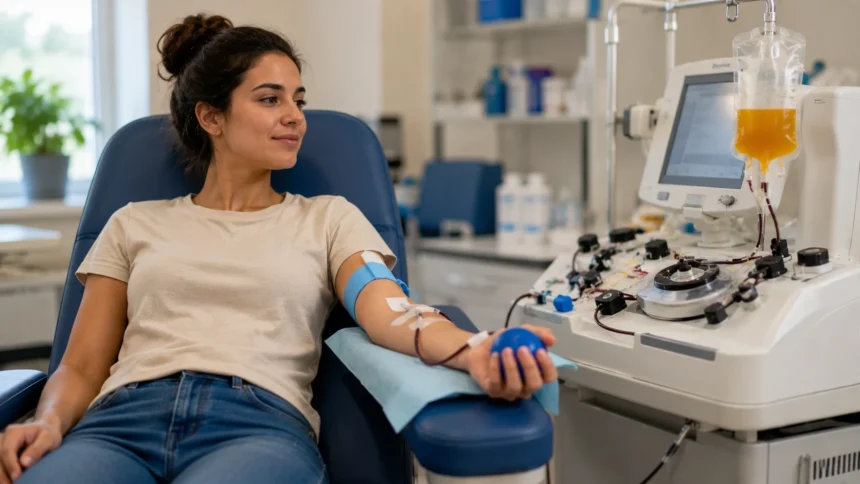
Donating Plasma: Requirements, Benefits & Side Effects
Donating plasma can provide an important resource for hospitals and for medicines used to treat people with immune disorders, bleeding conditions, severe injuries, and other medical needs. Plasma is the pale-yellow liquid portion of blood that carries proteins, electrolytes, hormones, nutrients, and other substances throughout the body. During a plasma donation, a machine separates plasma from the donor’s blood and returns most of the red blood cells and other components. This process is called plasmapheresis and generally takes longer than a standard whole-blood donation. Most eligible people tolerate the procedure well, although temporary side effects such as bruising, fatigue, dizziness, or dehydration can occur. Understanding the process beforehand can make the experience more comfortable and less intimidating.
Plasma donation requirements vary according to country, collection organization, donation type, medical history, and individual health. In the United States, source-plasma programs generally require adult donors to meet minimum weight and health standards and complete screening before donating. Donation centers also check factors such as vital signs, protein levels, medications, recent procedures, infections, travel history, and other circumstances that could affect donor or recipient safety. Some people can donate frequently, while others may need to wait temporarily or may not qualify at all. This guide explains plasma donation eligibility, what happens during plasmapheresis, potential benefits, common side effects, preparation, recovery, donation frequency, and warning signs that deserve medical attention.
What Is Plasma Donation and How Does It Work?
Plasma is the liquid component of blood and makes up a substantial portion of total blood volume. It is mostly water but also contains important proteins, antibodies, clotting factors, salts, nutrients, and other substances transported throughout the body. Red blood cells, white blood cells, and platelets normally circulate within this liquid portion. When plasma is donated through plasmapheresis, specialized equipment separates the liquid plasma from selected cellular components. Most of the donor’s red blood cells are then returned through the same intravenous line or another configured collection system. Because important blood cells are returned, plasma can generally be donated more frequently than whole blood under programs that permit frequent source-plasma collection.
The donation process is different from ordinary whole-blood collection because the blood repeatedly moves through an automated apheresis machine. A small amount of blood is drawn from a vein and enters sterile disposable tubing connected to the machine. The equipment separates plasma from the blood cells using centrifugation or another approved separation process. Plasma enters a collection container while the remaining components are returned to the donor, usually along with saline or other appropriate fluid according to the procedure. This collection-and-return cycle continues until the intended plasma volume has been obtained. The exact amount collected depends partly on donor characteristics and the rules followed by the donation organization.
There are also different purposes for donated plasma, which helps explain why donation schedules can vary between centers. Some plasma is collected for direct transfusion to patients who need blood components in hospitals. Other plasma, often called source plasma, is collected primarily for manufacturing plasma-derived therapies. Source plasma can be processed into products containing immunoglobulins, albumin, clotting proteins, and other important components. These medicines may be used by people with immune deficiencies, bleeding disorders, neurological conditions, and other medical needs. The collection method can look similar from the donor’s perspective, but eligibility rules, frequency, testing, compensation, and processing practices may differ between donation programs.
Plasma replenishes relatively quickly because much of its volume consists of water, but that does not mean the body instantly replaces every protein removed during donation. Fluid volume begins recovering soon after a person drinks and eats normally, while plasma proteins take additional time to return toward previous levels. Frequent donation programs therefore monitor donors and apply limits intended to protect health. The body’s ability to replace plasma is one reason plasmapheresis can be performed more frequently than whole-blood donation in appropriate donors. However, donating as often as permitted is not necessarily appropriate for every individual. Symptoms, protein measurements, medical conditions, and center screening all matter when deciding whether someone should continue donating.
The experience usually takes longer for a first-time donor because registration, identification, medical history, education, screening, and physical assessment may be required before collection begins. Later visits can be faster once initial eligibility has been established, although screening is still performed before each donation. The actual time connected to the machine depends on plasma volume, vein quality, equipment, blood flow, and other individual factors. Many donors spend roughly an hour or longer in the collection process, while the entire visit can take considerably longer. Bringing something to read or listen to can make the time easier. Following instructions from collection staff is important throughout the procedure, especially if unusual symptoms develop.
Plasma Donation Requirements and Eligibility
Eligibility requirements are designed to protect both the donor giving plasma and the person who may eventually receive a transfusion or plasma-derived therapy. Requirements vary internationally, so the rules at one plasma donation center should not automatically be applied to another country or organization. In U.S. source-plasma programs, donors are generally expected to be at least 18 years old, weigh at least 110 pounds, and meet health-screening requirements. Individual centers may apply additional criteria or restrictions based on their procedures. Donors normally provide identification and complete detailed medical and lifestyle questions. Answering accurately is essential because the screening process depends heavily on information that cannot always be identified through laboratory testing alone.
Vital signs are generally checked before donation to make sure the body is in an appropriate condition for plasmapheresis. Staff may evaluate temperature, blood pressure, pulse, weight, and other required measurements according to applicable standards. A small blood sample may also be taken to assess factors such as hematocrit or hemoglobin and total protein. These checks can identify reasons why donating that day may not be appropriate even when a person usually qualifies. Being temporarily deferred does not necessarily mean there is a serious health problem. It often means that one measurement falls outside the collection center’s acceptable range and donor safety takes priority over completing the donation.
Medical history also influences plasma donor eligibility. Certain heart, kidney, blood, immune, neurological, or infectious conditions can affect whether someone can donate safely. Recent illness, fever, surgery, pregnancy-related circumstances, certain vaccinations, or ongoing treatment may result in temporary or longer deferral depending on the situation. Medications are reviewed as well because some drugs reflect an underlying condition that matters for donation, while others can directly affect eligibility. Donors should never stop prescription medication merely to qualify for plasma donation. If a medicine appears on a center’s deferral list, staff or the prescribing healthcare professional can explain what it means for future eligibility.
Tattoos, piercings, travel, and possible exposure to certain infections may also affect eligibility depending on where the donation takes place and how recently the event occurred. Regulations and screening policies have changed over time, so old information found in forums may no longer be accurate. The safest approach is to answer the center’s questions exactly and allow trained staff to determine whether any waiting period applies. Infectious disease testing is another important part of plasma collection because donated material must meet safety requirements before it can be used. Testing does not replace honest screening because some infections may not be detectable immediately after exposure. Donor questionnaires and laboratory testing therefore work together.
Body size can influence the amount of plasma collected because larger donors generally have greater circulating blood volume. This is one reason minimum weight requirements exist and why collection volumes are not necessarily identical for everyone. People who barely meet a weight threshold should not attempt rapid weight changes simply to qualify for donation. Maintaining stable nutrition and hydration is more important than trying to manipulate a screening measurement. Donation centers may also decline a procedure when veins are unsuitable for safe collection or when staff identify another concern during assessment. Eligibility should be viewed as an individual safety decision rather than something a person needs to “pass” at any cost.
What Happens During a Plasma Donation?
A typical visit begins with check-in and donor screening before any needle is inserted. First-time donors may need to complete registration, identity verification, medical history, consent documents, and a more extensive health assessment. Returning donors usually complete an updated questionnaire because health conditions, medications, travel, or recent procedures may have changed since the previous visit. Staff then perform required physical measurements and collect a small blood sample when necessary. If every requirement is satisfied, the donor is taken to the collection area and seated or reclined in a donation chair. The staff member explains the procedure and prepares the arm using infection-control practices before accessing a suitable vein.
The needle used for plasmapheresis allows blood to move from the body into a sterile collection system. Some people feel a brief sting or pressure during insertion, similar to other blood-drawing procedures. Once the needle is positioned, the machine begins alternating between drawing blood, separating plasma, and returning cellular components. Donors may notice changing pressure in the arm as the machine moves through different phases. Staff monitor the machine and donor throughout collection and can adjust the procedure if necessary. The donor should avoid repeatedly bending or moving the needle arm because movement can contribute to discomfort, infiltration, or bruising around the venipuncture site.
An anticoagulant is used inside the collection system to prevent blood from clotting while it travels through the tubing and machine. Citrate is commonly involved in apheresis procedures and can temporarily bind calcium when a small amount returns to the donor with the blood components. Most donors have no significant problem, but some experience tingling around the lips or fingers, a metallic taste, chills, unusual sensations, or muscle symptoms. These signs should be reported immediately rather than tolerated silently. Staff can often respond by adjusting the procedure and following the center’s protocol for managing citrate-related symptoms. Severe reactions are uncommon but require prompt attention when they occur.
The donor may also receive saline or other replacement fluid as part of the procedure depending on the collection system and center practices. Some people notice feeling cool during the return phase because fluids and blood components entering the vein may be below body temperature. Wearing comfortable clothing and having a light layer available can help if the center permits it. Drinking excessively during the procedure is not necessary and may be inconvenient because leaving the chair before collection ends can be difficult. Good hydration should begin before arriving rather than being attempted entirely while connected to the machine. Staff should always be told about nausea, dizziness, pain, numbness, or increasing discomfort.
Once the required plasma volume has been collected, the machine completes the final return and the needle is removed. Staff apply pressure and a bandage to reduce bleeding from the venipuncture site. Donors may be asked to remain seated briefly and stand slowly to make sure dizziness does not develop. Depending on the center, a drink or snack may be available afterward, although practices vary. The collected plasma is labeled, tested, and handled according to the purpose of the donation and applicable regulations. Donors can usually leave once staff are satisfied that they feel well, but strenuous use of the needle arm should be limited for the remainder of the immediate recovery period.
Benefits of Donating Plasma
The clearest benefit of plasma donation is its value to other people rather than a guaranteed physical health benefit for the donor. Plasma contains proteins and components that can be used directly in patient care or processed into specialized medicines. People with severe injuries, burns, bleeding problems, immune deficiencies, and other medical conditions may depend on plasma-based products. Some therapies require regular administration throughout a patient’s life, creating an ongoing need for donated plasma. A single donation does not become one universal medicine because manufacturing separates and processes particular proteins for different clinical purposes. Regular eligible donors therefore contribute to a supply chain that supports many types of medical treatment.
Immunoglobulin is one important category of medicine produced from donated plasma. These products contain antibodies and are used in the treatment of several immune and neurological disorders when clinically appropriate. Some patients cannot produce enough functional antibodies themselves and depend on replacement therapy to reduce infection risk. Other plasma-derived products contain clotting factors needed by people with certain bleeding disorders. Albumin, another major plasma protein, also has medical uses in particular hospital settings. Donors rarely see the individuals who ultimately receive these therapies, but their plasma may become part of a carefully controlled manufacturing process serving patients far beyond the original donation center.
Plasma collected for transfusion can serve different clinical purposes from source plasma used in pharmaceutical manufacturing. Hospitals may use plasma in selected patients who require replacement of multiple clotting factors, particularly when significant bleeding is occurring. Plasma is not a general energy booster or routine treatment for every patient who has lost blood. Clinical teams choose blood components according to the patient’s actual needs. Certain blood types are especially useful for transfusion plasma because compatibility works differently from red blood cell compatibility. People considering donation can ask their organization how the plasma they give is typically used, because collection programs differ.
Donation centers also perform basic health screening before collection, which can occasionally alert donors to measurements that deserve follow-up. Blood pressure, pulse, temperature, protein levels, or blood-related measurements may be checked according to the program. These screenings are designed to determine donation eligibility rather than provide a complete health examination. A normal screening result does not prove that a person is free from disease, and an abnormal value does not establish a diagnosis. Donors should continue normal preventive healthcare instead of relying on plasma visits as a substitute for medical appointments. If screening repeatedly identifies an unusual measurement, discussing it with a healthcare professional may be appropriate.
Financial compensation is available in some source-plasma programs and countries, while volunteer transfusion-plasma programs may operate differently. Payment policies depend on local regulations, donation organization, location, and program type. Compensation is generally associated with the donor’s time and participation rather than turning plasma into an unrestricted retail product. Financial motivation should not encourage anyone to hide medical information or donate when feeling unwell. There is also no strong reason to view plasma donation as a “detox,” weight-loss technique, immunity booster, or treatment for high iron unless a clinician specifically addresses a separate medical issue. Its major established benefit is helping create medically useful plasma and plasma-derived therapies.
Common Side Effects of Donating Plasma
Most eligible donors complete plasma donation without a serious complication, but temporary side effects can occur. Fatigue is common enough that some people prefer avoiding demanding activity for the remainder of the day. The combination of time spent donating, temporary fluid loss, travel, fasting mistakes, and anxiety can contribute to feeling tired afterward. Mild thirst or dehydration can also occur because plasma contains a large amount of water. These effects usually improve with rest, fluids, and normal meals. Persistent or severe weakness is different from ordinary post-donation tiredness and deserves closer attention, particularly if it is accompanied by fainting, chest symptoms, shortness of breath, or another unusual problem.
Dizziness and lightheadedness can occur during or after plasma donation, particularly in people who are anxious, dehydrated, have not eaten enough, or are prone to vasovagal reactions. A vasovagal response occurs when the nervous system causes a temporary drop in blood pressure and heart rate, sometimes leading to sweating, nausea, weakness, tunnel vision, or fainting. Donors should report these sensations immediately instead of trying to finish the procedure without assistance. Staff can recline the chair, monitor vital signs, and take other appropriate steps. Standing suddenly after collection can worsen lightheadedness, so moving gradually is sensible. Someone who loses consciousness outside the center or has persistent symptoms should receive appropriate medical evaluation.
Bruising around the needle site is another possible plasma donation side effect. A small amount of blood can escape into surrounding tissue when the vein is punctured, particularly if the needle moves or pressure is insufficient after removal. Minor bruising often changes color over several days before gradually disappearing. Increasing pain, major swelling, numbness, weakness, or a rapidly enlarging bruise is not typical and should be reported. Rarely, blood can collect more substantially beneath the skin and create a hematoma. Keeping the bandage in place for the recommended period and avoiding heavy lifting with the donation arm immediately afterward may reduce additional bleeding.
Citrate reactions are more specific to apheresis procedures because citrate anticoagulant can temporarily lower the amount of free calcium available in the blood. Early symptoms may include tingling around the mouth, lips, fingers, or toes, along with chills, metallic taste, trembling, or unusual sensations. More significant reactions can produce muscle cramps, spasms, or other symptoms requiring immediate management by donation staff. Donors should not wait until symptoms become severe before mentioning them. Collection professionals are trained to recognize citrate-related reactions and can determine whether the procedure should be adjusted or stopped. Taking calcium supplements independently before every donation is not necessary unless recommended by an appropriate professional or donation protocol.
Serious complications are uncommon but possible with any procedure involving a needle and movement of blood outside the body. Infection at the needle site, significant bleeding, nerve irritation, severe allergic-type reactions, or complications related to the collection system can occur rarely. Increasing redness, warmth, swelling, pus, fever, or significant worsening pain around the needle site should be medically assessed. Sudden shortness of breath, chest pain, severe weakness, loss of consciousness, or persistent neurological symptoms require urgent medical care. Donors should also contact the donation center when symptoms begin soon after the procedure because staff may need to document the event. Knowing warning signs should create preparedness rather than unnecessary fear.
How to Prepare for Donating Plasma
Good preparation starts with hydration during the day before and the hours leading up to the appointment. Because plasma contains substantial water, arriving well hydrated can support blood flow and may make the collection process more comfortable. Water is usually a useful choice, but drinking extremely large amounts immediately before screening is unnecessary and can make the visit uncomfortable. Alcohol should generally be avoided around donation because it can contribute to dehydration and may interfere with eligibility or judgment. Caffeine affects people differently and may influence pulse or hydration habits, so moderation is sensible. Follow any specific instructions supplied by the donation organization because center requirements should take priority over generic preparation advice.
Eating a balanced meal before donating is also important. Arriving after prolonged fasting can increase the likelihood of weakness, nausea, or lightheadedness during collection. Meals containing adequate protein can support overall nutritional intake, particularly for people who donate regularly. Extremely fatty meals close to donation may affect the appearance or processing of plasma and are discouraged by many programs. Choose familiar foods rather than trying unusual supplements or restrictive diets immediately before the appointment. Regular nutrition matters more than attempting to create one supposedly perfect “plasma donation meal.” If the center provides specific dietary guidance, follow those recommendations because they may be tailored to its screening and collection practices.
Protein intake deserves attention among frequent source-plasma donors because plasma contains proteins that the body must replace after each donation. Donation programs may monitor total protein and defer people whose measurements fall below acceptable levels. Protein can come from meat, fish, eggs, dairy products, beans, lentils, soy foods, nuts, seeds, and other appropriate dietary sources. People following vegetarian or vegan diets can donate when otherwise eligible, but they should make sure their overall diet meets nutritional needs. Protein powders are not automatically required merely because someone donates plasma. Persistent low protein measurements deserve a broader nutritional or medical discussion rather than repeatedly trying to increase one screening number quickly.
Sleep can influence how someone feels during donation, so arriving reasonably rested is helpful. A person who has slept very little may be more likely to feel fatigued, stressed, or uncomfortable during a long collection session. Vigorous exercise immediately beforehand can also increase fluid needs and may leave someone depleted, particularly in hot conditions. Plan strenuous workouts for another time when possible and allow the body to begin the donation in a stable state. Wear clothing that allows easy access to the inner elbow without creating a tight band around the upper arm. Comfortable layers can also help because some people feel cooler while blood components and fluids are being returned.
Finally, bring accurate information about medications, medical conditions, recent travel, tattoos, piercings, procedures, vaccinations, and previous donation reactions. Do not omit information because you are worried about being deferred. A temporary deferral protects both donor and recipient and does not represent a personal failure. If you previously experienced a citrate reaction, fainting episode, difficult needle placement, or significant bruising, tell staff before collection begins. They may be able to modify positioning, monitoring, or other aspects of the visit. Preparation is ultimately about making the procedure predictable rather than trying to guarantee that nothing uncomfortable will happen. Honest communication is one of the most effective safety measures a donor can provide.
Recovery and Aftercare After Plasma Donation
Immediately after donation, remain seated until you feel steady enough to stand comfortably. Some centers recommend a brief observation period or provide refreshments before the donor leaves. Move slowly if you tend to become lightheaded because symptoms can appear after standing even when you felt normal while reclining. Keep the pressure dressing or bandage on for the period recommended by the staff to reduce renewed bleeding. If the needle site begins bleeding again, apply firm direct pressure and elevate the arm when practical. Persistent bleeding despite appropriate pressure, especially in someone using blood-thinning medication or with a bleeding disorder, should be evaluated rather than repeatedly ignored.
Replacing fluids is useful during the hours after plasma donation. Water and ordinary nonalcoholic drinks can help restore the liquid portion of plasma that was removed. There is no need to force extreme quantities of fluid within a short period, and people who have medically prescribed fluid restrictions should follow their clinician’s instructions. Eating a balanced meal can also support recovery by providing protein, carbohydrates, minerals, and other nutrients. Some donors feel completely normal afterward, while others prefer a quieter day. Pay attention to how your own body responds rather than assuming another person’s post-donation routine will automatically work for you.
Heavy lifting with the donation arm should generally be avoided for a period after the needle is removed because strain can encourage bleeding or worsen bruising. Strenuous exercise can also increase dehydration and may aggravate dizziness in someone who has not fully recovered. Light normal activity is often well tolerated when the donor feels good, but returning immediately to an intense workout is unnecessary. People whose jobs involve heavy physical labor may find it easier to schedule donation when they have recovery time afterward. If activity repeatedly causes symptoms after donation, discuss the pattern with staff before the next visit. Donation should fit around health rather than requiring the donor to repeatedly push through significant discomfort.
A small bruise can usually be monitored while it gradually resolves. Avoid repeatedly massaging a painful needle site because this can further irritate the surrounding tissue. If the area becomes increasingly swollen, hot, red, numb, or severely painful, contact the donation center or a healthcare professional. Rare nerve irritation can produce persistent tingling, shooting pain, or weakness beyond the normal tenderness of a needle puncture. Symptoms extending down the arm or interfering with normal hand function deserve assessment. Most needle-site discomfort remains mild and temporary, but understanding the difference between expected soreness and worsening symptoms can prevent complications from being overlooked.
Recovery also includes deciding whether the body feels ready for another donation when the required interval has passed. Meeting the legal or center-defined minimum interval does not mean a donor must return at the earliest possible opportunity. Ongoing fatigue, repeated dizziness, slow recovery, low protein readings, or difficult vein access are reasonable reasons to discuss donation frequency with staff or a healthcare professional. Frequent donors should pay attention to overall nutrition, sleep, hydration, and changes in how they feel over time. A sustainable schedule should not leave someone consistently unwell between visits. Helping others through donation is valuable, but protecting donor health remains part of a safe plasma collection system.
How Often Can You Donate Plasma Safely?
Donation frequency depends strongly on the type of plasma program and the country where collection occurs. In U.S. source-plasma programs, eligible donors may generally donate no more frequently than once in a two-day period and no more than twice within a seven-day period. This is much more frequent than standard whole-blood donation because red blood cells are largely returned during plasmapheresis. However, not every plasma program uses this maximum schedule. Organizations collecting plasma primarily for direct transfusion may require substantially longer intervals. Donors should therefore follow the schedule provided by their specific organization instead of assuming all plasma centers operate under identical rules.
For example, some volunteer transfusion-plasma programs schedule donations approximately every four weeks rather than twice weekly. Different collection purposes, equipment, blood components, organizational policies, and donor populations can produce different intervals. This difference explains why two trustworthy websites may appear to provide conflicting answers about how often plasma can be donated. One may be discussing frequent source-plasma collection for manufacturing, while another is describing plasma intended for transfusion. Neither rule should automatically be transferred to the other program. When comparing donation information online, first identify which kind of plasma collection the organization is discussing. The donation center itself remains the most reliable source for the schedule applying to that specific donor.
Frequent plasma donation removes protein repeatedly even though red blood cells are returned. Donation programs monitor selected measurements to help identify when continuing at the same frequency may not be appropriate. Some research has raised questions about changes in immunoglobulin or other protein levels among very frequent donors, which is why monitoring and regulatory limits matter. The health impact can differ between individuals according to diet, body size, baseline protein status, frequency, and other medical factors. A person who repeatedly fails protein screening should not simply search for ways to temporarily raise the number before the next visit. Persistent abnormalities deserve appropriate evaluation and potentially a longer break from donation.
Plasma donation usually has less effect on iron stores than whole-blood donation because most red blood cells are returned to the body. Red blood cells contain much of the body’s circulating iron, making whole-blood donation more directly relevant to iron loss. However, small amounts of red cells can occasionally be lost during plasmapheresis, and frequent donors can have other nutritional factors affecting iron status. Persistent fatigue should therefore not automatically be blamed on plasma volume alone. A clinician can investigate anemia, iron deficiency, sleep problems, thyroid disorders, nutritional issues, or other causes when appropriate. Donors should avoid self-treating unexplained fatigue with large amounts of iron unless deficiency has been identified or professional advice supports supplementation.
The safest donation frequency is ultimately one that remains within the applicable rules and is well tolerated by the individual donor. Someone who feels healthy at the maximum permitted frequency may have a different experience from another donor who needs longer recovery intervals. Repeated adverse reactions, difficult venous access, worsening fatigue, low protein measurements, or medical changes may justify reducing frequency or stopping temporarily. Donation centers can defer donors when screening indicates a safety concern, but donors can also choose to take a break before reaching that point. Maximum permitted frequency is a regulatory limit rather than a personal target. Long-term plasma donation should remain compatible with normal health, nutrition, work, exercise, and daily functioning.
When to Delay Donation or Seek Medical Help
Do not donate plasma when you are acutely ill simply because an appointment is already scheduled. Fever, significant infection symptoms, vomiting, diarrhea, or feeling generally unwell can make donation inappropriate and may affect recovery. Illness can also influence vital signs, hydration, and screening results. Contact the center when uncertain because staff can explain whether a temporary deferral is needed. The same principle applies after certain surgeries, medical procedures, vaccinations, tattoos, piercings, or changes in medication. Waiting until eligibility is restored is safer than hiding information to avoid losing an appointment or compensation.
Pregnancy and the postpartum period require specific donation restrictions, and exact waiting periods should be confirmed with the collection organization. Pregnancy changes circulating blood volume, iron requirements, and many other physiological processes, making donation eligibility different from ordinary adult screening. Breastfeeding policies may also vary by program and location. People with chronic diseases should ask whether their condition or treatment affects donation rather than assuming that feeling well guarantees eligibility. Kidney, heart, blood, immune, or other significant health conditions can alter how the body responds to fluid and protein removal. A healthcare professional may also provide individualized advice when the donation center’s basic rules do not fully address a complex medical situation.
During the procedure, report symptoms immediately rather than trying to endure them until the collection finishes. Tingling around the mouth, worsening chills, muscle cramps, nausea, severe pain at the needle site, swelling, chest discomfort, difficulty breathing, or feeling close to fainting all deserve staff attention. Early reporting often allows a mild reaction to be managed before it becomes more severe. Donation staff would rather evaluate a symptom that turns out to be minor than discover that someone concealed an important reaction. Previous experiences should also be mentioned at future visits. A pattern of repeated reactions may influence whether additional precautions or a different donation schedule is appropriate.
After leaving the center, seek urgent medical care for severe symptoms such as difficulty breathing, chest pain, prolonged loss of consciousness, severe weakness, confusion, major bleeding that will not stop, or rapidly worsening swelling of the donation arm. Significant signs of infection around the needle site, including spreading redness, heat, pus, fever, or severe worsening pain, also require medical assessment. Persistent numbness, weakness, or abnormal hand movement may indicate nerve or vascular irritation that should not be ignored. These complications are uncommon, but rarity does not make them unimportant. Tell the healthcare professional that symptoms began after plasmapheresis so the recent procedure can be considered during evaluation.
For most eligible donors, plasma donation remains a well-established procedure with manageable short-term effects. Safe participation depends on honest screening, proper hydration and nutrition, appropriate donation intervals, and attention to symptoms rather than treating the procedure as completely risk-free. The major benefit is the contribution plasma makes to transfusion medicine and life-sustaining plasma-derived therapies, not a promised detoxification or wellness effect for the donor. People who tolerate donation well may choose to return according to the program’s schedule, while others may need longer intervals or decide it is not right for them. Both decisions are reasonable. A good plasma donation experience protects the donor at the same time that it helps the patients who ultimately depend on the donated material.
Frequently Asked Questions
What are the basic requirements for donating plasma?
Requirements vary by country and donation center, but U.S. source-plasma donors are generally expected to be at least 18 years old, weigh at least 110 pounds, be in suitable health, and pass medical and infectious-disease screening. Additional rules can apply based on medications, procedures, travel, pregnancy, tattoos, piercings, and other health factors.
How long does donating plasma take?
The first visit can take around two hours or longer because of registration, medical screening, and the collection itself. Return visits may be shorter, although the exact time depends on the center, equipment, vein access, collection volume, and individual blood flow.
What are the most common side effects of plasma donation?
Temporary fatigue, bruising, mild bleeding, dehydration, dizziness, and lightheadedness can occur. Some donors also experience citrate-related tingling, chills, metallic taste, or muscle symptoms during plasmapheresis and should tell collection staff immediately.
How often can you donate plasma?
In U.S. source-plasma programs, eligible donors can generally donate no more than once within a two-day period and no more than twice in seven days. Other programs, including some transfusion-plasma services, use much longer intervals, so always follow the schedule of the organization where you donate.
Is donating plasma good for your health?
The primary proven benefit of donating plasma is helping patients by supporting transfusions and production of plasma-derived medicines. Donors may receive basic screening and, in some programs, compensation, but plasma donation should not be promoted as a detox, weight-loss treatment, or guaranteed way to improve personal health.