

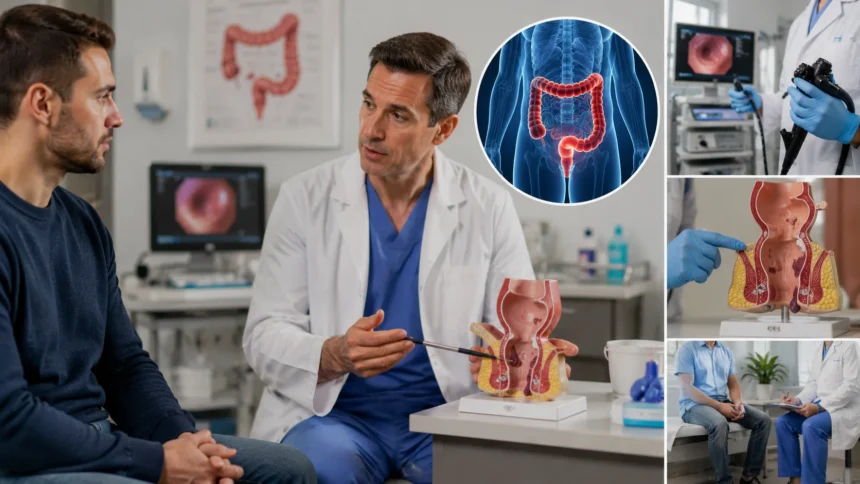
What Does a Proctologist Do? Conditions They Treat
A proctologist is a doctor who specializes in diagnosing and treating conditions involving the colon, rectum and anus. Today, the term colorectal surgeon is used more commonly than proctologist, particularly in the United States, because the specialty covers a broader portion of the large intestine rather than only the rectum and anus. Colorectal surgeons treat everything from common problems such as hemorrhoids and anal fissures to inflammatory bowel disease, rectal prolapse and colorectal cancer. Despite the word “surgeon,” seeing one does not automatically mean you will need an operation. Many colorectal problems can be evaluated and managed with medications, dietary changes, office procedures or other nonsurgical treatments.
People are often referred to a proctologist because of rectal bleeding, anal pain, persistent hemorrhoids, changes in bowel habits, fecal incontinence, chronic constipation or another lower gastrointestinal problem. Some patients are referred after a gastroenterologist discovers polyps, inflammatory bowel disease or another condition that may eventually require surgical treatment. Colorectal specialists can perform physical examinations, anoscopy, proctoscopy, colonoscopy and specialized pelvic-floor tests, as well as minimally invasive and open surgery when necessary. Understanding what a proctologist does can make an appointment feel less intimidating and help you recognize when symptoms deserve expert evaluation rather than repeated home treatment.
What Is a Proctologist?
A proctologist is a physician with specialized training in diseases affecting the lower digestive tract, particularly the colon, rectum and anus. The title comes from the word “proctology,” historically referring to the study of the rectum and anus. In modern medicine, the specialty has expanded beyond those structures, which is why the term colorectal surgeon is now preferred. Cleveland Clinic explains that colorectal surgeons are essentially the modern equivalent of proctologists and specialize in conditions involving the large intestine. They can evaluate both common benign problems and complex disorders requiring advanced surgery.
In the United States, colorectal surgeons first train in general surgery and then receive additional specialized training in colorectal diseases and procedures. Cleveland Clinic notes that U.S. colorectal surgeons typically complete at least five years of general surgical training followed by additional colorectal specialization. This background allows them to understand the digestive tract from both a medical and surgical perspective. They are trained in anatomy, intestinal physiology, continence, pelvic-floor function, cancer surgery and minimally invasive procedures. That combination makes them particularly useful when a condition affects both how the bowel functions and its physical structure.
Although the word surgeon appears in the modern title, colorectal specialists do far more than perform operations. They diagnose anorectal symptoms, assess bowel function, prescribe conservative treatments and perform office-based procedures that do not require major surgery. Someone with hemorrhoids, for example, might receive advice about fiber, hydration and bowel habits or undergo an office procedure rather than an operation. A person with an anal fissure may initially receive medication designed to relax the anal sphincter and allow healing. Surgery becomes one option among several rather than the automatic outcome of seeing the specialist.
A colorectal surgeon may also work closely with gastroenterologists. Gastroenterologists are physicians who specialize in diseases of the digestive system and commonly manage conditions through medications and endoscopic procedures. Colorectal surgeons have surgical training and are particularly involved when structural disease, complications or operations are likely. Cleveland Clinic describes the main distinction as surgical training: colorectal surgeons complete general surgical training before specializing further in colorectal procedures. Many patients therefore see both types of specialists during treatment for complex digestive conditions.
The specialty may also overlap with pelvic-floor medicine, oncology and other surgical fields. Problems involving fecal incontinence, rectal prolapse or fistulas can interact with the urinary tract, pelvic muscles and reproductive organs. Colorectal specialists may therefore work with gynecologists, urologists, oncologists, radiologists, physical therapists and gastroenterologists. The lower digestive tract does not function independently from the rest of the pelvis. A multidisciplinary approach can be especially useful when symptoms are caused by more than one anatomical or functional problem.
What Does a Proctologist Do During an Appointment?
A proctology or colorectal appointment usually begins with a detailed discussion of symptoms. The specialist may ask about rectal bleeding, pain, itching, bowel frequency, constipation, diarrhea, stool consistency, straining, leakage, abdominal symptoms and how long the problem has been present. Medical history matters as well, particularly previous colonoscopies, bowel surgery, inflammatory bowel disease, family history of colorectal cancer and current medications. Patients should be as specific as possible even when symptoms feel embarrassing. Colorectal specialists discuss these problems every day, and accurate information makes diagnosis considerably easier.
A physical examination may include inspection of the skin around the anus. The doctor may look for external hemorrhoids, fissures, swelling, skin irritation, abscesses, fistula openings, prolapse or other visible abnormalities. This part of the examination is usually brief. Depending on symptoms, the specialist may then perform a digital rectal examination, which involves inserting a lubricated gloved finger gently into the rectum. This can help assess tenderness, masses, sphincter tone and certain structural problems. Cleveland Clinic includes the digital rectal examination among routine diagnostic tests performed by colorectal surgeons.
Anoscopy may be performed when the doctor needs to look more directly at the anal canal and lower rectum. A short instrument called an anoscope is inserted gently to allow visualization of internal hemorrhoids, fissures, inflammation or other abnormalities. Proctoscopy is similar but examines a somewhat larger portion of the rectum. These tests are usually much shorter and more limited than a colonoscopy. They can often be performed during an office visit without sedation. Cleveland Clinic lists both anoscopy-related examination and proctoscopy among tools used in colorectal practice.
If symptoms suggest disease higher in the colon, additional testing may be recommended. This can include flexible sigmoidoscopy, colonoscopy, stool testing, blood tests or imaging. Colonoscopy allows the doctor to examine the colon and rectum using a flexible camera and may also permit removal of polyps or tissue sampling. Mayo Clinic Healthcare notes that evaluation of rectal bleeding can include anoscopy, flexible sigmoidoscopy, colonoscopy and blood or stool testing depending on the suspected cause. The exact test should be chosen according to symptoms, age and risk factors rather than performed automatically for every patient.
Specialized tests may be used when the main problem is bowel function rather than visible disease. Anorectal manometry can measure how the rectal and anal muscles respond during squeezing and bowel movements. Defecography can examine how the rectum and pelvic floor behave during defecation. Endorectal ultrasound may help evaluate sphincter injuries, tumors or other structures. Cleveland Clinic lists anorectal manometry, defecography and endorectal ultrasound among tests colorectal surgeons may use. These evaluations are particularly valuable for fecal incontinence, obstructed defecation and pelvic-floor dysfunction.
What Conditions Does a Proctologist Treat?
One of the most common reasons people see a proctologist is hemorrhoids. Hemorrhoids are swollen veins in or around the anus and lower rectum and may cause bleeding, itching, swelling or discomfort. Internal hemorrhoids often cause painless bright-red bleeding, while external hemorrhoids can become painful or form a clot. Many improve with fiber, hydration, avoiding prolonged straining and short-term symptom relief. Persistent or severe cases may require rubber-band ligation, other office procedures or surgery. Mayo Clinic emphasizes that rectal bleeding should not automatically be assumed to come from hemorrhoids because other diseases can produce the same symptom.
Anal fissures are another common condition. A fissure is a small tear in the lining of the anal canal, often triggered by hard stool, constipation, diarrhea or trauma. It can cause intense sharp or burning pain during and after bowel movements and may produce a small amount of bright-red blood. Treatment commonly begins with improving stool consistency and reducing sphincter spasm. Prescription ointments, injections or surgical procedures may be considered when a chronic fissure fails to heal. Because fissures and hemorrhoids can produce similar bleeding, an examination can help identify which problem is actually present.
Colorectal specialists also treat perianal abscesses and anal fistulas. An abscess is a collection of infected material that can cause severe pain, swelling, warmth, fever or drainage near the anus. A fistula is an abnormal tunnel that can remain after an abscess and connect the anal canal to the skin. These conditions often require procedural or surgical treatment because antibiotics alone may not resolve the underlying problem. Cleveland Clinic includes abscesses and anal fistulas among the benign anorectal diseases treated by colorectal surgeons.
Rectal prolapse is another condition commonly managed by the specialty. In rectal prolapse, part or all of the rectum slips downward and may protrude through the anus. Symptoms can include a visible lump, mucus, bleeding, difficulty controlling bowel movements or a sensation of incomplete emptying. Pelvic-floor weakness, chronic straining and aging can contribute. Treatment depends on severity and overall health, but surgery is often required for significant full-thickness prolapse. Cleveland Clinic lists rectopexy among surgical procedures used to repair rectal prolapse.
Proctologists also treat colorectal cancers, polyps, diverticular disease, inflammatory bowel disease, bowel obstruction and inherited colorectal disorders. Cleveland Clinic’s colorectal surgery service lists colon, rectal and anal cancers; Crohn’s disease; ulcerative colitis; diverticulitis; inherited polyposis syndromes; constipation; pelvic-floor dysfunction and fecal incontinence among the conditions within the specialty. This broad scope demonstrates why the modern term colorectal surgeon is more accurate than proctologist. The specialty extends far beyond hemorrhoids and anal complaints.
Hemorrhoids, Fissures and Other Anal Problems
Hemorrhoids are frequently the first condition people associate with proctologists, but they come in several forms. Internal hemorrhoids develop inside the rectum and may cause painless bright-red bleeding or protrude through the anus. External hemorrhoids develop beneath the skin around the anus and can cause itching, swelling or pain. If a blood clot forms in an external hemorrhoid, the result can be a hard and very painful lump known as a thrombosed hemorrhoid. Mayo Clinic notes that thrombosed external hemorrhoids can produce severe pain and swelling.
An important part of colorectal evaluation is confirming that bleeding actually comes from hemorrhoids. Bright-red blood may indeed result from hemorrhoids or a fissure, but rectal bleeding can also occur with inflammatory bowel disease, polyps, diverticular disease and colorectal or anal cancer. Mayo Clinic specifically warns patients not to assume bleeding is due to hemorrhoids, particularly when bowel habits or stool characteristics have changed. This is why repeated bleeding deserves medical assessment even when a person has had hemorrhoids before.
Anal fissures are often characterized by severe pain that accompanies bowel movements. The pain can feel like tearing or cutting and may continue as burning or spasm afterward. Some people avoid bowel movements because they fear the pain, which can worsen constipation and make the fissure harder to heal. Treatment aims to soften stool and reduce anal sphincter tension so the tear has a chance to close. Chronic fissures may require stronger prescription treatment or a procedure when conservative care fails.
Anal itching can also bring someone to a colorectal clinic. Causes include moisture, stool leakage, skin irritation, hemorrhoids, infection, excessive cleaning and dermatological conditions. Repeated scrubbing or using scented wipes may actually worsen irritation. A specialist can examine the area and determine whether the itching is associated with a structural problem or primarily a skin condition. This can prevent months of self-treatment with products that do not address the underlying cause.
Anal pain with fever or drainage deserves faster evaluation because an abscess may be present. Mayo Clinic advises prompt care when anal pain becomes much worse, spreads or occurs with fever, chills or anal discharge. Abscesses often require drainage because a collection of infected material cannot always be treated effectively with medication alone. A fistula may remain after the acute infection resolves and sometimes requires additional surgery. Persistent drainage from an opening near the anus should therefore not simply be treated as recurrent skin irritation.
Colorectal Cancer, Polyps and Inflammatory Bowel Disease
Colorectal surgeons play an important role in the treatment of colon and rectal cancer. Gastroenterologists often identify suspicious lesions during colonoscopy, and biopsies establish whether cancer is present. A colorectal surgeon then helps determine whether the affected portion of bowel can be removed surgically and which procedure is appropriate. Treatment may involve collaboration with medical oncologists and radiation oncologists, particularly for rectal cancer. Cleveland Clinic lists colon, rectal and anal cancer among the major conditions treated by colorectal surgeons.
Polyps are growths that develop inside the colon or rectum. Many are harmless, but certain types can gradually become cancerous. Smaller polyps can often be removed during colonoscopy without surgery. Larger, difficult or suspicious growths may require advanced endoscopic removal or colorectal surgery. Cleveland Clinic lists polypectomy, endoscopic mucosal resection and other advanced techniques among procedures used within colorectal care. Early removal of precancerous polyps is a major reason colorectal screening is effective.
Inherited conditions may greatly increase a person’s lifetime colorectal cancer risk. These include familial adenomatous polyposis, Lynch syndrome, MUTYH-associated polyposis and several rarer syndromes. Colorectal specialists may participate in surveillance, preventive surgery and long-term care for patients with these disorders. Cleveland Clinic includes multiple hereditary polyposis and cancer syndromes among conditions managed by colorectal surgery services. Patients with a strong family history of early colorectal cancer or numerous polyps may therefore be referred to both colorectal and genetic specialists.
Inflammatory bowel disease, including Crohn’s disease and ulcerative colitis, can also require colorectal surgical care. Many people manage IBD primarily with medications prescribed by gastroenterologists. Surgery may become necessary when complications such as severe inflammation, strictures, fistulas, abscesses, uncontrolled bleeding or cancer risk develop. Ulcerative colitis can sometimes be treated surgically by removing the colon and creating an internal pouch, while Crohn’s disease may require more targeted removal or widening of affected bowel segments. Cleveland Clinic specifically lists both disorders among its major colorectal surgical specialties.
Diverticulitis is another condition that sometimes requires a colorectal surgeon. Diverticula are small pouches that can form in the colon wall, and inflammation or infection of one of these pouches is called diverticulitis. Many uncomplicated attacks are managed medically, but repeated severe disease, abscesses, fistulas, obstruction or other complications may lead to surgical evaluation. Cleveland Clinic lists diverticulitis and diverticular abscesses and fistulas among conditions treated within colorectal surgery. Seeing a surgeon does not necessarily mean an immediate operation; it may simply allow discussion of the risks and benefits of different options.
Bowel Control, Constipation and Pelvic Floor Problems
Colorectal surgeons also treat disorders involving bowel function, including chronic constipation, obstructed defecation and fecal incontinence. These problems may not involve a visible lesion but can still have a major effect on daily life. A person with pelvic-floor dysfunction may feel that stool reaches the rectum but cannot be passed normally because the muscles fail to coordinate properly. Others may experience leakage because the anal sphincter is weak or injured. Cleveland Clinic lists pelvic-floor dysfunction, obstructed defecation and fecal incontinence among functional bowel disorders treated by colorectal specialists.
Chronic constipation is not always simply a matter of eating too little fiber. Slow movement through the colon, medication effects, neurological disease, pelvic-floor dysfunction and structural conditions can all contribute. A colorectal surgeon may become involved when symptoms are severe, long-lasting or resistant to ordinary treatment. Testing can help distinguish slow-transit constipation from difficulty evacuating stool at the outlet. Those two problems may require very different treatments, which is why increasingly stronger laxatives are not always the answer.
Anorectal manometry can evaluate muscle coordination and pressure within the rectum and anal canal. During the test, a small flexible catheter measures how the muscles behave at rest, during squeezing and while simulating a bowel movement. When the pelvic floor tightens rather than relaxes during defecation, treatment may involve pelvic-floor physical therapy and biofeedback rather than surgery. This is one example of how a colorectal surgeon may diagnose a problem but recommend rehabilitation instead of an operation. Cleveland Clinic includes anorectal manometry among its specialized diagnostic tools.
Fecal incontinence can arise from childbirth injuries, previous anal surgery, nerve damage, diarrhea, aging, rectal prolapse or other causes. Treatment depends on what is contributing. Dietary changes, medication, pelvic-floor rehabilitation and bowel-management strategies may help some people. Others may require procedures targeting the anal sphincter or pelvic floor. Because embarrassment often prevents people from discussing leakage, symptoms may persist for years unnecessarily. Colorectal specialists are specifically trained to assess continence and should not treat the problem as unusual or shameful.
Rectal prolapse can contribute to both constipation and incontinence, making functional and structural problems overlap. A person may strain because the rectum does not empty properly, while repeated straining can further weaken pelvic support. Proper evaluation may therefore include examination, defecography and assessment of pelvic-floor function. When surgery is required, procedures such as rectopexy can restore the rectum to a more normal anatomical position. Cleveland Clinic lists rectopexy among established colorectal operations.
Proctologist vs Gastroenterologist: What Is the Difference?
A gastroenterologist is a medical specialist who diagnoses and treats diseases throughout the digestive system, including the esophagus, stomach, small intestine, colon, liver, gallbladder and pancreas. They commonly manage reflux disease, liver conditions, irritable bowel syndrome, inflammatory bowel disease and many other gastrointestinal disorders. They also perform endoscopy and colonoscopy. A colorectal surgeon focuses more specifically on the large intestine, rectum, anus and related pelvic structures and has surgical training. Cleveland Clinic identifies this surgical background as the major distinction between the specialties.
Many patients with rectal symptoms initially see a primary-care doctor or gastroenterologist. If the problem is straightforward, the condition may be treated without referral. A colorectal surgeon becomes especially relevant when symptoms are persistent, when an anorectal condition requires a procedure, or when surgery might become necessary. For example, a gastroenterologist may diagnose Crohn’s disease and manage it with medication, while a colorectal surgeon treats a fistula or obstruction caused by the disease. The two specialists often collaborate rather than compete.
A patient with hemorrhoids may go directly to a colorectal surgeon because anorectal examination and hemorrhoid procedures fall squarely within the specialty. Someone with unexplained abdominal pain and widespread digestive symptoms might reasonably start with a gastroenterologist. If colonoscopy reveals colon cancer, a colorectal surgeon is likely to become part of the treatment team. The correct specialist therefore depends on the symptom and suspected diagnosis rather than on one doctor being universally better.
Colonoscopy can be performed by appropriately trained gastroenterologists and colorectal surgeons. The procedure allows examination of the inside of the colon and can identify polyps, cancer, inflammation and certain sources of bleeding. Colorectal surgeons may perform colonoscopy as part of diagnostic work or cancer surveillance and can also proceed to surgical management when necessary. Cleveland Clinic specifically lists colonoscopy, sigmoidoscopy and other endoscopic techniques within colorectal practice.
Patients do not need to determine the perfect specialist before asking for help. A primary-care clinician can often evaluate symptoms initially and make an appropriate referral. If a person is already seeing a gastroenterologist and a surgical problem emerges, that physician can refer them to colorectal surgery. Likewise, a colorectal specialist who finds a primarily medical gastrointestinal disorder may involve gastroenterology. The more important issue is getting persistent or concerning symptoms assessed rather than delaying care because the specialty titles are confusing.
What Procedures Can a Proctologist Perform?
Colorectal surgeons perform a wide range of procedures, from simple office treatments to major bowel surgery. Hemorrhoid procedures may include rubber-band ligation, excision or other techniques depending on hemorrhoid type and severity. Abscesses may require drainage, while fistulas can require specialized procedures designed to eliminate the tract without unnecessarily damaging the anal sphincter. Anal fissures that fail conservative treatment may be managed with injections or surgery. The exact procedure should match the condition rather than assuming all anal symptoms require the same treatment.
Endoscopic procedures also form part of colorectal practice. Colonoscopy examines the entire colon, while flexible sigmoidoscopy examines the lower portion. Polyps may be removed during these procedures, and suspicious tissue can be biopsied. Cleveland Clinic also lists advanced endoscopic approaches such as endoscopic mucosal resection and endoscopic submucosal dissection for selected tumors. These methods can sometimes remove difficult lesions without traditional abdominal surgery.
When bowel surgery is necessary, modern colorectal surgeons often use minimally invasive techniques. Laparoscopic surgery involves small abdominal incisions and a camera, while robotic surgery uses computer-controlled surgical instruments operated by the surgeon. These approaches may reduce incision size and recovery burden in appropriate patients, although open surgery remains necessary in some situations. Cleveland Clinic lists laparoscopy, laparoscopic surgery and robotic surgery among standard colorectal techniques.
Bowel resection involves removing a diseased segment of intestine and reconnecting healthy ends when possible. This may be required for colorectal cancer, complicated diverticulitis, Crohn’s disease, bowel obstruction or other serious conditions. Some patients require a temporary or permanent ostomy, in which stool exits through an opening called a stoma into an external pouch. Colorectal surgeons perform both ostomy creation and, when appropriate, reversal procedures that reconnect the bowel. Cleveland Clinic includes bowel resection, ostomy surgery and anastomosis among colorectal operations.
Pelvic-floor and prolapse procedures form another important part of the specialty. Rectopexy can repair rectal prolapse, while other operations may address sphincter injury, pelvic organ prolapse or fistulas connecting the rectum with nearby structures. The objective is often to improve both anatomy and function. A technically successful operation that leaves a patient unable to control bowel movements would not represent a good outcome, which is why specialized knowledge of anorectal physiology matters. This combination of surgical and functional expertise distinguishes colorectal surgery from many other surgical fields.
When Should You See a Proctologist?
You should consider seeing a colorectal specialist when rectal bleeding is persistent, recurrent or unexplained. Hemorrhoids and fissures are common causes, but bleeding can also occur with polyps, inflammatory bowel disease and cancer. Mayo Clinic advises arranging medical evaluation when rectal bleeding lasts more than a day or two, or earlier when it causes concern. Mayo also warns against automatically attributing bleeding to hemorrhoids, particularly when bowel habits or stool characteristics have changed.
Persistent anal pain is another reason for evaluation. A fissure may cause severe pain during bowel movements, while a thrombosed hemorrhoid can create a painful lump near the anus. An abscess may cause increasingly intense pain, swelling, fever or drainage. Mayo Clinic advises immediate evaluation when anal pain worsens substantially, spreads or occurs with fever, chills or discharge. Pain lasting more than a few days despite basic self-care also deserves a medical appointment.
Changes in bowel function can also justify referral. Chronic constipation that does not respond to ordinary treatment, difficulty emptying the rectum, stool leakage or a sensation that tissue is protruding through the anus can indicate pelvic-floor or structural problems. These conditions can often be evaluated with specialized tests that primary-care offices do not routinely perform. Many are treatable, and people should not assume that incontinence or difficult bowel movements are simply unavoidable consequences of aging.
A new anal lump or swelling should also be assessed when its cause is uncertain. Some lumps are external hemorrhoids or benign skin tags, while others may reflect an abscess, wart, prolapse or another lesion. A rapidly appearing painful lump can represent a thrombosed external hemorrhoid. Mayo Clinic notes that timely treatment can provide more relief when a painful hemorrhoid has developed a clot. A physical examination is usually much more reliable than attempting to diagnose a lump from pictures online.
Anyone with a known colorectal condition may also need specialist follow-up even without dramatic symptoms. This includes people with colorectal cancer, inflammatory bowel disease complications, inherited polyposis syndromes, recurrent diverticulitis or prior colorectal surgery. A specialist can monitor progression and discuss when intervention becomes appropriate. Early consultation does not force someone to undergo surgery; it often provides more treatment options because problems are identified before they become emergencies.
When Rectal or Anal Symptoms Need Urgent Medical Care
Heavy or continuous rectal bleeding requires more urgent attention than a small occasional spot of blood. Mayo Clinic advises immediate medical care for continuous or heavy rectal bleeding, particularly when severe abdominal pain or cramping occurs at the same time. Significant blood loss can lead to circulatory instability and should not be managed through routine hemorrhoid creams or waiting for a clinic appointment.
Signs of shock alongside bleeding require emergency medical assistance. These can include fainting, confusion, cold clammy skin, very low urine output, blurred vision and significant dizziness or lightheadedness. Mayo Clinic specifically lists these symptoms as reasons to seek emergency help when rectal bleeding is substantial. Even if hemorrhoids have bled in the past, a large amount of bleeding with systemic symptoms must be treated differently from a small streak on toilet paper.
Severe anal pain with fever, chills or discharge also deserves prompt assessment because an abscess or spreading infection may be present. Mayo Clinic recommends immediate evaluation when anal pain gets significantly worse, spreads or occurs with fever, chills or anal discharge. An untreated abscess can sometimes progress or form a fistula. Trying to squeeze or drain a painful perianal swelling at home is unsafe.
Severe abdominal pain, vomiting, marked abdominal swelling and inability to pass stool or gas can suggest bowel obstruction or another serious abdominal problem. Colorectal surgeons treat bowel obstruction, but these symptoms may require emergency-department evaluation rather than waiting for a scheduled specialist appointment. Acute abdominal emergencies often require imaging, fluids, laboratory testing and rapid surgical consultation. The exact cause cannot be determined reliably from symptoms alone.
New rectal bleeding accompanied by unexplained weight loss, persistent change in bowel habits or increasing fatigue also deserves timely medical evaluation even when the bleeding itself is not heavy. These symptoms do not prove colorectal cancer, but they should not be repeatedly dismissed as hemorrhoids without assessment. Mayo Clinic emphasizes that bleeding can have causes other than hemorrhoids, including colorectal and anal cancers. Evaluating persistent symptoms early provides the best opportunity to identify both serious and easily treatable conditions.
How to Prepare for a Proctologist Appointment
Before your appointment, write down your main symptoms and when they started. Include information about bowel frequency, constipation, diarrhea, pain, bleeding, itching, drainage, lumps, mucus or leakage. If bleeding occurs, note whether it appears bright red, dark red, mixed into the stool or only on toilet paper. You do not need to describe symptoms with perfect medical terminology. Simple descriptions of what you actually see and feel are usually more valuable than trying to diagnose yourself in advance.
Prepare a list of medications, supplements and relevant health conditions. Blood-thinning medicines are particularly important because they can affect bleeding and decisions about procedures. Tell the doctor about previous colonoscopy results, abdominal or pelvic surgery and any known inflammatory bowel disease. Family history of colon or rectal cancer and inherited polyps also matters. If a close relative developed colorectal cancer at a young age, include their approximate age at diagnosis if you know it.
Ask the office whether bowel preparation is required. Most ordinary colorectal clinic visits do not require the same full bowel cleanse used before colonoscopy. Anoscopy and basic rectal examination can often be performed without extensive preparation. However, specific clinics may provide their own instructions depending on the planned test. Following those instructions is more useful than taking laxatives unnecessarily before every appointment.
It is normal to feel uncomfortable about an anorectal examination, but colorectal clinicians perform these examinations routinely. You can ask the doctor to explain each step before it happens and tell them if something is painful. A digital rectal examination or anoscopy is usually brief. Medical staff should preserve privacy and explain why each examination is necessary. Knowing what to expect often makes the visit considerably less stressful.
Finally, bring questions about treatment options rather than assuming surgery will be recommended. Ask what the diagnosis is, whether additional testing is needed, what conservative treatments are available and what might happen if the condition is left untreated. If surgery is recommended, ask why, what alternatives exist and what recovery typically involves. The goal of the appointment is to understand the problem and make an informed decision, not simply to undergo a procedure because you were referred to a surgeon.
The Bottom Line: What Does a Proctologist Do?
A proctologist, now more commonly called a colorectal surgeon, specializes in disorders affecting the colon, rectum, anus and related pelvic structures. The specialty includes both common anorectal conditions and complex intestinal disease. Cleveland Clinic describes colorectal surgeons as specialists who treat the lower gastrointestinal tract through diagnostic testing, nonsurgical care, endoscopy, minimally invasive procedures and surgery. Seeing one does not mean surgery is inevitable.
Common conditions include hemorrhoids, anal fissures, abscesses, fistulas, rectal prolapse, chronic constipation and fecal incontinence. Colorectal surgeons also treat Crohn’s disease, ulcerative colitis, diverticular disease, colorectal polyps and cancers. Functional bowel problems such as pelvic-floor dysfunction can be evaluated using specialized tests including anorectal manometry and defecography. This broad scope explains why the modern title is more accurate than the older word proctologist.
A typical appointment may involve a symptom discussion, visual inspection, digital rectal examination and possibly anoscopy or proctoscopy. Additional tests such as colonoscopy, imaging or pelvic-floor studies are recommended only when the clinical situation requires them. These examinations can identify conditions that are difficult to distinguish based on symptoms alone. Rectal bleeding, for example, may come from hemorrhoids or a fissure but can also result from more serious bowel disease.
Persistent bleeding, recurrent anal pain, unexplained bowel changes, continence problems or a prolapsing rectal mass are all reasonable reasons to seek colorectal evaluation. Heavy bleeding, bleeding with signs of shock, severe abdominal pain or rapidly worsening anal pain with fever or discharge needs more urgent medical attention. Mayo Clinic specifically recommends emergency evaluation for significant bleeding accompanied by symptoms such as fainting, confusion or severe dizziness.
Ultimately, a proctologist is not simply a “hemorrhoid doctor.” Colorectal specialists manage a wide spectrum of diseases that affect bowel health, continence and quality of life, including conditions that people often delay discussing because they feel embarrassed. Symptoms involving the anus and rectum are routine medical concerns, and many have effective treatments. Seeking appropriate evaluation can provide a clear diagnosis, rule out more serious causes and help determine whether conservative treatment, an office procedure or surgery offers the best solution.
Frequently Asked Questions
Is a proctologist the same as a colorectal surgeon?
Essentially, yes. Colorectal surgeon is the more modern term and reflects the fact that these specialists treat the colon as well as the rectum and anus.
What is the most common reason to see a proctologist?
Common reasons include hemorrhoids, rectal bleeding, anal fissures, anal pain, abscesses, fistulas, chronic constipation and fecal incontinence. Persistent or unexplained bleeding should be medically evaluated rather than automatically assumed to be hemorrhoids.
What happens at your first proctologist appointment?
The doctor usually reviews your symptoms and medical history and may inspect the anal area, perform a digital rectal examination or use an anoscope. Additional tests are ordered only when needed.
Do proctologists only perform surgery?
No. Colorectal surgeons also diagnose conditions and provide nonsurgical management, office procedures, endoscopy and specialized bowel-function testing. Surgery is recommended only when appropriate for the underlying problem.
Should I see a proctologist for rectal bleeding?
Yes, persistent, recurrent or unexplained rectal bleeding deserves medical assessment. Seek urgent care if bleeding is heavy or continuous or is accompanied by severe abdominal pain, dizziness, fainting or other signs of significant blood loss.
