

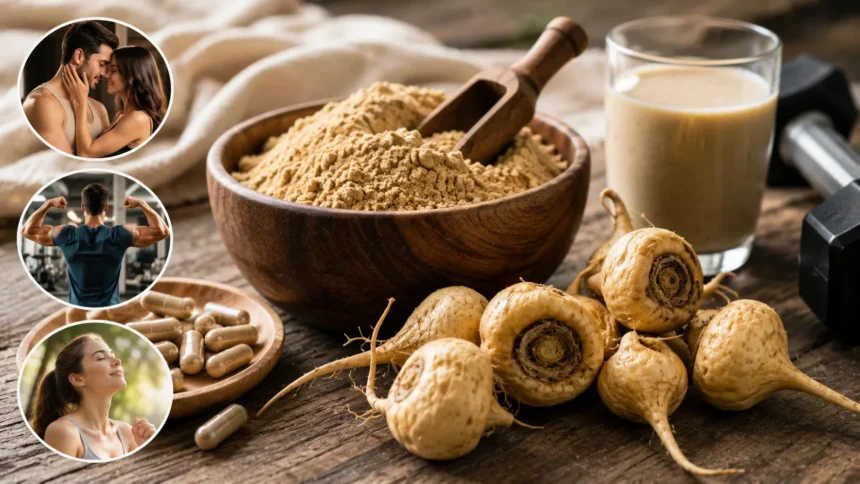
Maca Root Benefits, Uses and Possible Side Effects
Maca root has become a popular ingredient in powders, capsules, smoothies, energy blends, and supplements marketed for libido, fertility, stamina, mood, and hormonal balance. The plant, traditionally associated with the high Andes of Peru, belongs to the cruciferous vegetable family and is commonly known scientifically as Lepidium meyenii or Lepidium peruvianum. Its underground portion is dried and used as a food or supplement, sometimes in raw powder form and sometimes after a process known as gelatinization. Maca contains carbohydrates, fiber, amino acids, minerals, fatty acids, sterols, polyphenols, and distinctive compounds called macamides. However, the presence of these compounds does not mean every health claim made for maca has been proven in humans.
Research on maca root benefits is promising in a few areas, particularly sexual function, but the overall evidence remains limited. Systematic reviews have found some positive findings for libido and menopausal symptoms, while more recent evidence on sperm quality remains inconsistent. Many studies are small, use different types or colors of maca, and last only a few weeks or months. Typical research doses often range from about 1.5 to 3.5 grams daily, but there is no universally established medical dose for improving libido, fertility, energy, or hormonal symptoms. Maca should therefore be approached as a traditional food and dietary supplement with emerging evidence rather than as a proven treatment for infertility, erectile dysfunction, menopause, depression, or chronic fatigue.
What Is Maca Root?
Maca is a hardy plant traditionally cultivated at high elevations in the Peruvian Andes, where harsh temperatures, strong winds, and difficult growing conditions limit many other crops. The edible underground structure is frequently called a root, although botanically it is often described as a hypocotyl-root structure. It can vary in color, including yellow, red, black, purple, and other shades. Maca has been eaten traditionally as part of the diet rather than only as a medicinal herb. It may be cooked, dried, ground into flour-like powder, fermented, or incorporated into beverages. Modern supplements have taken this traditional food and concentrated it into powders, capsules, extracts, and specialty products marketed internationally.
Maca belongs to the Brassicaceae family, which also includes vegetables such as broccoli, cabbage, kale, mustard, and radishes. Its composition differs from those vegetables because the edible storage structure contains substantial carbohydrates alongside protein and fiber. Researchers have also identified phytochemicals including macamides, macaenes, glucosinolates, sterols, and polyphenols. These compounds are often discussed in relation to maca’s proposed effects on sexual function, energy, stress, and reproduction. However, supplement labels sometimes use the presence of unique compounds as proof of clinical effectiveness, which is not scientifically justified. Identifying a phytochemical tells researchers what to study; it does not automatically establish a health benefit.
The most common commercial form is maca powder, which can be stirred into smoothies, yogurt, oatmeal, milk, coffee alternatives, or baked foods. Its flavor is often described as earthy, nutty, malty, or slightly caramel-like. Some people find the flavor pleasant, while others prefer capsules because the taste is relatively strong. Powder can also vary significantly depending on processing and plant variety. A tablespoon of one product is not necessarily chemically identical to a tablespoon of another. Growing conditions, harvest, drying, color, extraction, storage, and manufacturing can influence the final composition.
Gelatinized maca is another widely sold form. Despite the name, gelatinization does not mean gelatin has been added. Instead, the maca is generally heated and processed to remove part of the starch, producing a powder that some people find easier to digest. The process can also create a more concentrated product by weight because some starch has been removed. Raw maca powder, meanwhile, usually undergoes drying and grinding without the same starch-removal process. Neither form has been definitively established as universally superior for health outcomes. Consumers should compare actual serving amounts rather than assuming that terms such as “raw,” “gelatinized,” or “premium” guarantee greater effectiveness.
Maca should also be distinguished from medications that directly alter hormone concentrations. Although supplement advertising frequently calls maca a “hormone balancer,” research has not established that it simply raises or lowers estrogen, testosterone, or progesterone to whatever level the body supposedly needs. Some clinical research has reported improvements in sexual or menopausal symptoms without major changes in circulating sex hormones. This suggests that any effects may involve mechanisms other than straightforward hormone replacement. It is therefore more accurate to describe maca as a plant under study for reproductive and sexual-health effects rather than a natural hormonal medicine.
What Are the Potential Benefits of Maca Root?
The most discussed benefit of maca root is its possible effect on sexual desire. A systematic review of randomized clinical trials found limited evidence that maca may improve sexual function or desire in some adults, including healthy men, people with erectile dysfunction, and some menopausal women. However, only four trials met the review criteria, and the researchers concluded that the total evidence remained insufficient for strong conclusions. This is an important distinction because “some studies were positive” is not the same as “maca is proven to increase libido.” The trials also used specific amounts and products, which may not match every supplement currently sold.
Maca has also been investigated for antidepressant-associated sexual dysfunction. Some people taking selective serotonin reuptake inhibitors or similar antidepressants experience reduced desire, arousal difficulties, or problems with orgasm. A small dose-finding trial found better sexual-function scores with 3 grams of maca per day than with 1.5 grams per day in participants with SSRI-related sexual dysfunction. Another 12-week placebo-controlled trial using 3 grams daily in women found higher remission rates on certain sexual-function measures, with potentially greater benefit among postmenopausal participants. These findings are interesting but come from relatively small studies. Maca should not be used as a reason to stop or alter antidepressant medication without guidance from the prescribing clinician.
Menopause is another area where maca has attracted attention. Symptoms such as hot flashes, sleep disruption, mood changes, vaginal discomfort, and altered sexual desire can significantly affect quality of life during the menopausal transition. A systematic review identified four randomized trials in which maca showed favorable changes on menopausal symptom scales. However, the reviewers emphasized that the total number of participants was small, methodological quality was limited, and safety data were inadequate for firm conclusions. Maca therefore cannot be considered an evidence-equivalent replacement for established menopausal treatments. It may be something an individual discusses with a clinician when seeking nonhormonal options, but expectations should remain conservative.
Fertility and sperm quality represent another popular claim. Older studies suggested possible improvements in sperm concentration, motility, or other semen parameters, which helped create maca’s reputation as a fertility supplement. A 2016 systematic review described the evidence as suggestive but too limited for firm conclusions. Importantly, a newer 2022 systematic review and meta-analysis of five randomized controlled trials found mixed effects and did not show a significant improvement in sperm concentration compared with placebo. The authors concluded that the overall effect of maca on semen quality remains unclear in both healthy men and men experiencing infertility. That newer evidence makes it inappropriate to promise that maca “boosts fertility” or reliably increases sperm count.
Other proposed benefits include improved energy, exercise performance, mood, memory, and stress resilience, but these areas generally have weaker human evidence. Small experiments and animal studies have produced interesting findings, yet they do not establish reliable effects in everyday supplement users. The term adaptogen is often applied to maca in wellness marketing, suggesting that it helps the body respond to stress, but this is not a precise clinical diagnosis or an FDA-approved indication. People may still enjoy maca as a food or perceive benefits from using it, but strong claims should be separated from evidence. The most defensible position is that maca has some preliminary human support for sexual function, with other commonly advertised benefits remaining uncertain.
Does Maca Root Increase Libido?
Libido is the area in which maca probably has its most recognizable human evidence. Sexual desire can be influenced by physical health, relationships, mood, medications, sleep, stress, hormonal changes, pain, and many other variables, so no single food or supplement can be expected to work for everyone. Clinical trials have nonetheless investigated whether maca can produce measurable changes in sexual desire. The systematic review of randomized trials found that two studies reported positive effects on sexual desire or dysfunction, while another study in healthy cyclists did not show the same benefit. The overall conclusion was that evidence was limited rather than definitive.
Interestingly, some research suggests that maca’s effects on libido may occur without large changes in testosterone. This matters because supplement marketing sometimes implies that maca works primarily as a natural testosterone booster. Human studies have not consistently demonstrated that interpretation. A person can experience changes in sexual function without a dramatic change in circulating testosterone because libido depends on psychological, neurological, vascular, relational, and hormonal factors. Maca may therefore influence sexual wellbeing through pathways that remain incompletely understood. Consumers should be skeptical of products marketed specifically as testosterone replacements unless convincing clinical evidence supports that claim.
The small trial involving SSRI-induced sexual dysfunction adds another layer to the evidence. Participants received either 1.5 grams or 3 grams of maca daily, and the higher-dose group showed significant improvements on two sexual-function scales. Libido also improved in the broader analysis. However, only 20 participants entered the trial and even fewer completed it, making the study too small to establish a standard treatment. It is best viewed as a signal that deserves further study. Anyone experiencing medication-related sexual dysfunction should first speak with their prescriber because dosage adjustments, medication changes, or other evidence-based interventions may be available.
The placebo-controlled study in women with antidepressant-related sexual dysfunction used 3 grams daily for 12 weeks. The overall remission results favored maca on several measures, and the authors suggested that postmenopausal women might have experienced a stronger benefit. Yet the sample was still modest, and the results were not uniformly strong across every outcome. This illustrates a recurring pattern in maca research: promising signals appear, but studies are not large enough to provide certainty. Someone interested in maca for libido should therefore understand that improvement is possible but far from guaranteed.
Persistent loss of libido also deserves attention beyond supplementation. Depression, thyroid disorders, diabetes, low testosterone, menopause-related symptoms, pain during sex, medication effects, sleep disorders, relationship difficulties, and chronic stress are just some possible contributors. Taking maca without investigating a significant new change in sexual function can delay identification of an underlying issue. A supplement may be reasonable as an optional adjunct in selected adults, but it should not replace evaluation when the change is persistent, distressing, or accompanied by other symptoms. Sexual health is complex enough that one botanical supplement should not be expected to solve every cause.
Maca Root for Fertility and Sperm Quality
Maca has a long traditional association with reproductive health, which is one reason fertility supplements frequently include it. Early human studies examined sperm concentration, motility, morphology, and total semen volume after maca supplementation. Some reported improvements, encouraging the idea that maca could support male fertility. The 2016 systematic review found five studies, including three randomized clinical trials and two uncontrolled studies, and described the evidence as suggestive. However, the investigators emphasized small sample sizes and risk of bias. That caution is essential because fertility research is particularly vulnerable to overinterpretation when one laboratory measurement improves but pregnancy outcomes are not established.
The 2022 systematic review and meta-analysis provides a more updated and cautious picture. Five randomized controlled trials were included, and their findings were mixed. The pooled analysis did not demonstrate a significant increase in sperm concentration compared with placebo, while individual studies produced inconsistent changes in other semen variables. Researchers concluded that maca’s effect on semen quality remains unclear in both infertile and healthy men. This newer analysis weakens claims that maca reliably increases sperm count or motility. It also highlights why SEO content should not repeat older fertility claims without incorporating more recent evidence.
Semen quality itself does not equal fertility. Conception depends on sperm concentration and movement, but also sperm DNA quality, timing, ovulation, fallopian tube function, age, underlying health conditions, frequency of intercourse, and factors involving both partners. Even a supplement that modestly improved one semen parameter would not automatically increase pregnancy or live-birth rates. The highest-value fertility outcomes are successful conception and healthy birth, not simply movement in a laboratory measurement. Maca has not been established as a proven fertility treatment based on those clinical endpoints.
Couples experiencing difficulty conceiving should therefore avoid relying exclusively on maca or other “fertility boosters.” Medical evaluation can identify causes such as low sperm production, varicocele, hormonal abnormalities, ovulatory disorders, endometriosis, blocked fallopian tubes, age-related fertility decline, or unexplained infertility. Some of these conditions have time-sensitive treatments. Waiting many months while experimenting with supplements can be particularly costly for couples where age is an important factor. A fertility specialist can determine whether lifestyle changes, medication, surgery, assisted reproductive technology, or simple observation is appropriate.
Maca could still be used as a food or optional supplement by some adults attempting conception, provided a healthcare professional has no safety concerns. The key is expectation. Current research does not justify promising that it will improve sperm count enough to reverse infertility. Anyone taking multiple fertility supplements should also examine total ingredient exposure, because products may combine maca with zinc, selenium, herbs, antioxidants, or high doses of vitamins. More ingredients do not necessarily improve fertility and may make side effects or interactions more difficult to identify.
Maca Root for Women, Hormones and Menopause
Maca is frequently promoted as a hormone-balancing supplement for women, but that phrase is vague and often scientifically misleading. Hormones are tightly regulated signaling molecules, and there is no single “balanced” level that a botanical product simply restores. Menstrual cycles, perimenopause, menopause, pregnancy, thyroid function, stress responses, and reproductive disorders all involve different hormonal systems. Maca has been studied for menopausal symptoms, but evidence does not establish it as a general hormone regulator. Consumers should therefore be cautious with claims that it naturally fixes estrogen dominance, progesterone deficiency, adrenal fatigue, or other poorly defined wellness diagnoses.
The systematic review on menopausal symptoms identified four randomized trials showing favorable effects on symptom scoring systems. Participants included perimenopausal and postmenopausal women, and reported symptoms improved in the maca groups. Nevertheless, the authors concluded that evidence was limited because trials were few, small, and not consistently high quality. They also noted that safety had not been sufficiently established. This makes maca an interesting research topic but not a substitute for established menopause management.
Some women consider maca specifically because they want an alternative to hormone therapy. That decision deserves nuance. Menopausal hormone therapy has a substantial evidence base for certain symptoms and is appropriate for some women but not others. Nonhormonal prescription treatments and lifestyle approaches are also available. Maca does not have comparable evidence for preventing osteoporosis, cardiovascular disease, or other long-term consequences associated with aging and estrogen decline. Improvement in a symptom questionnaire should not be interpreted as proof that maca replaces estrogen’s physiological effects.
Maca is also sometimes marketed for menstrual symptoms, polycystic ovary syndrome, or premenstrual syndrome. Human evidence for these specific uses is much thinner than the marketing suggests. Someone with irregular menstruation, heavy bleeding, severe pelvic pain, new acne or hair growth, or difficulty conceiving should seek appropriate evaluation rather than assuming maca will correct a hormonal imbalance. Conditions such as PCOS, thyroid disease, endometriosis, fibroids, and pregnancy-related issues require specific diagnosis. Supplementing without that context may add cost while delaying useful treatment.
Women with a history of hormone-sensitive cancers or other hormonally influenced conditions should discuss maca with their medical team before taking concentrated supplements. Evidence does not clearly establish that ordinary maca acts like estrogen in humans, but long-term safety information in these populations is limited. The same caution applies to people taking endocrine therapy after breast cancer or other specialized treatments. A lack of proven hormonal activity does not automatically mean safety has been demonstrated in every high-risk group. When medical stakes are high, uncertainty itself becomes relevant.
Does Maca Root Improve Energy and Exercise Performance?
Maca is often added to energy powders and pre-workout supplements, partly because it has a long traditional association with stamina and vitality. Some users report feeling more energetic after taking maca, but subjective energy is influenced by sleep, caffeine, food intake, mood, expectations, and exercise habits. Maca is not a stimulant in the same way that caffeine is. It does not typically create an immediate central nervous system effect resembling coffee or an energy drink. Any impact on perceived energy would likely be subtler and may take repeated use to notice, if it occurs at all.
Small human studies have investigated exercise performance, but the evidence is not strong enough to consider maca an established sports supplement. One trial included in the sexual-function systematic review involved healthy cyclists and failed to demonstrate the same sexual benefits seen in some other studies. Other small studies outside that review have explored cycling performance or endurance, but sample sizes have generally been too small for strong recommendations. Creatine, carbohydrate strategies, caffeine, protein, and structured training all have considerably stronger evidence for specific athletic outcomes.
The word “adaptogen” is frequently attached to maca in product descriptions. In wellness marketing, adaptogens are usually described as substances that help the body cope with physical or psychological stress. The concept has a history in herbal medicine research but does not function as a standardized medical indication. Calling maca an adaptogen therefore does not prove that it prevents burnout, treats adrenal disorders, or increases physical energy. Consumers should ask what measurable human outcome a product has actually been shown to improve rather than relying on broad terminology.
Maca powder does contain calories and carbohydrates because it is a food-derived product. A tablespoon added to oatmeal or a smoothie can therefore contribute a small amount of actual dietary energy, unlike a zero-calorie herbal extract. However, the nutritional contribution from an ordinary serving is modest compared with a complete meal. Someone who feels fatigued because they are undereating, iron deficient, sleep deprived, or living with a medical condition needs the underlying cause addressed. Maca is not a substitute for adequate calories, protein, micronutrients, or sleep.
Persistent fatigue deserves medical attention when it is unexplained or accompanied by symptoms such as shortness of breath, weight change, fever, palpitations, weakness, mood changes, or sleep disruption. Anemia, thyroid disorders, infections, sleep apnea, depression, diabetes, medication effects, and many other conditions can cause low energy. A supplement marketed for vitality may temporarily distract from identifying these problems. Maca may be an optional dietary addition, but it should not be used to self-treat significant chronic fatigue without evaluation.
Maca Root for Mood, Stress and Mental Wellbeing
Maca is sometimes promoted for mood support, particularly during menopause or periods of stress. Some small clinical trials investigating menopausal women have reported improvements in psychological components of symptom scores. This has led to speculation that maca may influence mood independently of hormone concentrations. However, these findings come from small studies designed primarily around menopausal symptoms rather than large trials of depression or anxiety. They are therefore insufficient to classify maca as an antidepressant or anti-anxiety treatment.
The studies of antidepressant-induced sexual dysfunction are sometimes misinterpreted as evidence that maca treats depression. In reality, participants generally had depression that was already in remission while they were experiencing sexual side effects from medication. The intervention was being studied for sexual function rather than as a replacement for antidepressant therapy. This distinction matters. A person taking an SSRI should never discontinue it and switch to maca because a study mentioned antidepressants.
Animal studies have explored potential effects of maca on stress-related behavior, memory, and mood, but animal findings do not automatically predict meaningful effects in humans. Dosages, metabolism, experimental conditions, and disease models differ substantially. Animal research is useful for generating hypotheses about possible biological mechanisms, not for proving that a supplement treats human mental-health disorders. Product marketing frequently skips this distinction when it describes preclinical findings as “science-backed.” Readers should look specifically for randomized human trials.
Some people may nevertheless experience subjective wellbeing improvements after adding maca to their routine. That experience could reflect the supplement, improved nutrition, expectations, a new morning ritual, or unrelated changes in life circumstances. Individual response is not invalid, but it cannot reveal the mechanism. If someone enjoys maca and tolerates it well, using it as part of a healthy diet is different from depending on it to treat clinically significant depression or anxiety. The latter requires evidence-based care.
Anyone experiencing persistent low mood, loss of interest, severe anxiety, panic, major sleep changes, impaired functioning, or thoughts of self-harm should seek professional mental-health support rather than relying on herbal supplements. Maca has no established role as emergency or primary treatment for these symptoms. The strongest evidence-based interventions for mental-health conditions may include psychotherapy, medication, lifestyle changes, or combinations tailored to the individual. Supplements should remain secondary considerations when symptoms are clinically significant.
How Much Maca Root Should You Take?
There is no officially established maca dosage for boosting libido, fertility, energy, or menopausal wellbeing. Clinical studies have used a variety of preparations and amounts, making it difficult to define one universally effective dose. Research on sexual function has commonly used approximately 1.5 to 3 grams daily, while some trials have used around 3 grams per day for several weeks or months. These research doses explain why commercial products often provide servings in that general range. However, study dosing is not the same thing as personalized medical advice.
Powdered maca is often used in servings of a few grams, which may correspond roughly to a teaspoon or more depending on product density. Measuring with a kitchen spoon is less accurate than using the manufacturer’s serving size or a small scale. Extracts create additional confusion because 500 milligrams of an extract cannot necessarily be compared directly with 500 milligrams of whole maca powder. Some extracts are concentrated, while others are standardized differently. Labels should explain the form and serving size clearly.
Starting with a smaller amount can make tolerability easier to assess. Maca can cause digestive discomfort in some people, particularly when a large amount of powder is introduced suddenly. Someone using it as a food could begin with a modest amount mixed into breakfast and increase gradually if desired. There is little reason to begin with extremely high doses because more has not been established as more effective. Supplement marketing often encourages escalating intake without supporting outcome data.
Timing is largely based on preference rather than strong clinical evidence. Some people take maca in the morning because they associate it with energy, while others simply use it with food because that is easier on the stomach. There is no well-established scientific requirement that maca must be taken on an empty stomach, precisely before exercise, or at a particular hour. Consistency may be more relevant in studies evaluating repeated supplementation over several weeks. If a person suspects that maca affects sleep, taking it earlier in the day is a reasonable practical adjustment.
Long-term dosing is less certain than short-term use. Many human trials lasted only several weeks or a few months, so they cannot establish what happens after years of daily concentrated supplementation. Someone taking maca indefinitely for fertility, hormone balance, or sexual health should periodically reconsider whether it is providing a meaningful benefit. Continuing a supplement automatically for years without evidence of improvement creates cost and exposure without a clear purpose. A healthcare professional can help assess whether long-term use remains appropriate.
Maca Root Side Effects
Maca appears to be relatively well tolerated in the small human trials conducted so far, but maca side effects can still occur. Reported or commonly described symptoms include digestive discomfort, bloating, stomach upset, headache, and changes in sleep or subjective energy in some users. Because maca powder contains fiber and starch, large servings may be more difficult to digest than capsules or gelatinized forms for certain people. A reaction does not have to be severe to justify reducing the amount or discontinuing the supplement. Optional supplements should provide a clear benefit if someone is tolerating unpleasant side effects.
Allergic reactions are possible with any food or botanical ingredient, although serious maca allergy appears uncommon. People allergic to other cruciferous vegetables are not automatically allergic to maca, but new swelling, hives, wheezing, or difficulty breathing after a supplement requires urgent medical attention. Mild itching or rash should also prompt discontinuation and medical advice when appropriate. Multi-ingredient products make reactions harder to interpret because another component may be responsible. Single-ingredient maca products are easier to evaluate.
Some users report feeling jittery, unusually stimulated, or having trouble sleeping after taking maca, although controlled evidence for a stimulant effect is limited. These symptoms could also result from caffeine or other ingredients commonly added to “energy” supplements containing maca. Reading the complete label is therefore important. A maca product combined with guarana, green tea extract, caffeine, or pre-workout stimulants has a very different safety profile from plain maca powder. Do not assume that every effect comes from the ingredient highlighted on the front of the package.
Concerns about thyroid function are sometimes raised because maca belongs to the cruciferous family and contains glucosinolates, compounds that can influence iodine-related thyroid biology under certain conditions. Evidence demonstrating clinically important thyroid problems from ordinary maca use in humans is limited. Nevertheless, someone with significant thyroid disease, iodine deficiency, or thyroid medication use may reasonably discuss concentrated maca supplements with their clinician. The presence of a theoretical mechanism should not be exaggerated into a claim that maca routinely damages the thyroid, but it also should not be ignored in higher-risk situations.
The largest safety limitation is simply the lack of extensive long-term human research. Small studies that report good tolerance over several weeks cannot prove safety during pregnancy, breastfeeding, cancer treatment, endocrine therapy, or many years of daily use. Supplement users often interpret “natural” as meaning risk-free, but natural substances can have pharmacological effects, contaminants, or interactions. Maca’s traditional history is reassuring in the context of food use, yet concentrated supplements and extracts may create different exposures than ordinary dietary consumption.
Who Should Be Cautious With Maca Root?
Pregnant people should be cautious with concentrated maca supplements because high-quality safety data are insufficient. Maca has traditional associations with fertility, but a reputation for reproductive benefits does not prove safety during pregnancy. Pregnancy involves major hormonal, cardiovascular, metabolic, and nutritional changes, and unnecessary supplements can complicate medication or symptom assessment. Someone who becomes pregnant while taking maca should discuss continued use with their obstetric clinician. Food-level exposure and high-dose extract supplementation are not necessarily equivalent.
Breastfeeding also lacks sufficient safety evidence for routine high-dose supplementation. Compounds in foods and herbs can sometimes pass into breast milk, and infants may metabolize them differently from adults. Because maca is not an essential medication, the benefit of continued supplementation should be clear enough to justify uncertainty. A lactation-informed clinician or pharmacist can review the specific product and circumstances. Avoid assuming that a product is safe for breastfeeding because it is sold as a superfood.
People with hormone-sensitive conditions should also use caution. These may include certain breast, uterine, ovarian, or prostate cancers, endometriosis, uterine fibroids, or conditions being treated with hormone-modifying medication. Maca has not consistently been shown to raise estrogen or testosterone substantially, but its reproductive-health effects are not fully understood. The safest approach in medically complex hormone-sensitive conditions is to involve the treating specialist. A botanical supplement should not interfere with cancer therapy or endocrine management simply because its mechanism remains uncertain.
Individuals taking multiple medications should review maca with a pharmacist or clinician, particularly if the supplement is part of a larger herbal blend. Direct interaction data for maca are limited, which means absence of a documented interaction does not prove that every combination is risk-free. Multi-ingredient sexual-enhancement and energy products are particularly important because they may contain stimulants, herbs, or undeclared substances unrelated to maca. The overall product is what determines risk.
Anyone undergoing fertility treatment should tell the fertility clinic about maca use. Supplements may seem harmless, but clinicians need an accurate picture of everything being taken when interpreting hormone tests, semen analyses, or treatment response. Some clinics may allow continued use, while others prefer minimizing nonessential supplements during treatment cycles. Transparency prevents unnecessary confusion. This is especially important because current evidence does not establish maca as a reliable fertility therapy.
Red, Black and Yellow Maca: Does the Color Matter?
Maca roots occur naturally in several colors, with yellow, red, and black maca being among the most commonly marketed varieties. Supplement companies often assign specific benefits to each color, such as black maca for male fertility and performance, red maca for women’s hormonal health, and yellow maca for general energy. These distinctions are influenced partly by animal research and traditional use. However, human clinical evidence comparing colors directly is limited. Consumers should not assume that color-specific marketing claims have been established through large randomized trials.
Black maca is frequently promoted for sperm quality, memory, and athletic performance. Some animal studies have reported differences between black and other phenotypes, but translating those findings directly to human fertility is premature. The updated human meta-analysis on semen quality evaluated maca research broadly and still concluded that evidence for benefit is unclear. Choosing black maca does not solve the limitations of the overall clinical evidence.
Red maca is often advertised for menopause, bone health, or prostate support. Again, human evidence establishing red maca as uniquely effective is not strong. The systematic review on menopausal symptoms included maca interventions but did not establish a modern evidence-based rule that red maca is the preferred treatment for every menopausal woman. Product color may influence phytochemical composition, but composition differences need to translate into meaningful clinical outcomes before strong health claims are justified.
Yellow maca is common and sometimes described as the most general-purpose variety. It may also be more widely available because yellow roots make up a substantial portion of traditional crops. From a consumer perspective, freshness, manufacturing quality, serving amount, and testing may matter more than choosing a color based on a social-media infographic. A high-quality yellow maca product is not automatically inferior to a poorly manufactured black or red product. Marketing categories should not override quality control.
People who enjoy experimenting can certainly compare varieties for flavor or personal tolerance. The important thing is not to mistake subjective preference for a clinically established color-specific effect. If a person feels better using one variety, continuing that product may be reasonable if it is safe and affordable. From an evidence standpoint, however, the strongest conclusions currently apply to maca in general rather than reliably proving that each color treats a different health problem.
How to Choose a Good Maca Supplement
Start with a product that clearly identifies the ingredient and amount. The label should state whether it contains whole maca powder, gelatinized maca, or an extract and should disclose the serving size. Be cautious with proprietary blends that list several herbs under one combined weight without revealing individual amounts. Those products make it impossible to compare intake with clinical research. Transparency is particularly important when a supplement makes claims about libido, fertility, or hormone support.
Third-party testing can provide additional reassurance about identity and contaminants. Dietary supplements can vary in purity, and botanical products may be exposed to heavy metals, microbes, pesticides, or adulteration depending on sourcing and manufacturing. Independent certification does not prove that maca improves libido or fertility, but it can increase confidence that the bottle contains what it claims. Quality assurance and clinical effectiveness are separate questions, and both matter.
Origin is often highlighted because maca is traditionally associated with Peru. Peruvian sourcing may appeal to people interested in traditional production, but origin alone does not guarantee safety or potency. A reputable manufacturer should still provide traceability and quality-control standards. Conversely, a product grown outside Peru is not automatically ineffective solely because its geography differs. Processing, testing, storage, and actual composition all contribute to quality.
Be especially cautious with products marketed as rapid sexual enhancers. Supplements promising immediate erectile effects, dramatic testosterone increases, or prescription-like sexual performance may be more likely to contain aggressive multi-ingredient formulas. Maca itself does not act like sildenafil, and clinical trials typically evaluate repeated daily use over weeks rather than an immediate effect after one capsule. A product claiming a powerful pharmaceutical-like response within an hour should not rely on maca’s evidence to justify that promise.
Finally, consider whether you need a supplement at all. If you enjoy maca’s flavor, a food-grade powder from a reputable source may be enough. If you dislike the taste or want a standardized serving, capsules are more convenient. Extracts may provide a different concentration but are not automatically better. The best product is one that is transparent, appropriately tested, affordable, and used for a realistic goal rather than one with the most dramatic front-label claims.
How to Use Maca Powder in Food and Drinks
Maca powder can be mixed into foods, making it relatively easy to use without taking capsules. Its nutty, malt-like flavor pairs particularly well with oatmeal, yogurt, smoothies, banana, cocoa, cinnamon, nut butter, and milk or plant-based beverages. Starting with a small amount allows you to judge both flavor and digestion. Large spoonfuls can make food taste chalky or overpowering. Maca is a food ingredient as well as a supplement, so it does not have to be consumed in elaborate wellness recipes to be useful.
Smoothies are probably the most popular option. Maca pairs well with banana, berries, oats, cocoa, peanut butter, yogurt, dates, or coffee-flavored ingredients. A smoothie can also mask some of the earthier taste. Keep in mind that adding maca does not automatically make a high-sugar smoothie nutritionally balanced. The overall ingredients still determine calories, protein, fiber, and added sugar.
Warm oatmeal is another easy choice. Maca can be stirred in after cooking along with cinnamon, fruit, seeds, or nut butter. Some people prefer gelatinized maca in hot foods because of its smoother digestibility and slightly different texture. Heating ordinary maca is unlikely to transform it into a dangerous product, despite online claims that raw powder must never be warmed. Traditional maca itself has often been cooked or processed before consumption.
Maca can also be added to baked goods, energy bites, pancakes, or homemade snack bars. Baking may alter some heat-sensitive compounds, but human clinical evidence has not established that raw maca must be preserved in an uncooked state to provide any potential benefits. When using it as a food, enjoyment and consistency are more relevant than attempting to protect every phytochemical molecule. A moderate amount can add flavor without dominating the recipe.
Coffee and maca are sometimes combined, but remember that any stimulation from the drink may come primarily from caffeine. If someone experiences jitters after a maca latte containing espresso, it would be premature to blame maca alone. The same applies to pre-workout smoothies containing caffeine, guarana, or green tea extract. Keeping preparations simple makes personal response easier to interpret. If maca appears to disturb sleep, use it earlier in the day or discontinue it rather than assuming the effect is necessary for it to “work.”
The Bottom Line on Maca Root Benefits
Maca root is a traditional Andean food and supplement with intriguing but limited clinical evidence. Human studies have most consistently investigated sexual desire, sexual dysfunction, menopausal symptoms, and semen quality. A systematic review found limited evidence for improvements in sexual function, while small trials have suggested potential benefit for antidepressant-associated sexual dysfunction. These results support continued research but do not justify describing maca as a guaranteed libido enhancer.
Evidence for menopause is similarly promising but insufficient. Four randomized trials included in a systematic review reported favorable changes in menopausal symptom scores, yet the researchers concluded that the number, size, and quality of the studies were too limited for firm conclusions. Maca should therefore not be treated as a proven replacement for hormone therapy or established nonhormonal treatments. Women interested in using it can discuss the option with a clinician, particularly when other medical conditions or medications are involved.
Fertility claims require even greater caution. Earlier research suggested improvements in semen quality, but a 2022 systematic review and meta-analysis found mixed results and no significant increase in sperm concentration compared with placebo. The evidence was judged too uncertain to draw firm conclusions. Maca is therefore not a proven treatment for male infertility and should not replace appropriate fertility evaluation.
Maca is generally well tolerated in short-term studies, but long-term safety information is limited. Digestive discomfort, headache, sleep changes, or other mild reactions can occur, and high-risk groups such as pregnant or breastfeeding people and those with hormone-sensitive medical conditions should seek professional advice before concentrated supplementation. Product quality also matters because powders and extracts differ substantially in formulation and testing. A traditional food history does not remove the need for sensible supplement safety.
Ultimately, maca can be a reasonable optional addition for adults who enjoy it and have realistic expectations. Typical clinical research has often used roughly 1.5 to 3 grams per day, but there is no universally established therapeutic dose for libido, fertility, energy, or menopause. Choose transparent products, avoid exaggerated claims, and judge continued use by whether it provides a meaningful personal benefit. Maca may have useful effects for some people, but current science supports a much more measured description than the “superfood hormone booster” reputation often seen online.
Frequently Asked Questions
What is maca root mainly used for?
Maca is commonly used as a supplement for libido, sexual function, fertility, energy, and menopausal symptoms. Human evidence is most promising for sexual function, but overall research remains limited.
Does maca increase testosterone?
Maca has not been consistently shown to substantially increase testosterone in humans. Any potential effects on libido may occur through mechanisms other than simply raising testosterone.
How much maca should you take per day?
Many human studies have used approximately 1.5 to 3 grams daily, with some using about 3 grams per day. There is no officially established ideal dose for every purpose, so supplement directions and individual medical considerations matter.
Does maca improve fertility?
Current evidence is uncertain. A 2022 systematic review and meta-analysis found mixed effects on semen quality and no significant improvement in sperm concentration compared with placebo.
What are the possible side effects of maca?
Maca is generally well tolerated in short-term research, but some people may experience digestive discomfort, headache, bloating, or changes in sleep. Long-term safety and safety during pregnancy, breastfeeding, and certain hormone-sensitive conditions are not well established.