

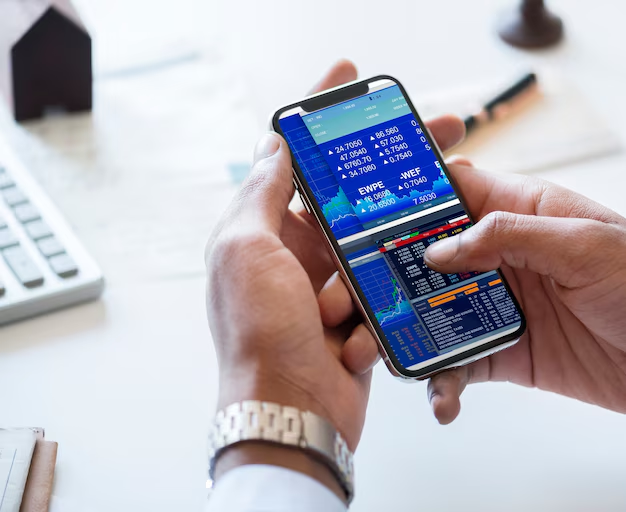
The convenience of having the stock market in your pocket is a double-edged sword. In 2026, mobile technology has made it so easy to trade that the line between “investing” and “gaming” has blurred. While a mobile trading app gives you the power to execute trades from a café in Mumbai or a beach in Goa, that same ease of access often leads to costly blunders.
Key Takeaways
- Treat your trading applike your bank; biometrics and 2FA are non-negotiable.
- A low brokerage trading app is only cheap if the execution speed and hidden fees don’t eat your profits.
- Using an international trading app is the only way to hedge against local market volatility.
- Mobile apps are designed to be addictive—learn to disconnect “trading” from “entertainment.”
.
Mistake 1: Prioritizing Free Over Quality
The biggest lure for new investors is the promise of zero commissions. While a low brokerage trading app is excellent for saving capital, “free” often comes with a hidden price: poor execution speed.
In the fast-moving markets of 2026, a delay of even three seconds can mean the difference between a profitable entry and a loss. If your broker is selling your “order flow” to high-frequency traders, you might be getting a worse price on the stock than you would with a paid, high-speed broker.
- The Fix:Look for transparency. Choose an app that offers a balance of competitive fees and institutional-grade execution speeds.
Mistake 2: Falling for the “Gamification” Trap
Modern mobile trading app interfaces are beautiful. They use bright colors, celebratory confetti, and push notifications to keep you engaged. While this makes for a great user experience, it can trigger “casino brain.”
When trading feels like a game, you take more risks. You might find yourself checking your portfolio every five minutes, leading to impulsive “boredom trades.”
- The Fix:Turn off non-essential notifications. Only open the app when you have a pre-planned trade to execute or a specific piece of news to analyze.
Mistake 3: Neglecting Security in Public Spaces
Trading on the go often means using public Wi-Fi or opening your app in crowded areas. This is a massive security risk. With the rise of AI-driven phishing and “screen-scraping” malware, your login credentials and financial data are targets.
- The Fix:
- Never trade on public Wi-Fi without a VPN.
- Enable Biometric Authentication (FaceID/Fingerprint).
- Use a dedicated email for your trading account that isn’t linked to your social media.
Mistake 4: Overlooking International Diversification
Many traders limit themselves to their local exchange (like the NSE or BSE). However, limiting yourself to one geography increases your “country risk.” If the local economy slows down, your entire portfolio suffers.
By using an international trading app, you can own pieces of global giants like Apple, Tesla, or NVIDIA.
- The Fix:Ensure your chosen platform allows for seamless global access. This allows you to trade in USD-denominated assets, which acts as a natural hedge against local currency depreciation.
Mistake 5: Trading Without a Stop-Loss Strategy
Mobile screens are small. It’s easy to overlook the “Advanced Order” tab where the Stop-Loss (SL) and Take-Profit (TP) settings live. Entering a trade without an exit plan is like driving a car without brakes.
In a volatile market, a stock can drop 10% in minutes. If you aren’t looking at your phone during those minutes, a small mistake becomes a catastrophic loss.
- The Fix:Make it a rule: No Stop-Loss, No Trade. Most professional apps allow you to set “bracket orders” where the SL is placed automatically the moment your buy order is filled.
Mistake 6: Ignoring the “Hidden” Costs
Brokers in 2026 are clever. While they might advertise “low brokerage,” they often make up for it through:
- High Withdrawal Fees:Charging you a premium to move your own money.
- Wide Spreads:The difference between the buy and sell price is artificially widened.
- Inactivity Fees:Penalizing you for not trading.
- Currency Conversion Markups:When using an international trading app, check the FX rates. A bad conversion rate can cost you 2-3% of your capital instantly.
Mistake 7: Relying on “Social Signals” Instead of Research
With integrated “social feeds” inside many stock trading apps, it’s easy to follow the herd. If “everyone” in the app chat is buying a specific penny stock, the FOMO (Fear Of Missing Out) kicks in.
Remember: By the time a stock is trending on a social feed, the big “smart money” has likely already exited.
- The Fix:Use the built-in technical analysis tools. Even on a mobile screen, you should check the RSI (Relative Strength Index) and Moving Averages before hitting “Buy.”
How Do you Know It’s a Good Trading App?
Here are some key differences to look for:
| Feature | Budget App | Professional App (e.g., 5Trade) |
| Brokerage | Zero (but hidden in spreads) | Transparent & Low |
| Market Access | Local only | Global / International |
| Execution | Delayed (Retail flow) | Instant (Institutional grade) |
| Analysis Tools | Basic Charts | Advanced Indicators & AI News Sifting |
| Security | Standard Password | Multi-factor + Biometric + Encrypted |
Table: What Makes a 2026 Trading App “Great”?
Trade with a “Desktop” Mindset on a Mobile Screen
The secret to success on a stock trading app isn’t about having the fastest thumbs; it’s about having the most disciplined mind. By avoiding these seven common pitfalls, you move from being a “user” of an app to being a “trader” of the markets.
